Boating by Édouard Manet
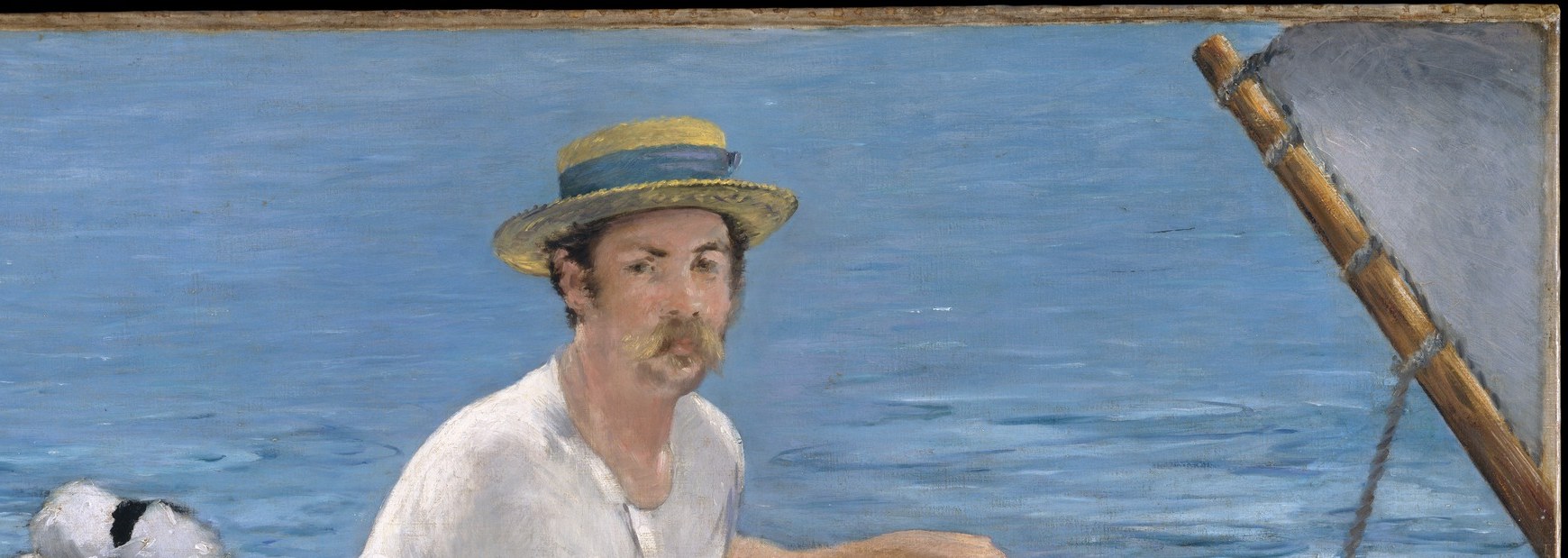
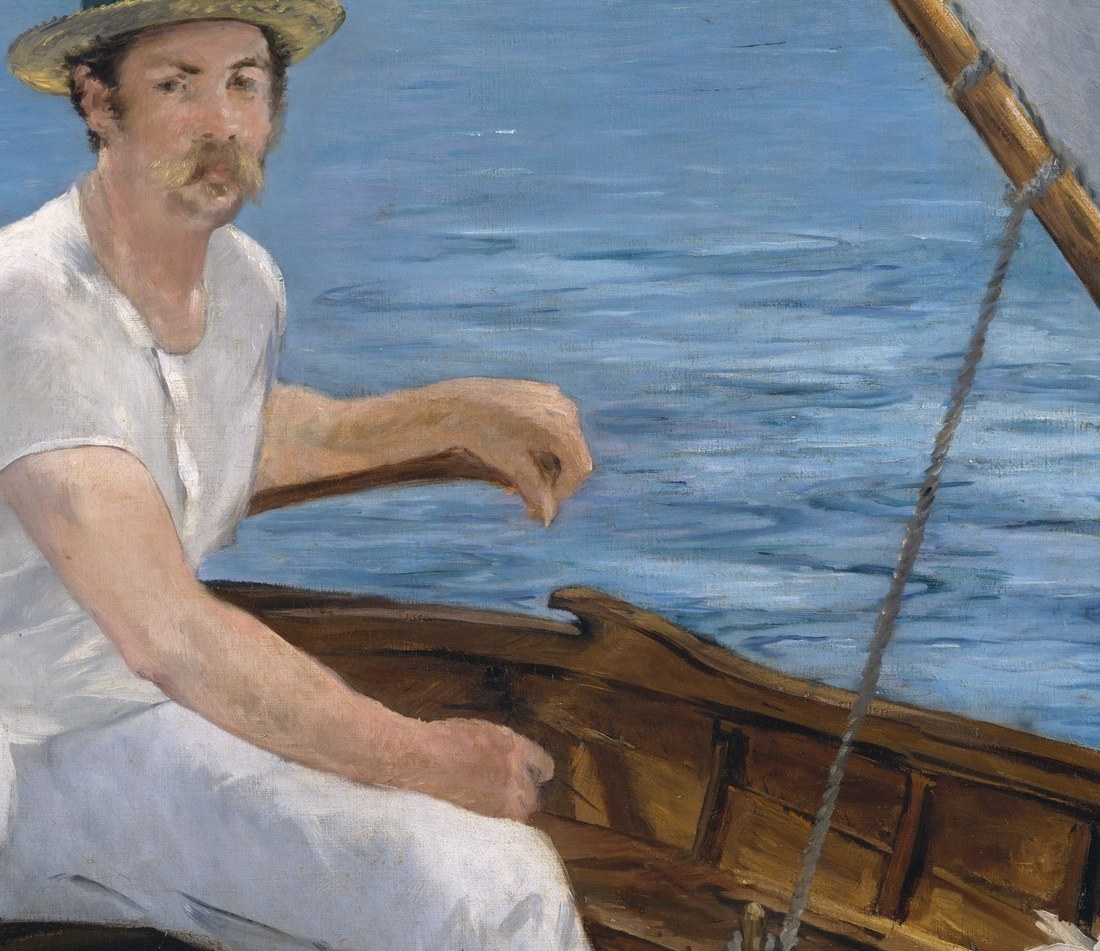
Édouard Manet painted "Boating" in the summer of 1874, from his family's property at Gennevilliers, just across the Seine from Argenteuil where Claude Monet was working that same season. The painting now hangs in the Metropolitan Museum of Art. It shows a man and a woman in a sailboat, close enough to touch, yet their silence is the picture's real subject.
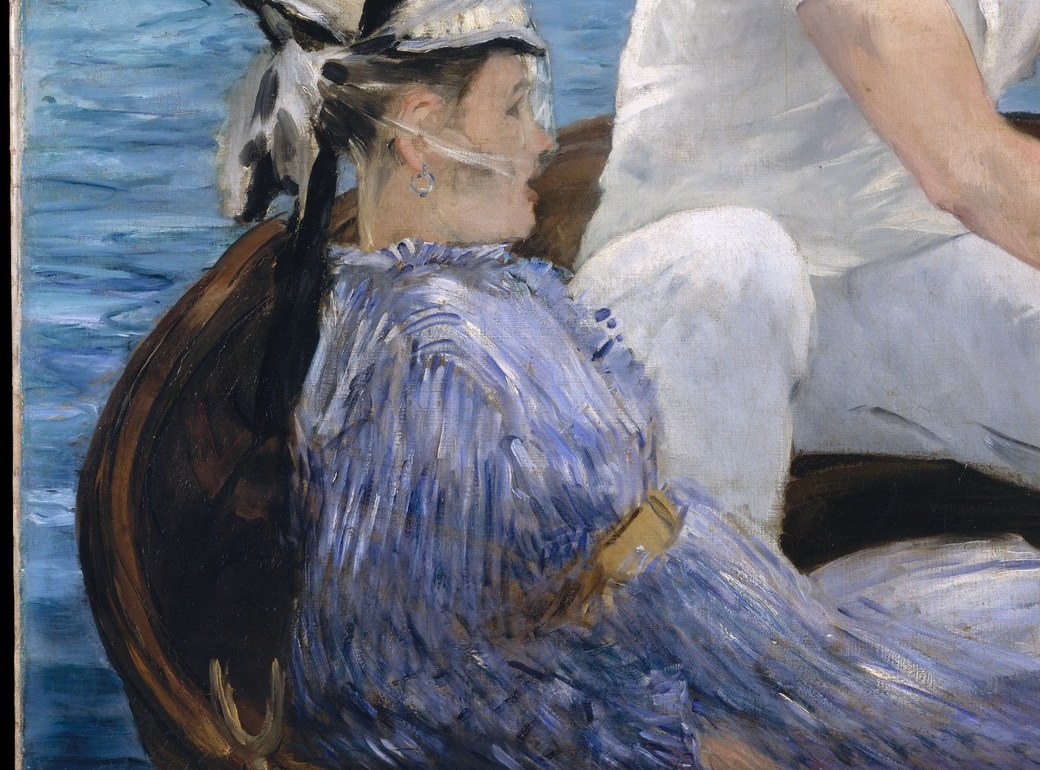
Look at her face. The woman is believed to be Camille Monet, wife of Manet's friend and rival. Her gaze is turned down and away, past the white sail, refusing the frame the man occupies so comfortably. He is Rodolphe Leenhoff, Manet's brother-in-law, his hands on the tiller, his face a calm blank. The two figures, so near in the cramped boat, feel miles apart. Her dark bonnet is closed and formal against his airy summer boater: the whole difference between them is written in their clothes.
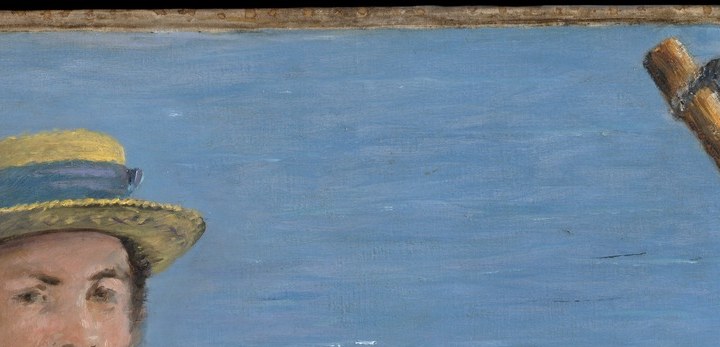
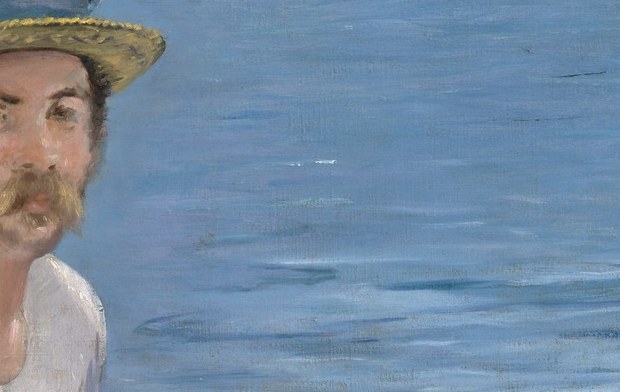
Manet painted this in a radical style. The water is a flat wall of Prussian blue with no horizon and no reflections, a visual choice that pushes toward abstraction. The boat is cropped sharply at the edges, pressing the figures right up against the picture plane. The effect is a snapshot of modern life in which the physical proximity of the two people only deepens their psychological distance.
When "Boating" appeared at the Salon in 1879, the American painter Mary Cassatt called it "the last word in painting." She may have understood that the real subject was not the sail or the sun, but the silence between two people who aren't looking at each other.
#arthistory #impressionism #edouardmanet
Details
Transcript
They look like a couple on the Seine. He steers. Relaxed, in control. The man is Manet's brother-in-law, Rodolphe Leenhoff. The woman is likely Camille Monet. Painted by her husband's rival. Her face is turned away. She looks beyond the sail, into the water. Two people. A marriage on one bank, a brother-in-law on the river. Manet painted this just across the Seine from where Monet was working.