Artwork
Boating
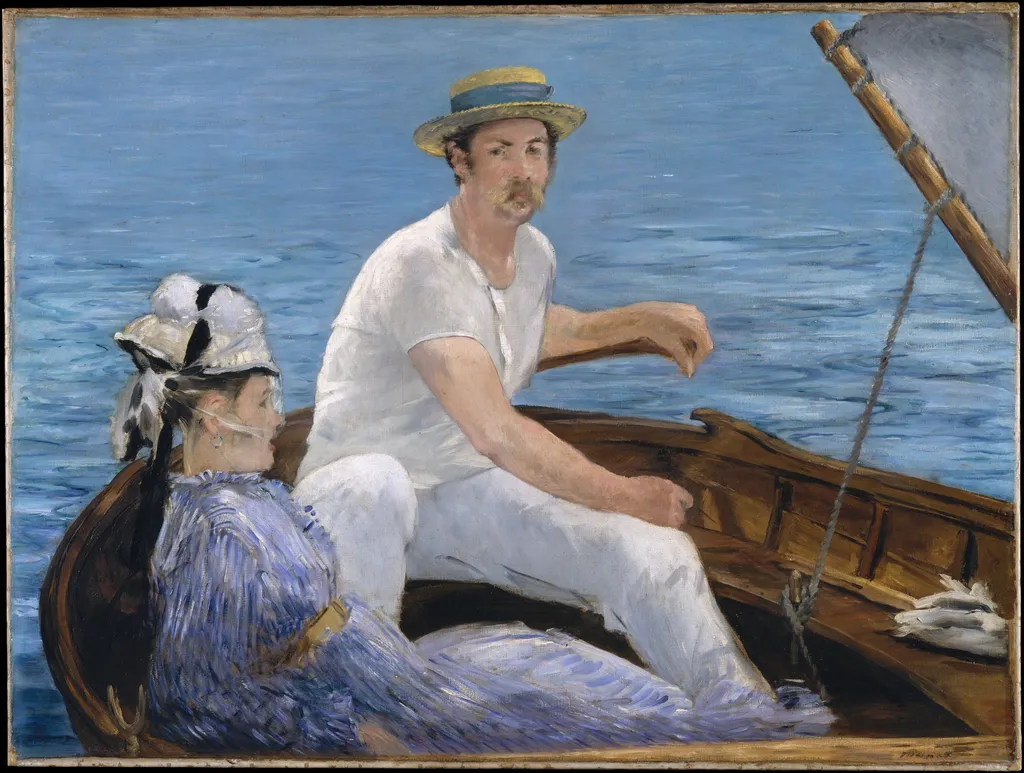
Boating is an oil painting by the Impressionist artist Édouard Manet. It dates from 1874 and is held in the collection of the Metropolitan Museum of Art.
About this work
Manet painted this pair during the summer of 1874 at Gennevilliers, across the Seine from Argenteuil where Claude Monet worked.
Rodolphe Leenhoff grips the tiller in a striped boater hat while a woman in a belted dress gazes past the sail. Manet painted this pair during the summer of 1874 at Gennevilliers, across the Seine from Argenteuil where Claude Monet worked. The canvas compresses the boat against a wall of aquamarine water, abruptly cropped at the edges like a Japanese print. Mary Cassatt later saw it at the 1879 Salon and called it "the last word in painting."
Subject & Meaning
The painting depicts a man and woman enjoying a leisurely sailboat outing on the Seine near Argenteuil, a popular summer vacation spot for Parisian bourgeoisie. The man is traditionally identified as Rodolphe Leenhoff, Manet's brother-in-law, while the woman may be Camille Monet, though her identity remains debated. Their sporty, chic attire, the woman in a blue-striped dress and veiled hat, the man in a white shirt and straw hat, signals their social status and the era's leisure fashion.
The cropped boat and elevated viewpoint, inspired by Japanese prints and photography, create an intimate, snapshot-like composition that emphasizes spontaneity. This work marks Manet's turn to Impressionism, focusing on modern everyday life and the fleeting sensations of a summer afternoon on the water.
Technique & Style
Executed in oil on canvas (97.2 × 130.2 cm), the painting exhibits Manet's transitional approach to Impressionism. The brushwork is loose and relaxed, particularly in the woman's striped dress, where short strokes of blue, violet, ochre, and white create a vibrant, airy effect. Manet employed abrupt cropping and a high viewpoint, cutting off the boat and eliminating a horizon line, a composition influenced by Japanese prints.
The palette is high-keyed, dominated by intense blue water with white reflections. Radiographs reveal multiple reworkings, indicating Manet revised the composition extensively. Despite the impressionist handling, broad, flattened color areas retain his distinctive touch.
History & Provenance
Édouard Manet painted Boating during the summer of 1874 while staying on his family's property in Gennevilliers and working alongside Claude Monet and Pierre-Auguste Renoir in Argenteuil. The painting remained in Manet's possession until 1879, when it was shown at the Salon of 1879. After the Salon, it was sold to banker and collector Victor Antoine Desfossés for 1,500 francs.
In 1895, Desfossés sold it to art dealer Paul Durand-Ruel for 25,000 francs, who then sold it later that year to New York industrialist Henry Osborne Havemeyer. Upon Havemeyer's death, his wife Louisine W. Havemeyer inherited the painting and bequeathed it to the Metropolitan Museum of Art in 1929, where it has since remained.
Boating is held at the Metropolitan Museum of Art in New York, where it is displayed in Gallery 818 under accession number 29.100.115. Its exhibition history began with the Paris Salon of 1879. Subsequent notable exhibitions include the 1930 The H. O. Havemeyer Collection at the Met, the 1955 Great French Paintings exhibition at the Art Institute of Chicago, the 1966 Édouard Manet retrospective at the Philadelphia Museum of Art, and the 1983 Manet exhibition at the Grand Palais in Paris.
It has also been shown internationally, such as in Leningrad in 1988 and at the Musée d'Orsay in 1998.
Context
When exhibited at the Salon of 1879, Boating elicited polarized reactions. Mary Cassatt hailed it as 'the last word in painting,' while Louis de Fourcaud criticized it as too rough and sketchy. Joris-Karl Huysmans defended its departure from conventional color and composition, noting Japanese influence.
Scholars widely view Boating as Manet’s decisive turn toward Impressionism, marked by its loose brushwork, vibrant palette, and abrupt cropping, a technique indebted to Japanese prints. Painted during Manet’s 1874 stay in Gennevilliers, the canvas reflects his immersion in the circle of Claude Monet and Pierre-Auguste Renoir. Radiographs reveal extensive reworking, indicating the painting was executed both outdoors and in the studio.
The work now serves as a key example of Manet’s temporary embrace of Impressionist ideals and his shift toward depicting modern leisure.
Legacy
Boating has been recognized as a pivotal work in Manet's shift toward Impressionism, often described as a temporary manifesto of his new allegiance to the movement. When exhibited at the Salon of 1879, it drew polarized reactions: art critic Louis de Fourcaud criticized it as too rough and sketchy, and a caricature in Journal amusant mocked the woman's dress. Conversely, painter Mary Cassatt hailed it as 'the last word in painting' and recommended its acquisition to the Havemeyers, while writer Joris-Karl Huysmans defended its bold color and composition.
Now held at the Metropolitan Museum of Art as part of the Havemeyer collection, the painting has been featured in major international exhibitions and remains a celebrated example of Manet's engagement with modern life and Japanese-influenced composition.
Overview
Édouard Manet's 1874 oil painting, "Boating," captures a summer scene featuring two figures aboard a sailboat. Executed on canvas, this work reflects the artist's engagement with contemporary life and leisure activities. The composition focuses intimately on the occupants of the vessel, presenting a snapshot of a moment on the water.
Own this work as a print
Artist & collection
Artist
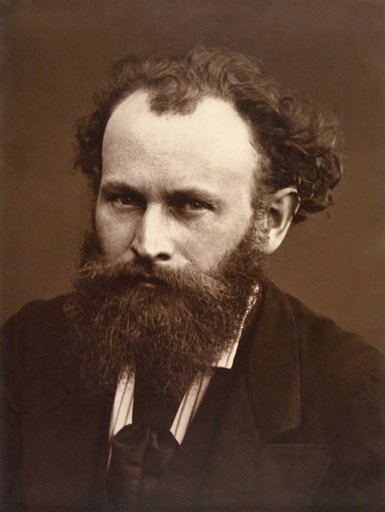
Édouard Manet was a French modernist painter. He was one of the first 19th-century artists to paint modern life, as well as a pivotal figure in the transition from Realism to Impressionism.

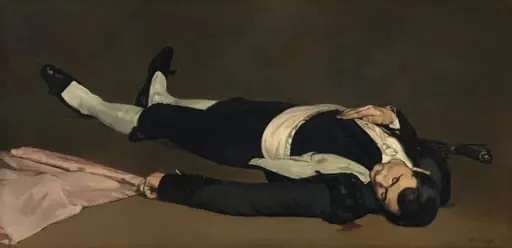
- The Boating Party
 Camille Monet und ihr Sohn Jean in Argenteuil
 The Monet Family in Their Garden at Argenteuil
 Figures on the Beach
 Rochefort's Escape
 Oarsmen at Chatou
 Alice Gerson in Prospect Park
 The Café-Concert
 Portrait d'Ernest Hoschedé et sa fille Marthe
 At the Races in the Countryside
 A Waitress at Duval's Restaurant
 Regatta at Sainte-Adresse