The Gulf Stream by Winslow Homer (American, 1836–1910)
View the artwork: The Gulf Stream →
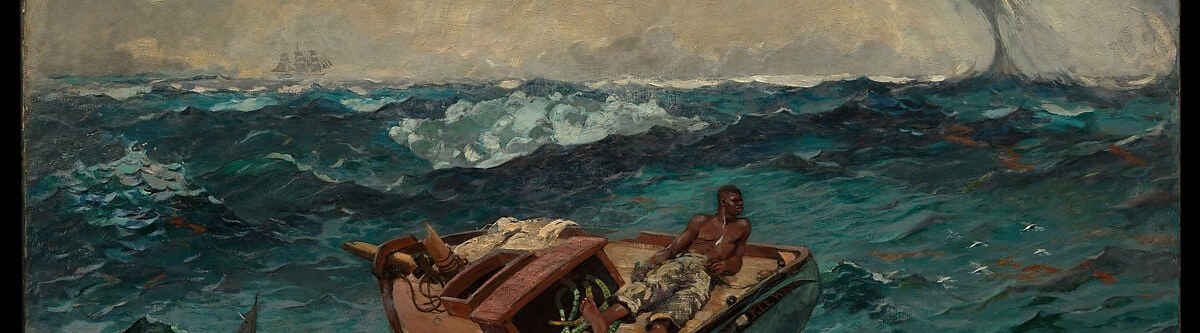
Winslow Homer finished The Gulf Stream in 1899, then reopened the canvas seven years later to add a single, devastating detail: a ship on the far horizon, impossibly distant. The painting is now in the Metropolitan Museum of Art.
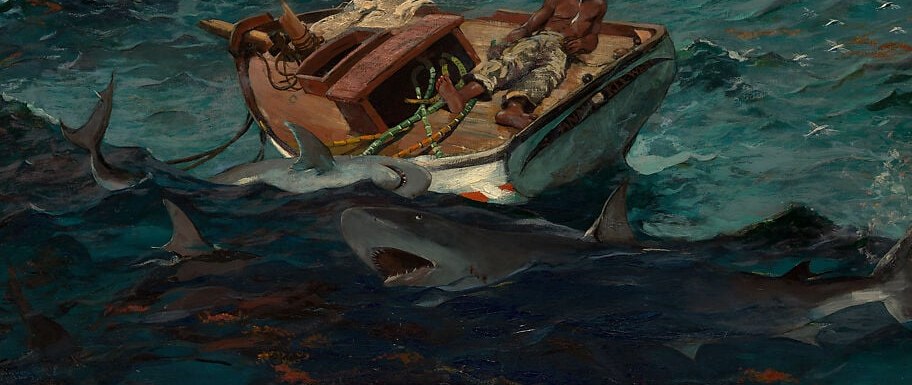
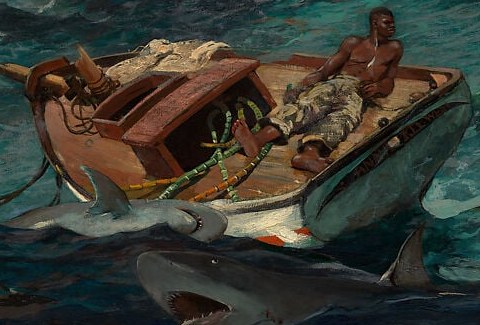
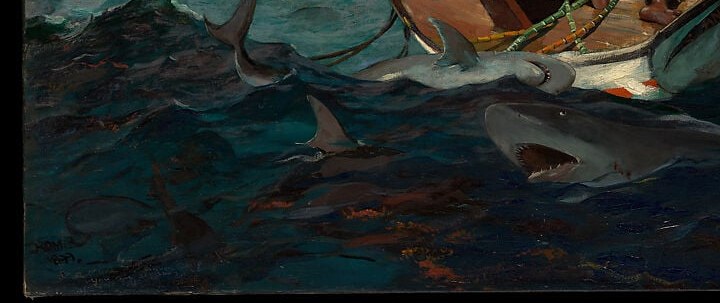
Everything in the frame closes off the possibility of rescue. The mast is shattered, the rudder gone, the rigging a tangled wreck. Sharks circle the hull while a waterspout forms in the upper right. And then, barely visible, that ship, not approaching, not even facing the boat with certainty. Homer painted it in after the painting's initial exhibition, sharpening the moral question: is salvation visible but unreachable, or was it never coming at all?
The sailor rests on a deck strewn with sugarcane stalks, which place the scene in the Caribbean plantation economy. Homer spent years sailing and sketching in Florida and the Caribbean. The boat's name, Anna, Key West, is marked on the stern. The man has already survived the wreck; what remains is the waiting, surrounded on every side.
When the reworked painting appeared at the National Academy of Design in 1906, the jury was so struck they recommended the Met acquire it immediately. They did. The ship Homer added is the reason the painting entered one of the world's great collections, and it is still the thing people miss on first look.
#arthistory #winslowhomer #metmuseum
Details

Transcript
A man adrift. No mast, no rudder, no help. His name was on the stern: Anna, Key West. Sugarcane stalks. Cargo from the Caribbean plantations. He has survived the storm. The rigging tells you that. Homer added this ship in 1906, seven years after finishing the painting. It made the jury at the National Academy recommend the Met buy it that same year. The ship is not coming. It is too far. It may even be turned away.