Equestrian Portrait of Emperor Paul I with his Sons and Joseph I, King of Hungary by Georg von Bothmann
The Equestrian Portrait of Emperor Paul I with his Sons and Joseph I, King of Hungary by Georg von Bothmann (1848), held at the State Hermitage Museum, was famously rejected by the Paris Salon. The painting depicts Emperor Paul I with his sons, presenting them in a powerful equestrian pose that conveyed imperial authority. The artist, Georg von Bothmann, was born in Lübeck in 1810 and died in 1891.
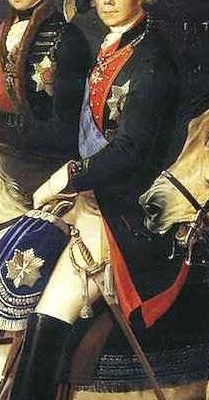
Observe the stern gaze of Emperor Paul I and the contrasting expressions of his sons. The dynamic rendering of the horses' manes and legs emphasizes their strength and the riders' status. Notice the intricate details of the uniforms and the opulent saddle blankets, showcasing the wealth of the imperial court.
Despite its artistic merit, the painting caused scandal. It was rejected from the 1848 Paris Salon, with critics deeming it politically provocative. Furthermore, a specific detail in Emperor Paul I's uniform, later deemed too suggestive, was censored, leading to its removal from public display for a time.
This incident highlights the complex interplay between art, politics, and social censorship in the mid-19th century. What other historical artworks have faced controversy for their content?
Details
Transcript
He looks like the most powerful man in Europe. His sons stand ready by his side. The artist painted this in 1848. He depicted them on horseback for power. But the Salon rejected it for its message. Look at this detail of the uniform. This embroidery was deemed too suggestive.