Queen Zenobia Addressing Her Soldiers by Tiepolo, Giovanni Battista
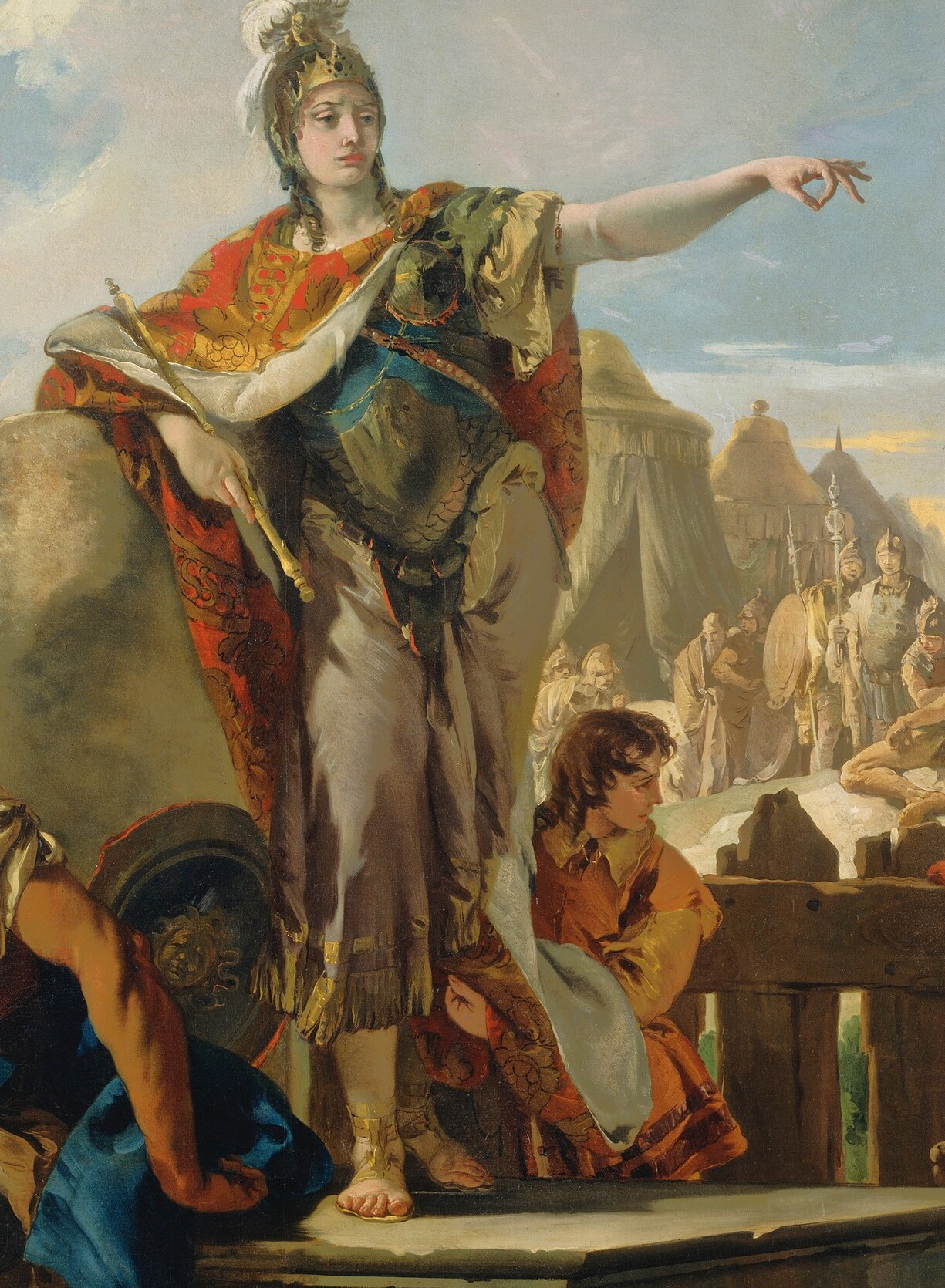
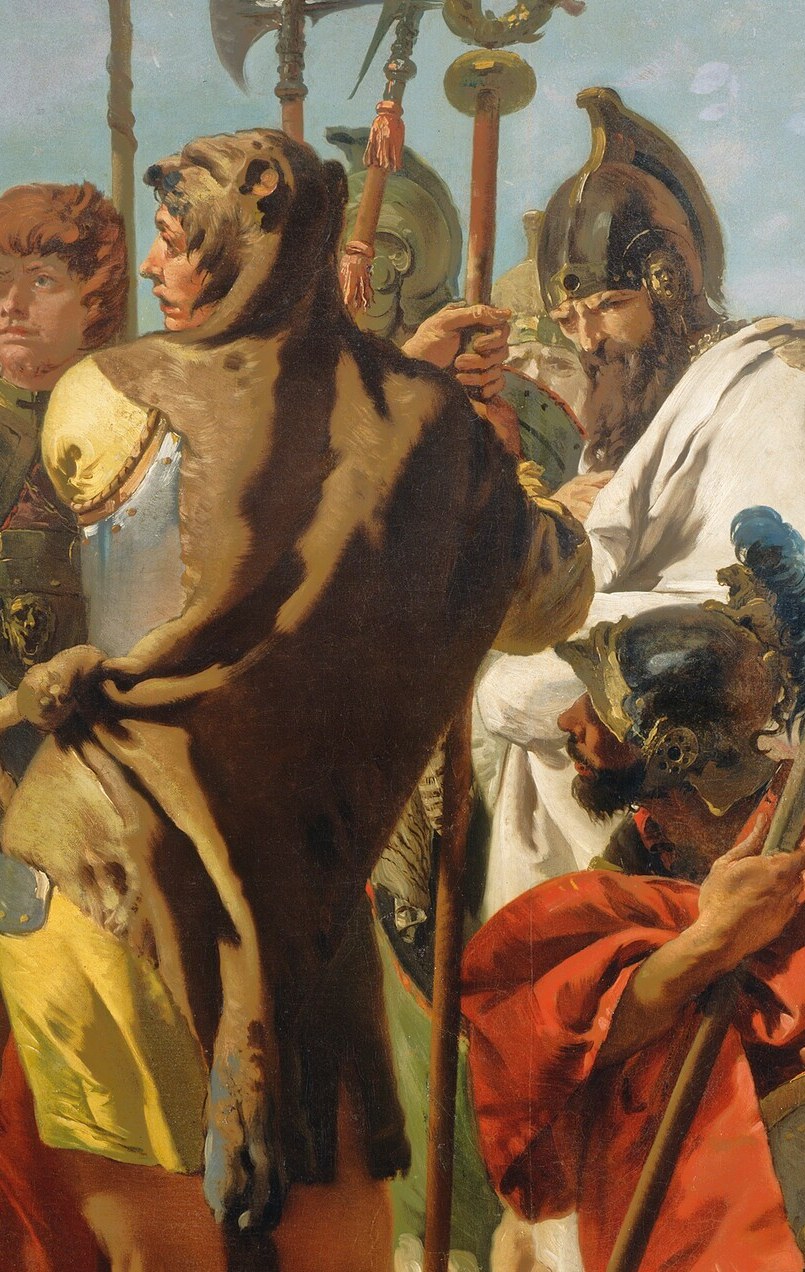
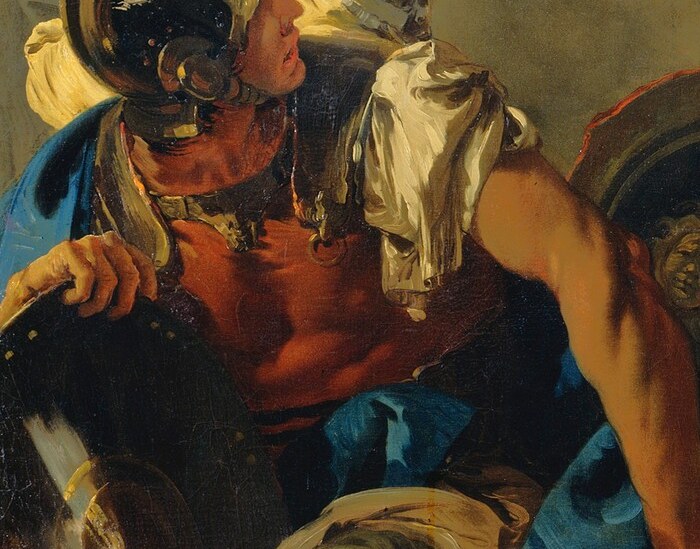
This is Giovanni Battista Tiepolo’s “Queen Zenobia Addressing Her Soldiers,” painted in Venice around 1728. The scene is all heroism at first glance: a queen rallies her troops with a sweeping gesture, and the sky itself seems to push them toward victory. But Tiepolo buried a sobering contradiction in the painting’s shadows.
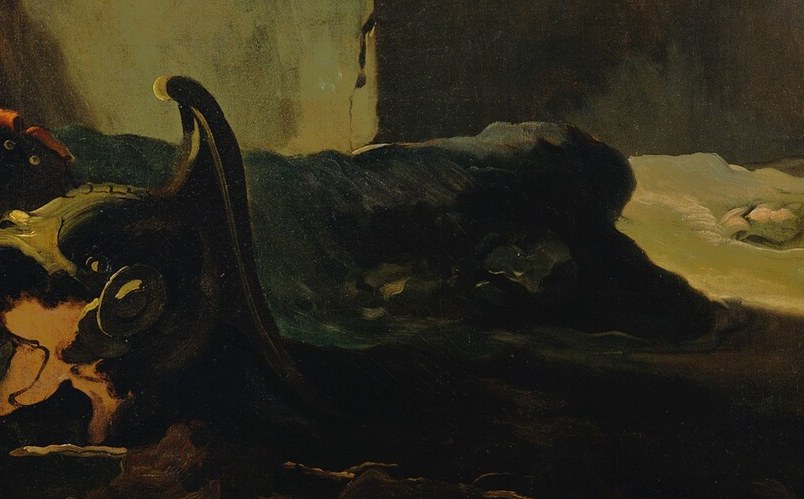
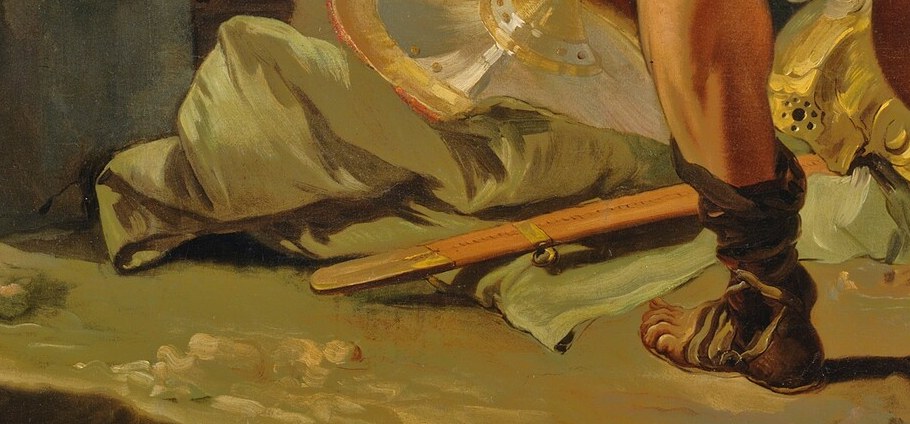
Let your eye drift from the bright silk and muscle to the very bottom of the canvas. Past the dog, past the fallen shield, half-hidden in the murk, is a Roman helmet lying on the ground. It is not a prop; it is a void left by someone absent.
Tiepolo was the greatest decorative painter of 18th-century Europe, a master of Rococo’s airy, theatrical light. He knew exactly how to make a painting feel handsome and weightless. And yet he chose to tuck this small, grim fact into the foreground, where most viewers scroll past it without stopping.
The queen’s speech promises glory. The helmet tells you what glory costs. Next time you see a grand leader rallying a crowd in a painting, look at the floor.
Details
Transcript
She commands with absolute authority. The soldiers listen, ready for a glorious fight. Tiepolo painted this in Venice around 1728. But let your eye fall to the shadowed foreground. Past the dog and the fallen shield, lower still. A Roman helmet. Abandoned by someone who will not rise. The speech is rousing, but Tiepolo shows you the price.