Nini in the Garden (Nini Lopez) by Pierre-Auguste Renoir
Pierre-Auguste Renoir's "Nini in the Garden" (1888) is more than a sun-dappled portrait. It is a precise social document of Belle Époque Paris, encoded in fabric, wood, and foliage.
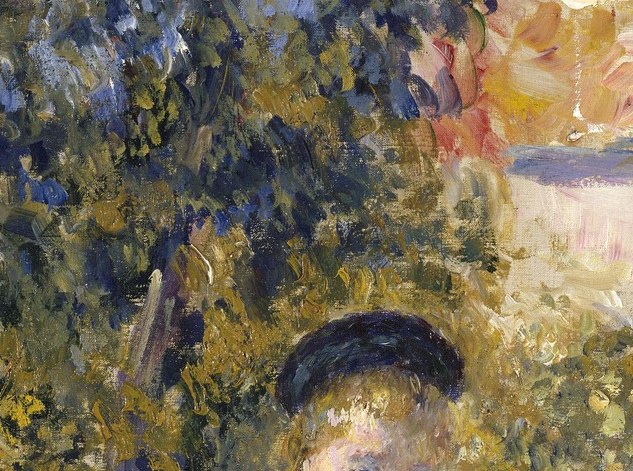
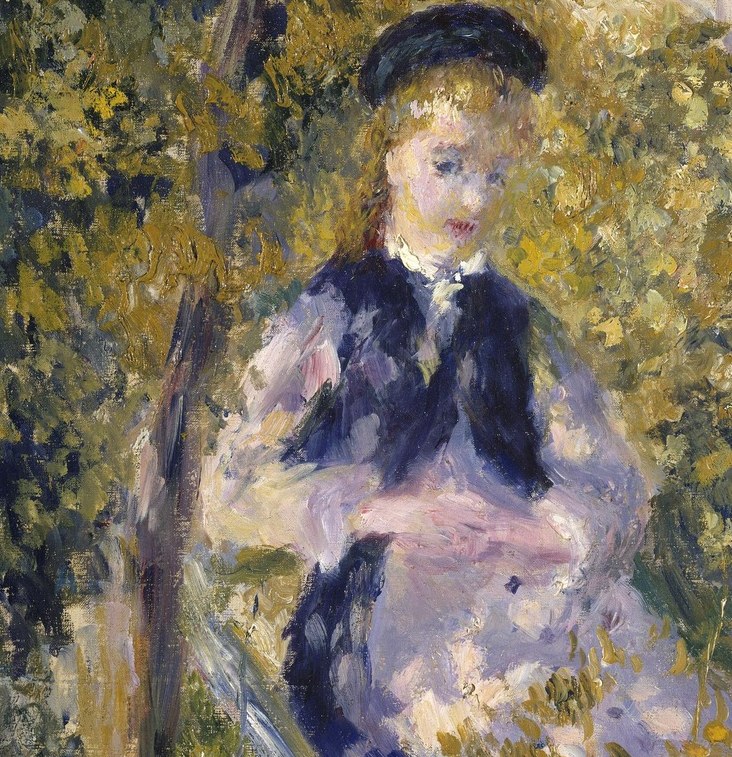
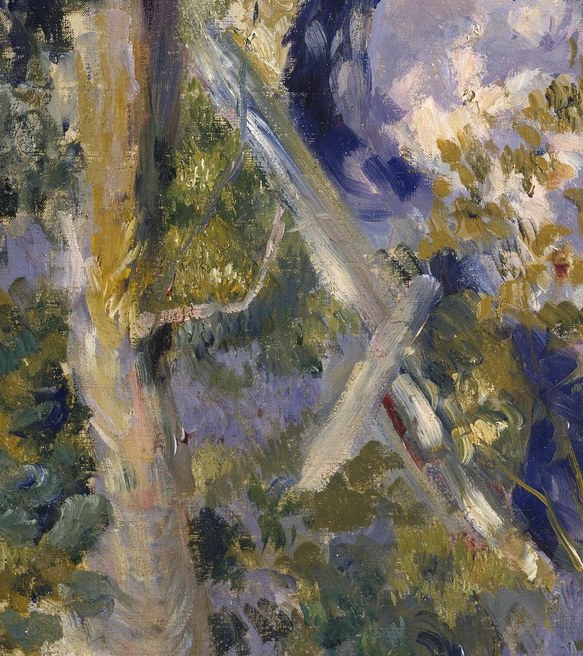
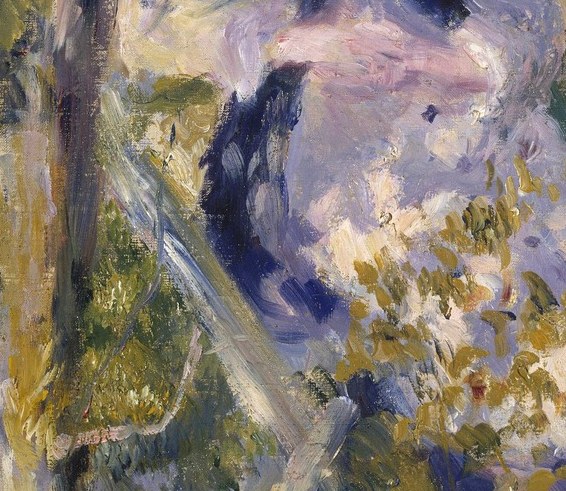
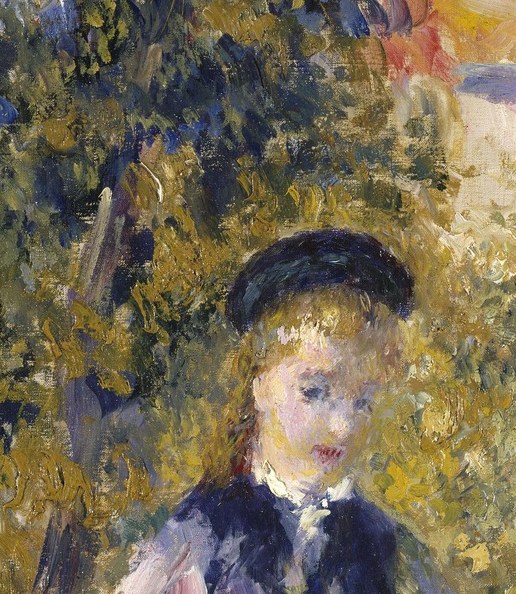
Look at the dark brimmed hat and the navy jacket. No apron, no work bonnet. This is not a peasant; this is a woman with leisure. Then look at her chair. It is a folding garden chair, portable, meant for a private garden, not a public bench. The white building glimpsed through the leaves confirms it: a domestic property. Every object Renoir includes places Nini in the comfortable, aspirational working class, enjoying the new ritual of the idle afternoon.
Nini Lopez was a favorite model of the Impressionists. Renoir painted her often, drawn to her quiet composure. Here, he places her in a private garden in Montmartre, using her as a vehicle to depict the new social reality of the Third Republic: leisure was no longer the exclusive property of the aristocracy. The painting hangs today in The Metropolitan Museum of Art.
What objects in your own life might accidentally reveal your social world to a viewer a century from now?
Details
Transcript
Her hat is the first piece of evidence. Fashionable, yes. But it also signals she is not a peasant. No apron, no bonnet. This is a woman with leisure time. The chair she sits on was designed to fold and be carried. Portable furniture means a private garden, not a public park. And a private garden means a household wealthy enough to own one. Renoir encodes an entire social class with a hat, a jacket, and a chair.