Christ Carrying the Cross by Benvenuto di Giovanni
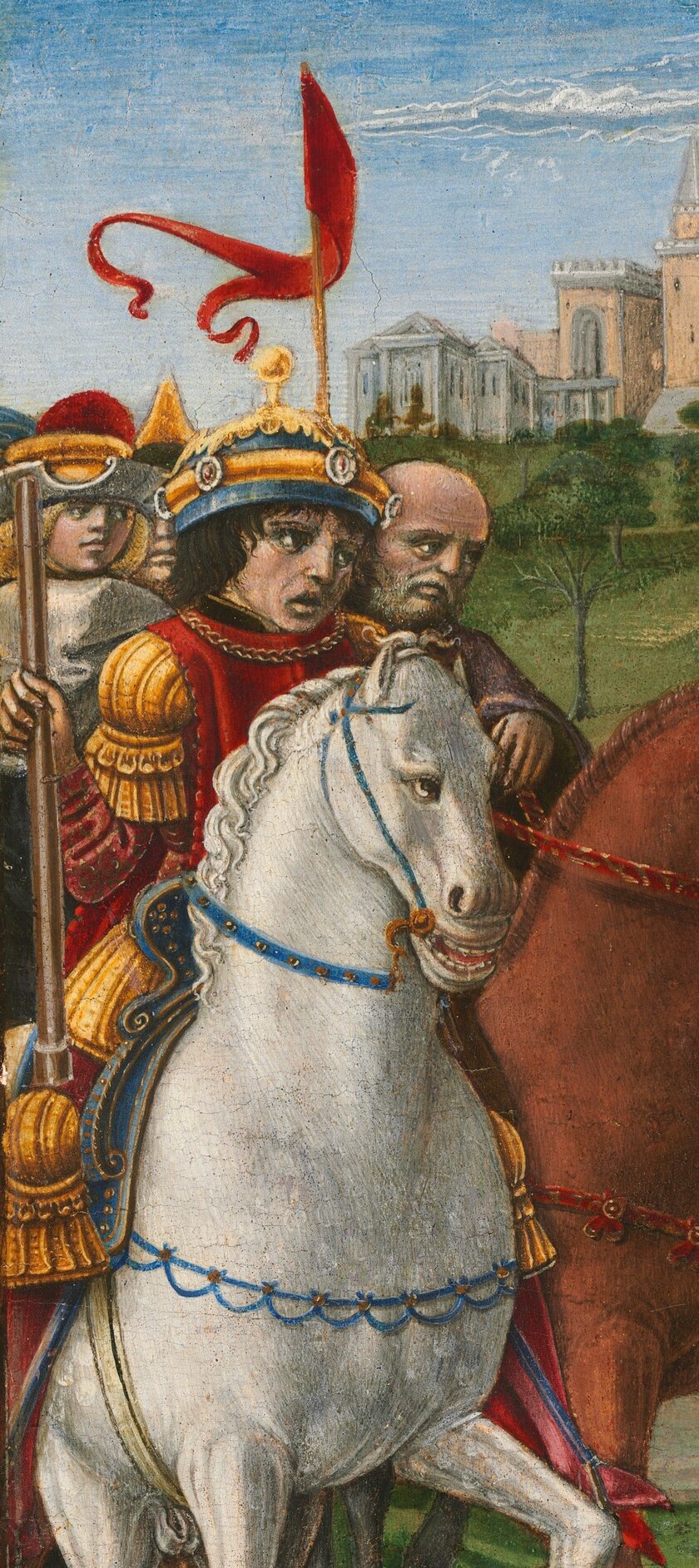
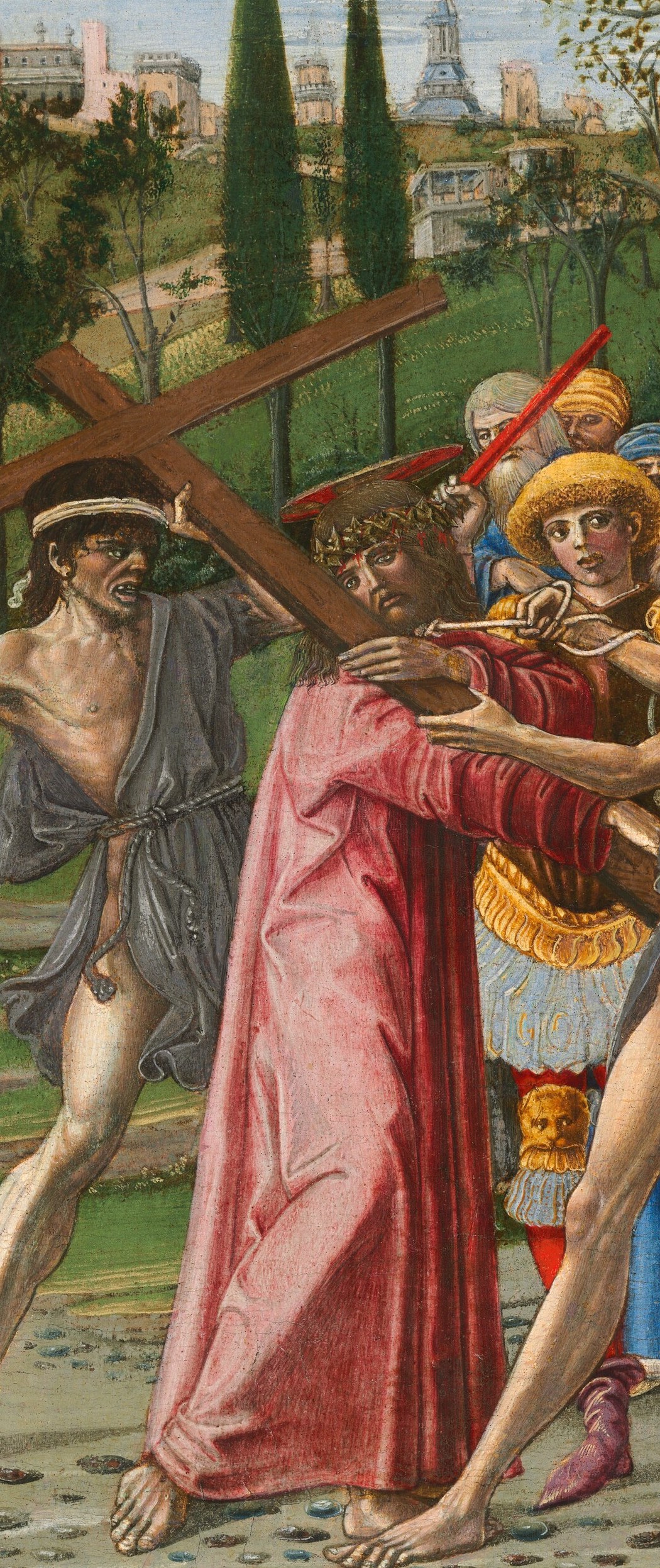
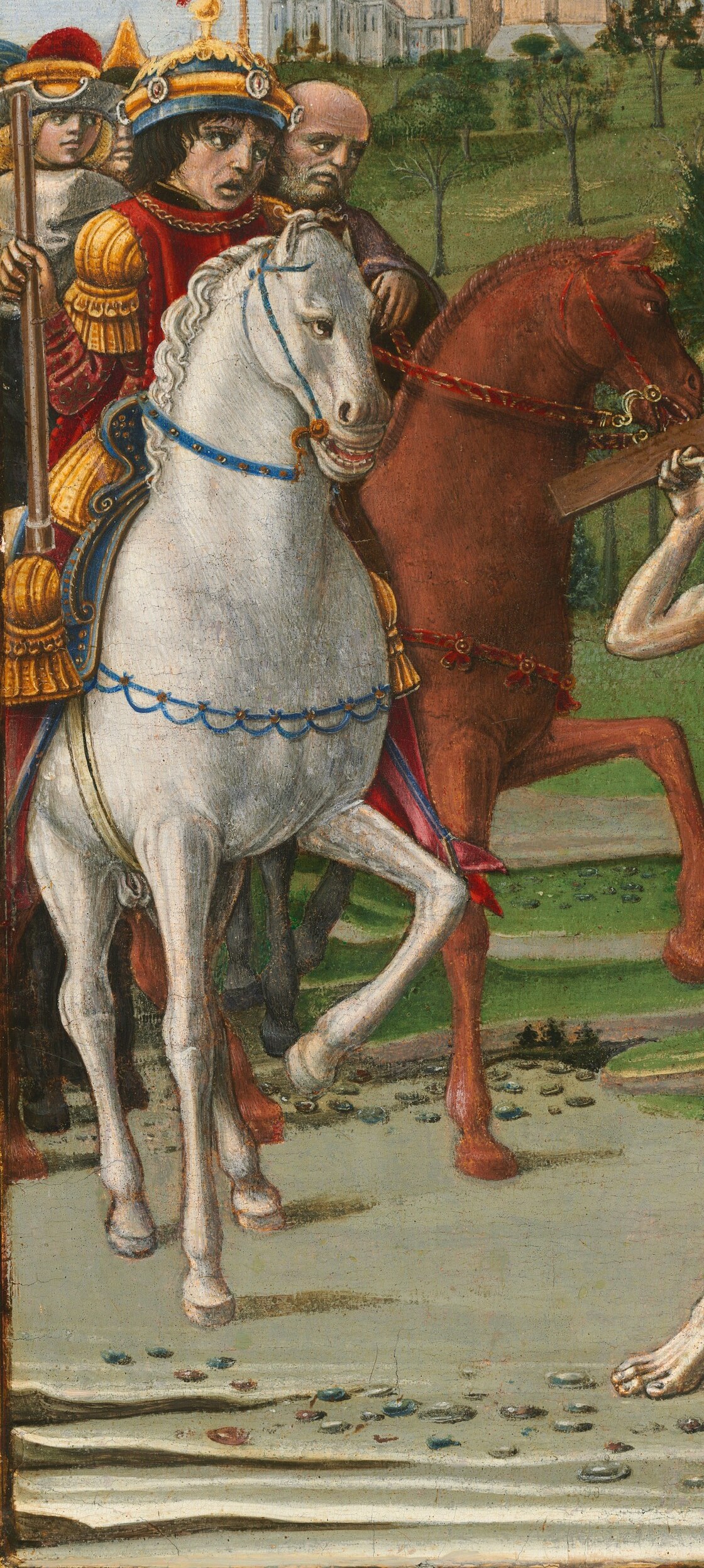
Benvenuto di Giovanni's *Christ Carrying the Cross*, painted in tempera on panel around 1491, turns the most solemn story in Christian theology into a crowded city street. The Sienese master was about 55 years old and had been painting for nearly four decades when he made this. His style had shifted noticeably in the 1480s, becoming more refined, and you can see the precision everywhere here, in the folds of Christ's robe, in the musculature of the white horse, in the individual faces of the crowd.
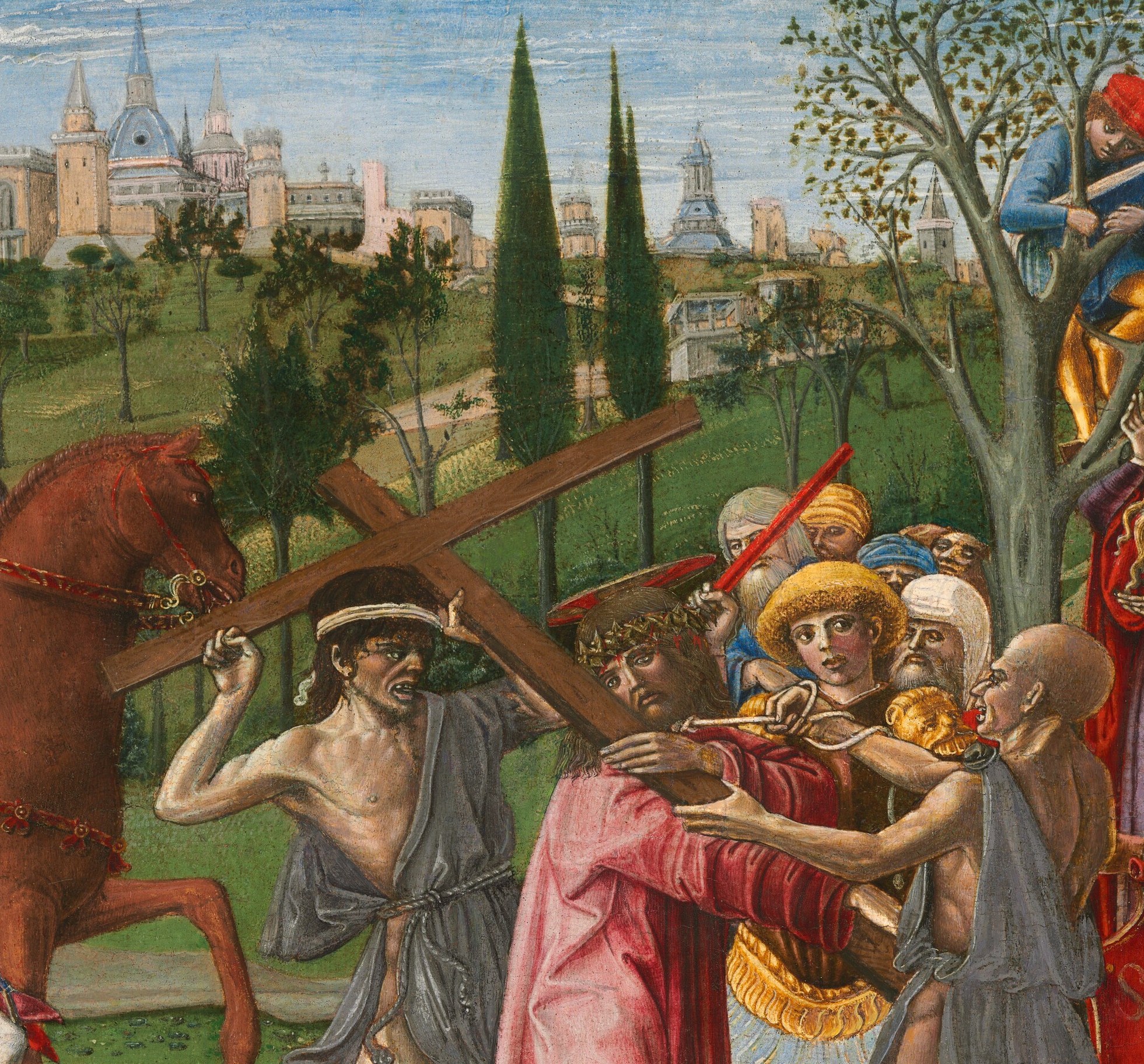
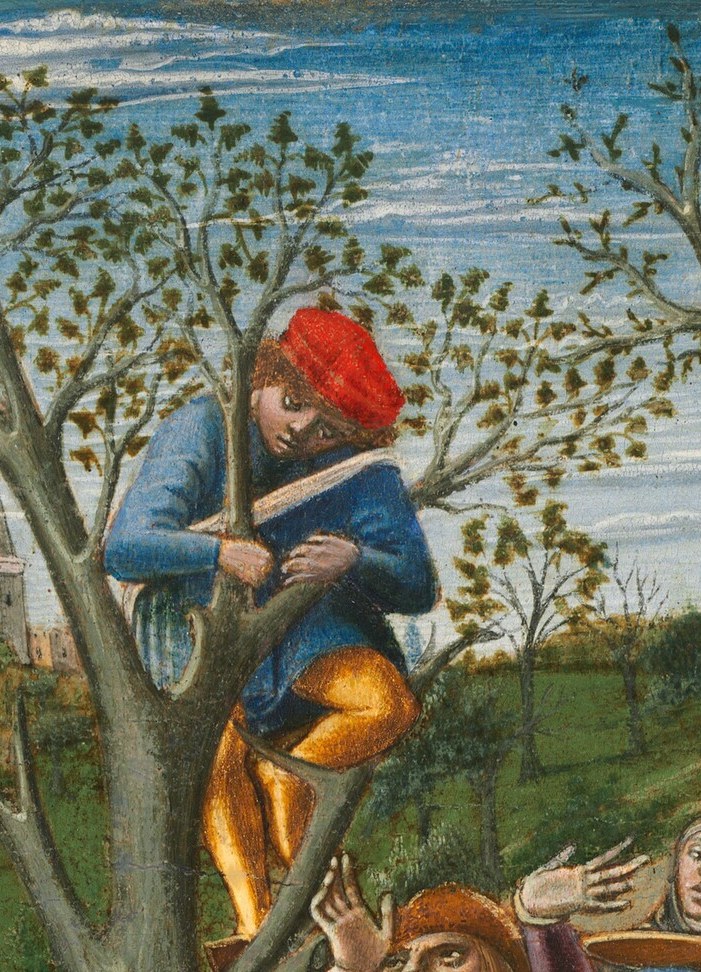
This is a painting that rewards slow looking. Start with the emotional core: Christ's face at center, crowned with thorns, exhausted and resigned. Then find the figure in pink confronting him, the most vivid color in the scene marking the point of greatest tension. The cross itself cuts diagonally through the composition, and everything else responds to that line. The weeping women on the right, the armored horseman on the left, and up in the bare branches on the upper right, a single figure sits watching. It is the kind of detail you would miss on a phone screen in two seconds, and it asks you to stay.
Benvenuto worked chiefly in Siena his whole life, producing choral miniatures, frescoes, and pavement designs alongside panel paintings like this one. His son Girolamo later worked alongside him, and their hands have sometimes been confused by scholars. But the scale of Benvenuto's surviving output makes his voice distinct. This panel belongs to a long tradition of Sienese Passion painting, but the density of the crowd and the specificity of the faces feel like a city scene the artist might have actually witnessed, a public execution, a procession, a street full of people each reacting in their own way.
A painting made more than 500 years ago, and every figure in it still has something to tell you about what it means to watch someone suffer.
Details
Transcript
Jerusalem, 1491. The city gates stand open. A guarded procession moves through the street. A figure in pink seizes the condemned man. The cross cuts through the crowd at a brutal angle. Now look up. A spectator sits in the bare tree. Even the Romans ride in on a virtuoso white horse. Benvenuto di Giovanni painted this at 55, watching his city change around him.