Villerville Seen from Le Ratier by Charles François Daubigny
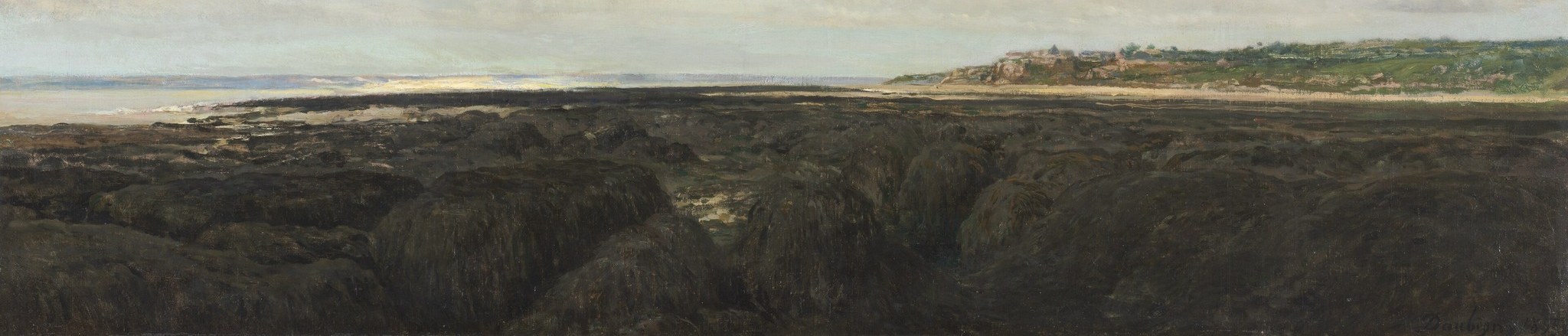
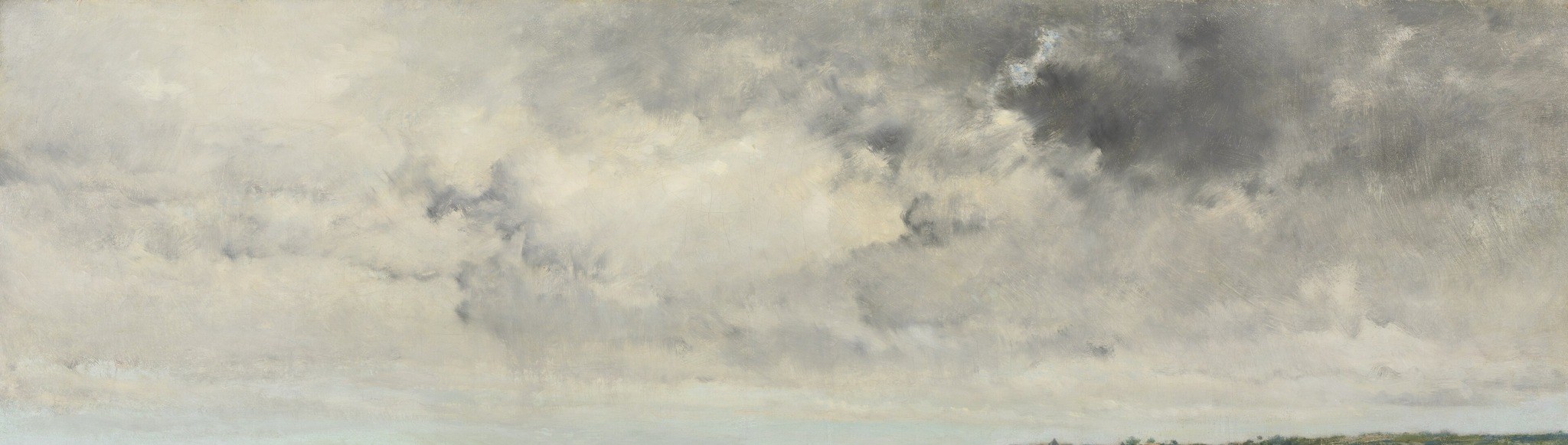
Charles-François Daubigny's "Villerville Seen from Le Ratier," painted in 1855, captures a serene moment on the Normandy coast. This oil painting, held at the Cleveland Museum of Art, is more than just a tranquil landscape; it quietly hints at the burgeoning industrial age.
While the eye is drawn to the dramatic overcast sky and the rugged foreground rocks, look closer at the distant village. Many people scroll past it, but if you zoom in, you'll spot a subtle yet significant detail: a small train moving across the scene.
Daubigny, a key figure in the Barbizon School and a precursor to Impressionism, was known for his realistic and poetic portrayals of nature. The inclusion of the train here subtly grounds the natural beauty in the context of human progress and infrastructure, offering a unique blend of timeless landscape and contemporary life.
This hidden detail transforms the painting from a purely pastoral scene into a dialogue between nature and the changing world. What else might you discover if you looked a little longer?
Details



Transcript
This quiet landscape is by a pioneer of French Impressionism. Charles Daubigny painted the Normandy coast in 1855. His textured brushstrokes make the foreground rocks almost tactile. Most people scroll past the distant village. But look closely, there is something moving. A train, crossing the landscape and changing its mood.