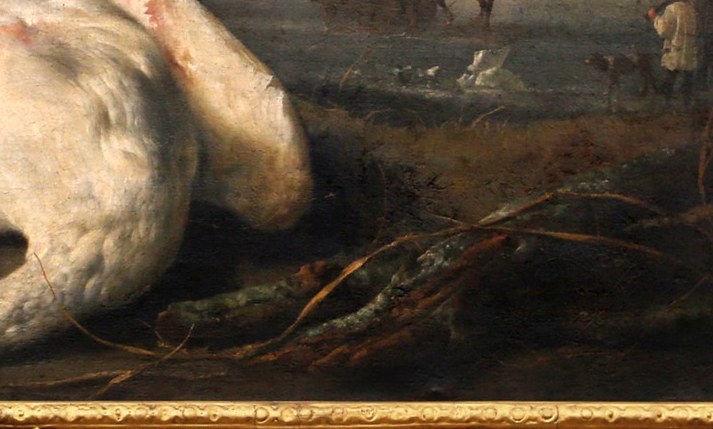
Winter landscape with dead birds and hunters by Aelbert Cuyp
Aelbert Cuyp's *Winter landscape with dead birds and hunters* (c. 1650) is a masterclass in capturing atmospheric light. The Dutch Golden Age painter was renowned for his ability to imbue his landscapes with a luminous, almost ethereal glow, even in the bleakest of winter scenes.
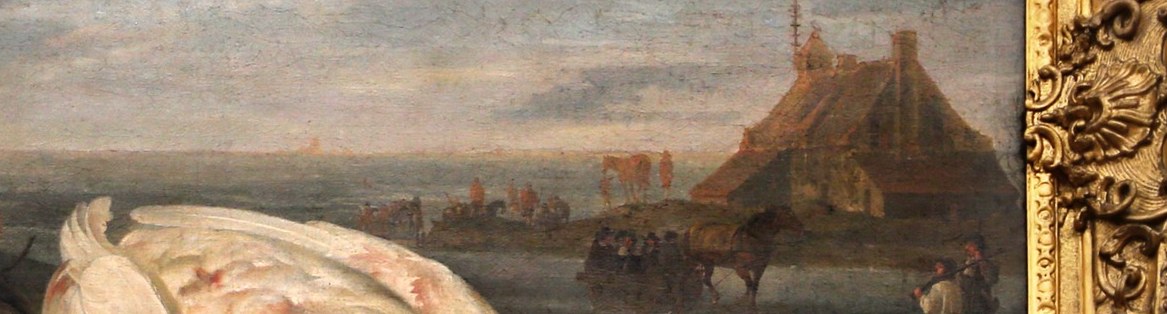
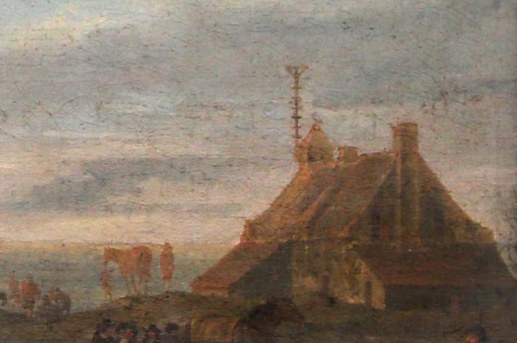
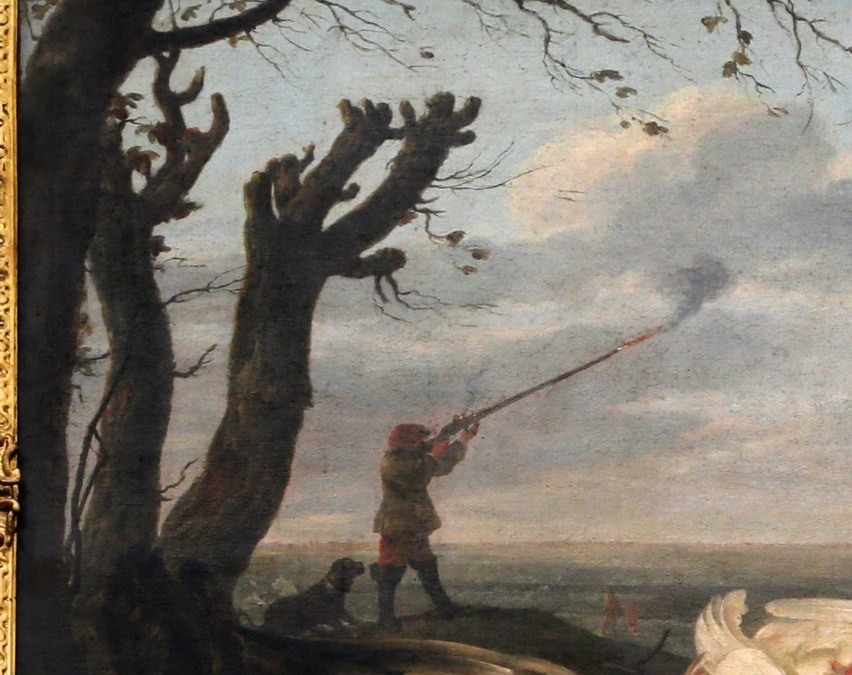
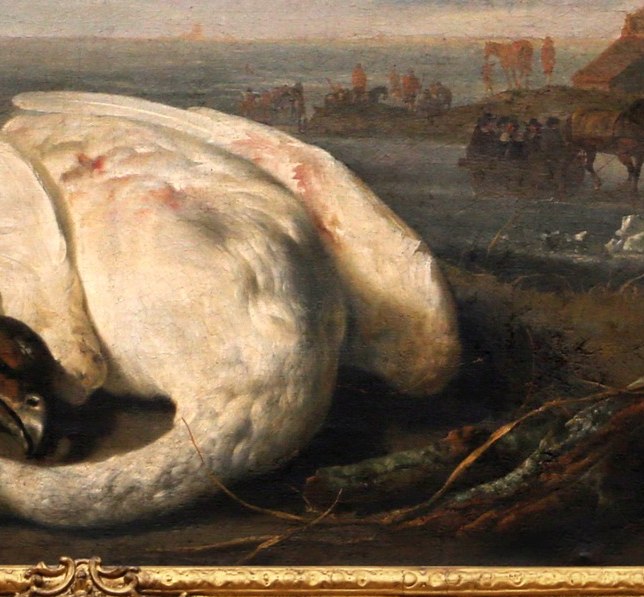
Look closely at the frozen water, where Cuyp uses subtle variations in color and brushwork to suggest the icy surface. The distant house, almost lost in the haze, seems to emanate a warm light, a stark contrast to the surrounding cold. Notice how the bare trees, rather than appearing dead, are rendered with a delicate luminescence, their forms softened by the atmospheric conditions.
Cuyp's technique involved building up thin, translucent layers of oil paint, known as glazes. This allowed him to create a remarkable depth and subtlety in his skies and light effects. The result is a scene that feels both realistic and dreamlike, a testament to his skill in manipulating paint to capture the fleeting quality of natural light.
His ability to create such a vibrant atmosphere in a muted winter palette is a true artistic feat.
Details
Transcript
This painter loved Dutch winter light. Look at the light on the frozen water. The distant house seems to glow from within. Cuyp softened the sky with layered glazes. See the subtle transition in the sky. He made bare trees feel alive with light. Oil paint lets him build up this glow.