Peasants Dancing by Johannes Lingelbach
Johannes Lingelbach painted *Peasants Dancing* in 1651, and the first thing worth knowing is that the most impressive brushwork is not where you look first. The painting hangs at The Metropolitan Museum of Art.
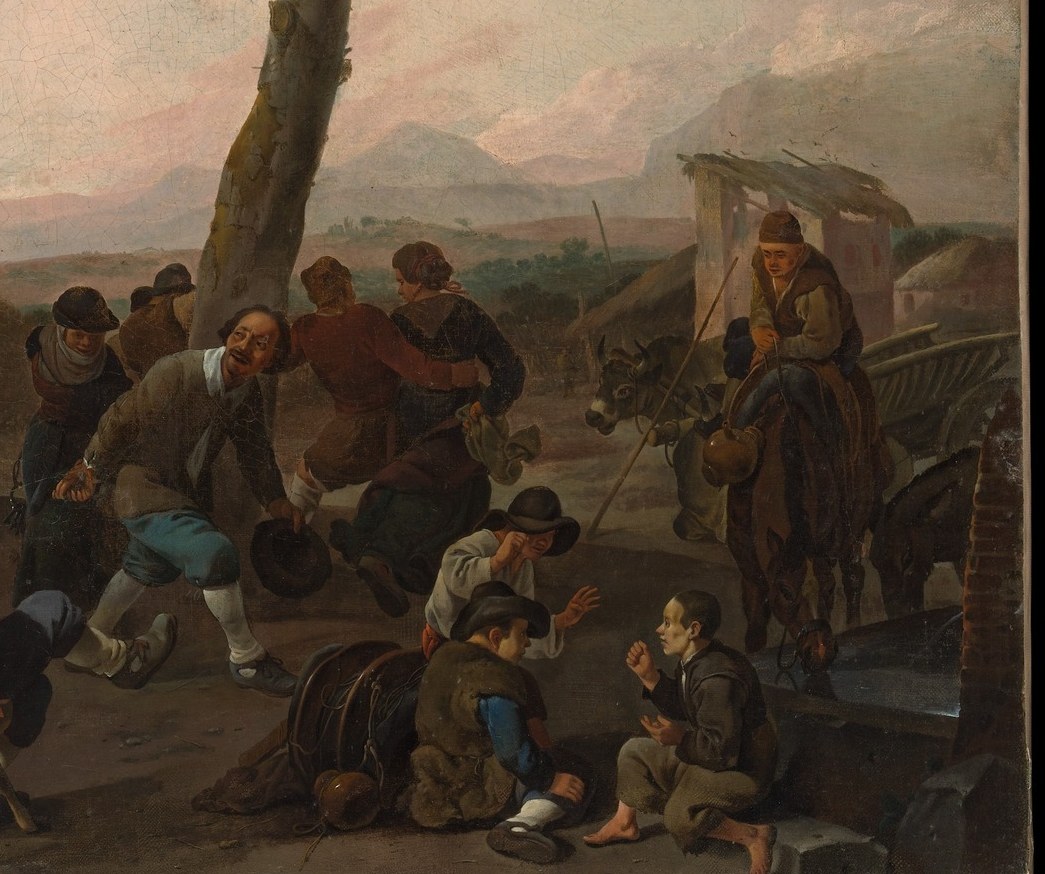
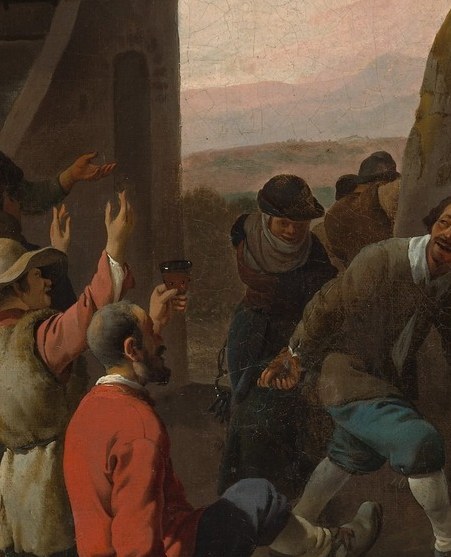
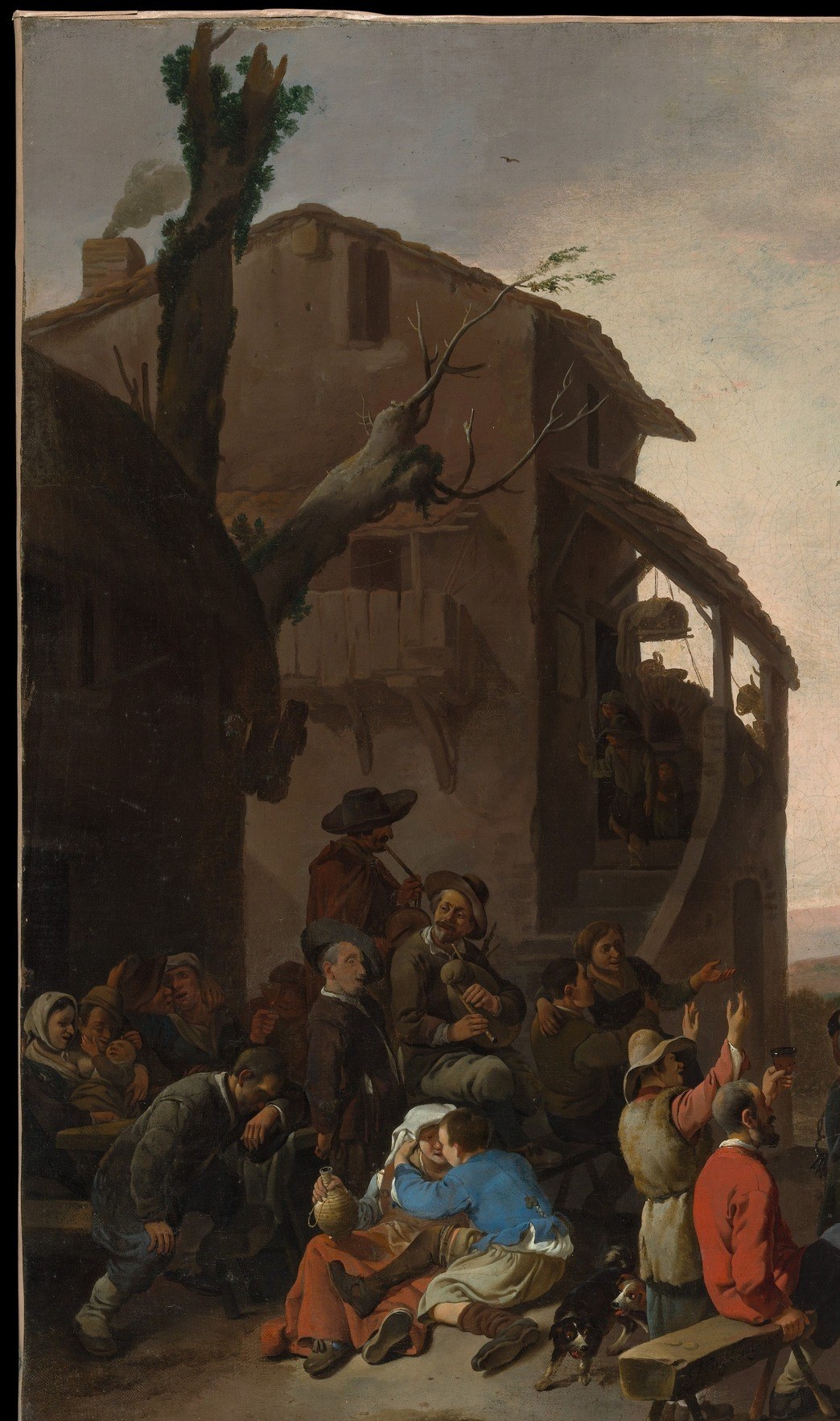
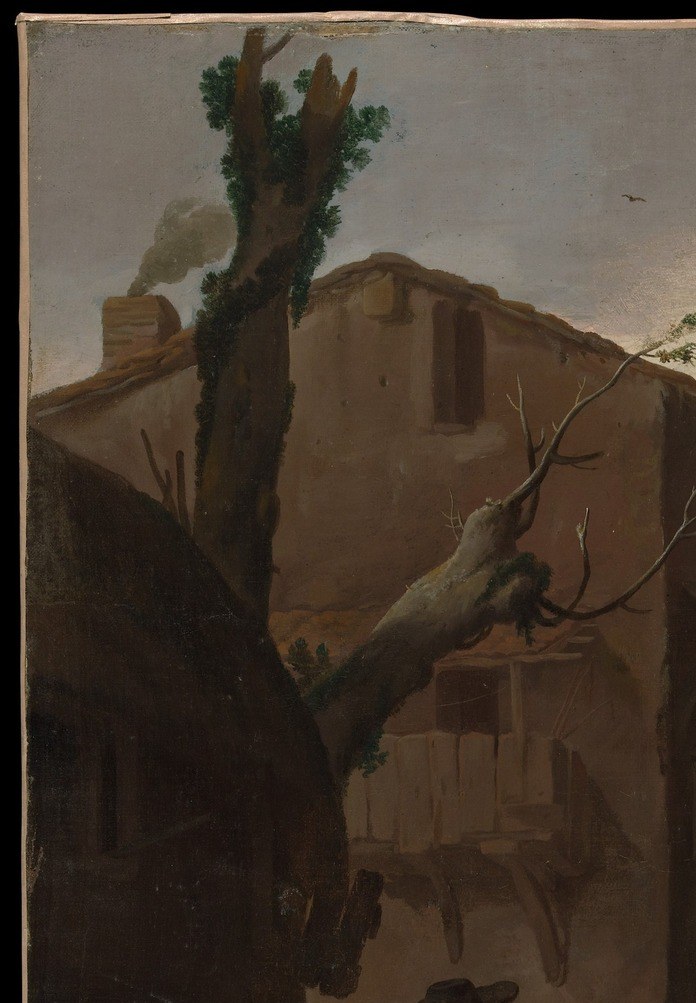
The crowd and the dancer in the red jacket pull your eye immediately, and the hazy golden Italian sky feels warm and inviting. That is the setup. The payoff is on the left side of the canvas, where a massive ruined stone building takes up nearly half the painting. From a distance it reads as a dark compositional anchor, but up close Lingelbach renders every pit and crumbling edge with thick, sculptural strokes of oil paint. The stone looks physically rough, eroded, three-dimensional, while the happy peasants are painted comparatively flat.
Lingelbach was part of the Bambocciate, a group of Dutch and Flemish genre painters living in Rome who specialized in scenes of everyday Italian life. They worked in the shadow of Pieter van Laer and brought a Northern eye for texture and detail to the Roman campagna. Lingelbach arrived in Rome in the late 1640s and stayed until 1650, producing market scenes, landscapes, and gatherings like this one. He eventually returned to Amsterdam, where he died in 1674.
The quiet magic of this painting is that the party is a reason to look, but the architecture is the reason to stay. A dancer in red grabs you from across the room. The wall makes you lean in and wonder how paint can feel like weathered stone.
Details
Transcript
Start with what you can see from a distance: a party outside Rome. The painter was Dutch, working in Italy around 1651. He makes sure you notice the brightest figure: a red jacket in the middle of the crowd. Now look at the other side. A ruined stone building fills the left half. This is where the real painting happens. Not a flat shape: crumbling, pitted stone. He built that wall with thick impasto. The paint itself has texture you can feel with your eyes.