Gulian Verplanck by John Wesley Jarvis
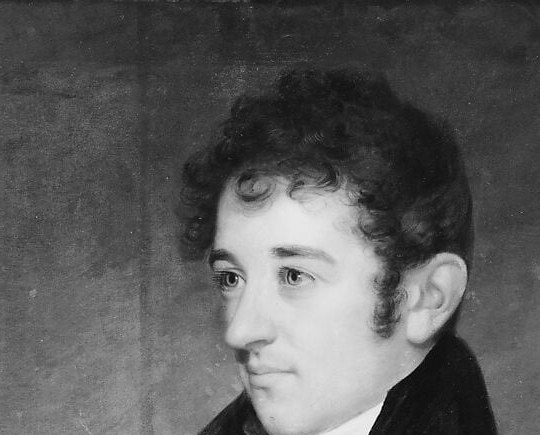
This is Gulian Verplanck, painted by John Wesley Jarvis around 1811 and now in the American Wing of the Metropolitan Museum of Art. At the time, Verplanck was a rising force in New York, a politician, a writer, and a public intellectual who had recently co-authored a major report on city governance. Jarvis captures him not as a distant statesman but as a man interrupted mid-task.
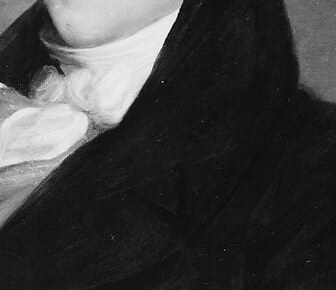
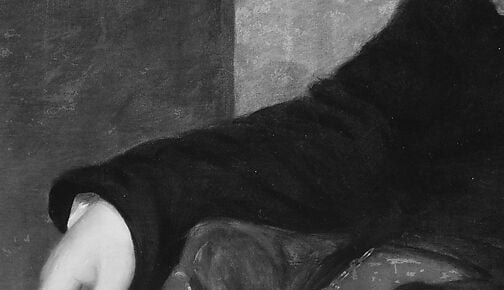
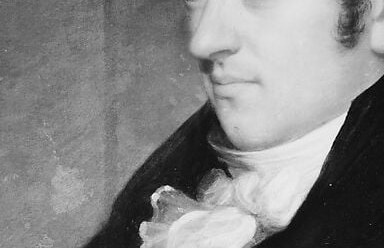
Look at the details: the quill held lightly in his right hand, the papers under his left. These are not generic studio props. They point to a specific moment in Verplanck's working life. The high white cravat and close-cropped hair date the portrait precisely to the early Federal period, when American gentlemen were crafting a visual identity distinct from their European counterparts.
John Wesley Jarvis was one of the busiest portraitists in early 19th-century New York. He trained under Edward Savage and later worked alongside Thomas Sully. His technique on this panel is economical, thin glazes of dark oil paint build the coat, while a soft, raking light on the forehead gives the sitter an almost moral luminosity. Jarvis wanted his subjects to look like thinkers.
There is a quiet confidence here. Verplanck's gaze is direct but unforced. He does not need to impress you, he has work to return to. The painting is a small witness to a moment when American portraiture stopped imitating Europe and started recording its own people, in their own rooms, with their own unfinished business on the desk.
Details
Transcript
New York, 1811. The young nation is finding its face. This is Gulian Verplanck. Politician. Writer. Man of letters. The quill is not a prop. He had just co-authored a major public report. His hand rests on the very document. The work is paused, not posed. His clothes date the moment: the high white cravat is pure 1811. The light falls on his brow, Jarvis's signature for intellectual glow. A face that expects to be taken seriously. The gaze of a public man.