Halsey's Bluff - Sioux Indians on the March by Catlin, George
George Catlin's "Halsey's Bluff - Sioux Indians on the March," painted in 1861, offers a glimpse into 19th-century Indigenous life in the American West. This oil on card, mounted on paperboard, is housed in a private collection.
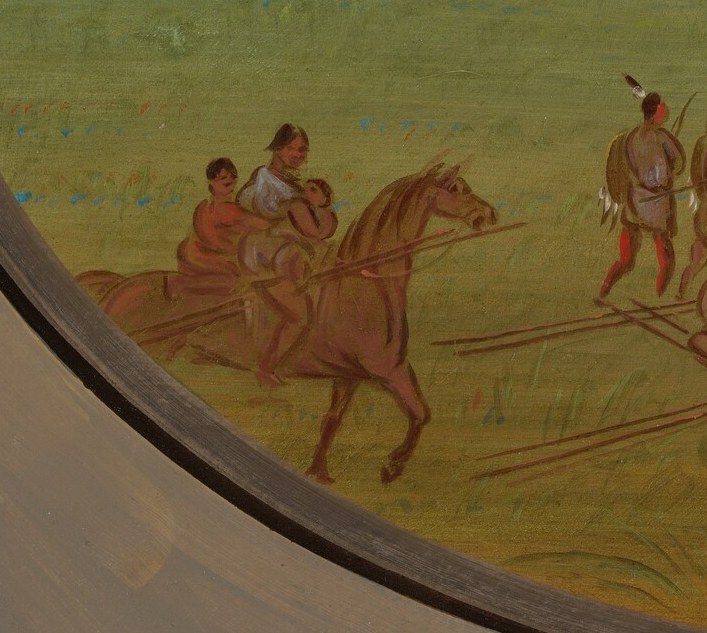
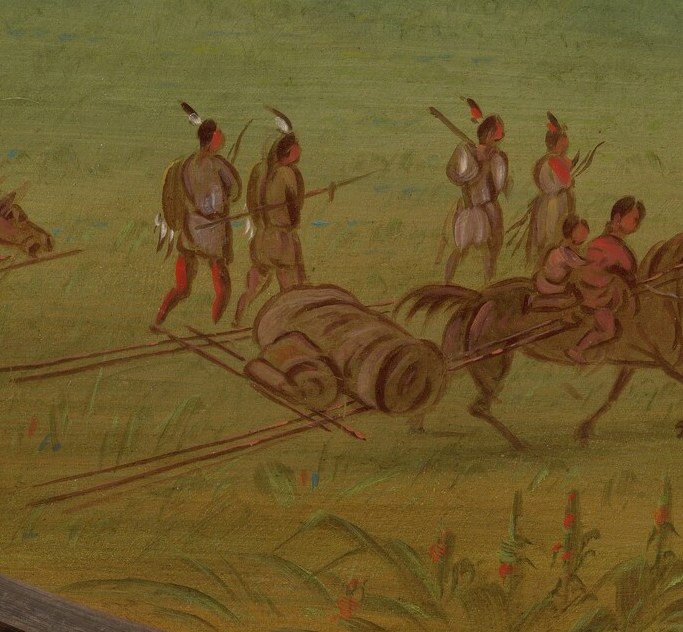
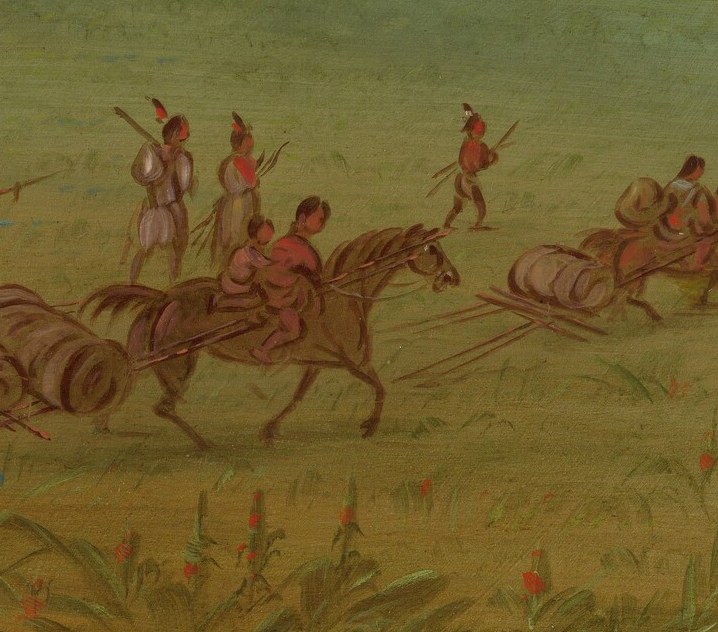
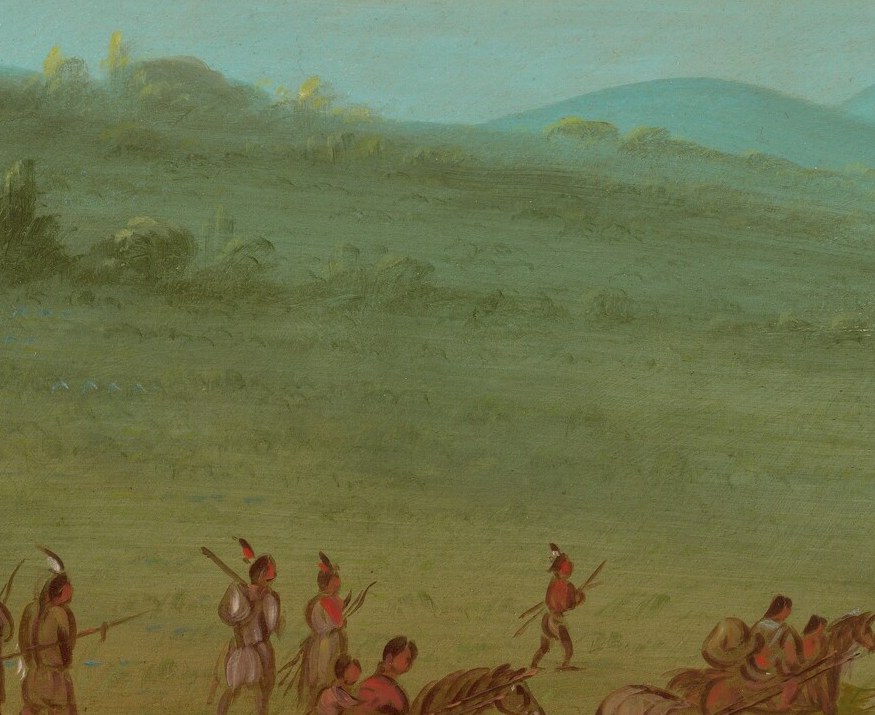
Look closely at the figures: a Sioux family on horseback, a man leading a horse and travois, and armed warriors. These details reveal the practicalities and purpose of their journey across the plains.
Catlin, a lawyer turned painter, embarked on five expeditions to the American West in the 1830s. He felt a profound urgency to document the customs and appearances of Native American tribes, believing their way of life was at risk of being lost forever. This painting, created later in his career, reflects his sustained commitment to creating a visual archive of Indigenous cultures.
What details in this painting draw your eye the most?
Details
Transcript
This painter spent decades documenting Native American life. He traveled the American West five times in the 1830s. Here, a Sioux family on horseback leads a long journey. A man guides a horse pulling a travois, a common transport. Armed warriors move with purpose, perhaps for defense or hunting. These scenes aimed to present Indigenous life authentically. He dedicated his career to capturing these cultures before they changed.