The Alling Children by Oliver Tarbell Eddy
The Alling Children, painted by Oliver Tarbell Eddy around 1839, is a group portrait that feels less like a formal commission and more like a candid snapshot of childhood boredom. The painting lives at the intersection of folk art and early American realism, and its power is in the faces.
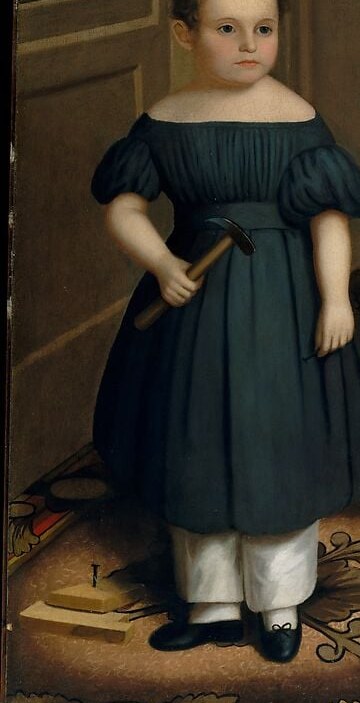
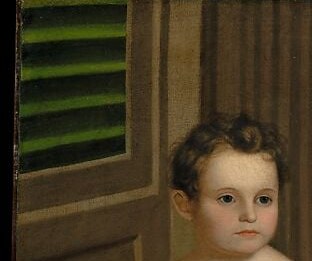
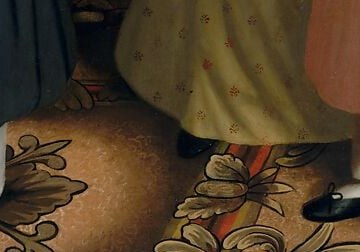
Look at the boy on the left. His round cheeks and direct stare are the universal look of a child who has been told, too many times, to sit still. The eldest girl, in pink, is beginning to master the art of composure. The toddler holds the family cat, the only creature in the scene with any visible energy. Its tail curls upward, the single most animated line in a painting full of forced stillness.
Eddy was a traveling portrait painter working in an era when most children were painted as miniature adults. Here, he gives us something rarer: four distinct personalities simmering beneath the Sunday clothes. The props, the handkerchief, the dark gown-like boy's outfit typical before 'breeching' age, anchor the work in its 1830s moment, but the expressions are timeless.
What do you notice in the boy's face? Impatience, defiance, or just the long, slow weight of a sitting that felt like forever?
Details


Transcript
In 1839, having your portrait painted was an ordeal. You wore your stiffest Sunday clothes and you did not move. This boy is barely old enough to stand still. His eyes say exactly what he thinks of the whole enterprise. But one living creature refused to cooperate. The painter let the cat's tail stay kinetic, a small act of mercy. Oliver Tarbell Eddy, a traveling portraitist, captured children as they were. Not ideals. Just four tired kids in a room, fighting boredom.