The Virgin and Child adored by Saint Louis, King of France by Claudio Coello
The Virgin and Child adored by Saint Louis, King of France by Claudio Coello (c. 1665) at the Museo del Prado. Despite its pious subject, the painting sparked quiet controversy upon its creation. Debates arose not from scandal but from perceived nuances in iconography that challenged established norms.
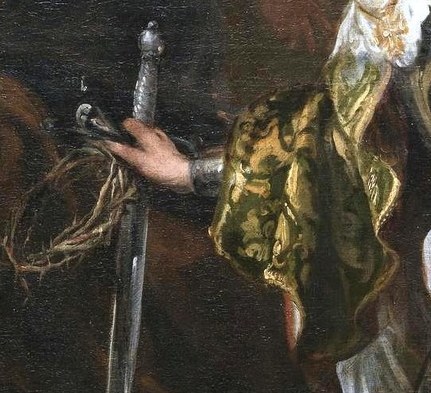
Look closely at Saint Louis. His armored chest signifies his role as a warrior king, while his right hand clutches his sword hilt, a gesture of presenting his submission to divine authority. Notice the fallen crown, a potent symbol of his renunciation of earthly power.
Claudio Coello, court painter to Charles II, created this oil masterpiece in 1665. He was renowned for his religious works adorning churches and royal palaces. Coello is remembered as the last great Spanish painter of the 17th century.
This painting exemplifies the complex interplay between artistic expression and the strictures of religious patronage in Baroque Spain.
Details
Transcript
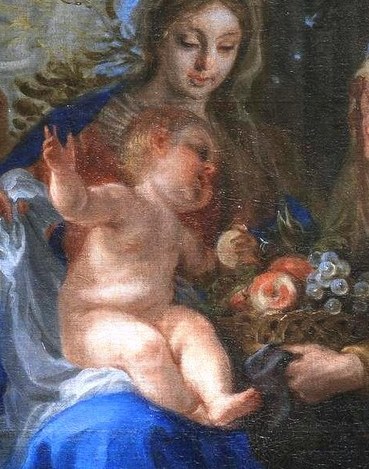
The Virgin Mary cradles the Christ Child. He is offered to Saint Louis, King of France. Louis's hand holds his sword hilt tight. This gesture showed his submission to divine authority. A fallen crown signifies renounced earthly power. Claudio Coello painted this in 1665. His work often adorned churches and royal sites. The painter was considered the last great Spanish master.