The Archangel Gabriel by Masolino da Panicale
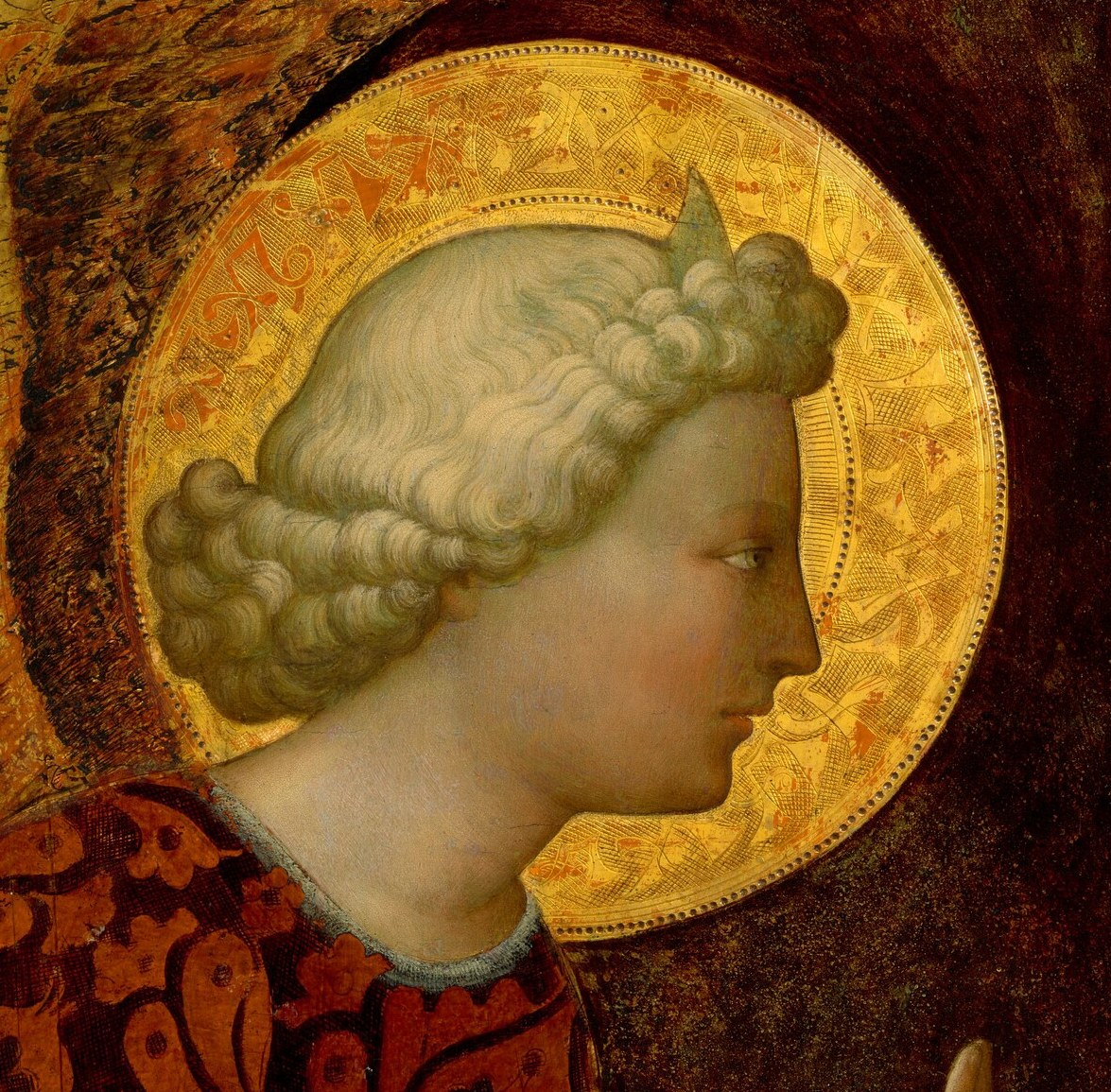
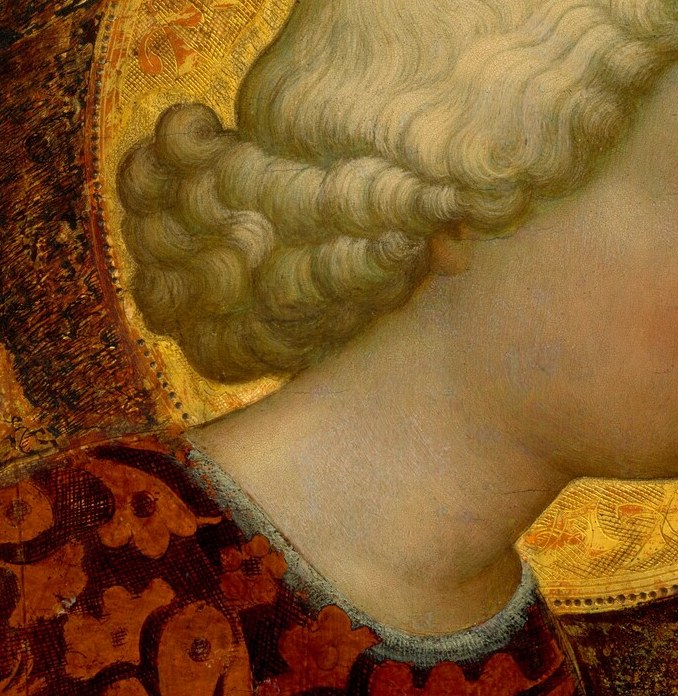
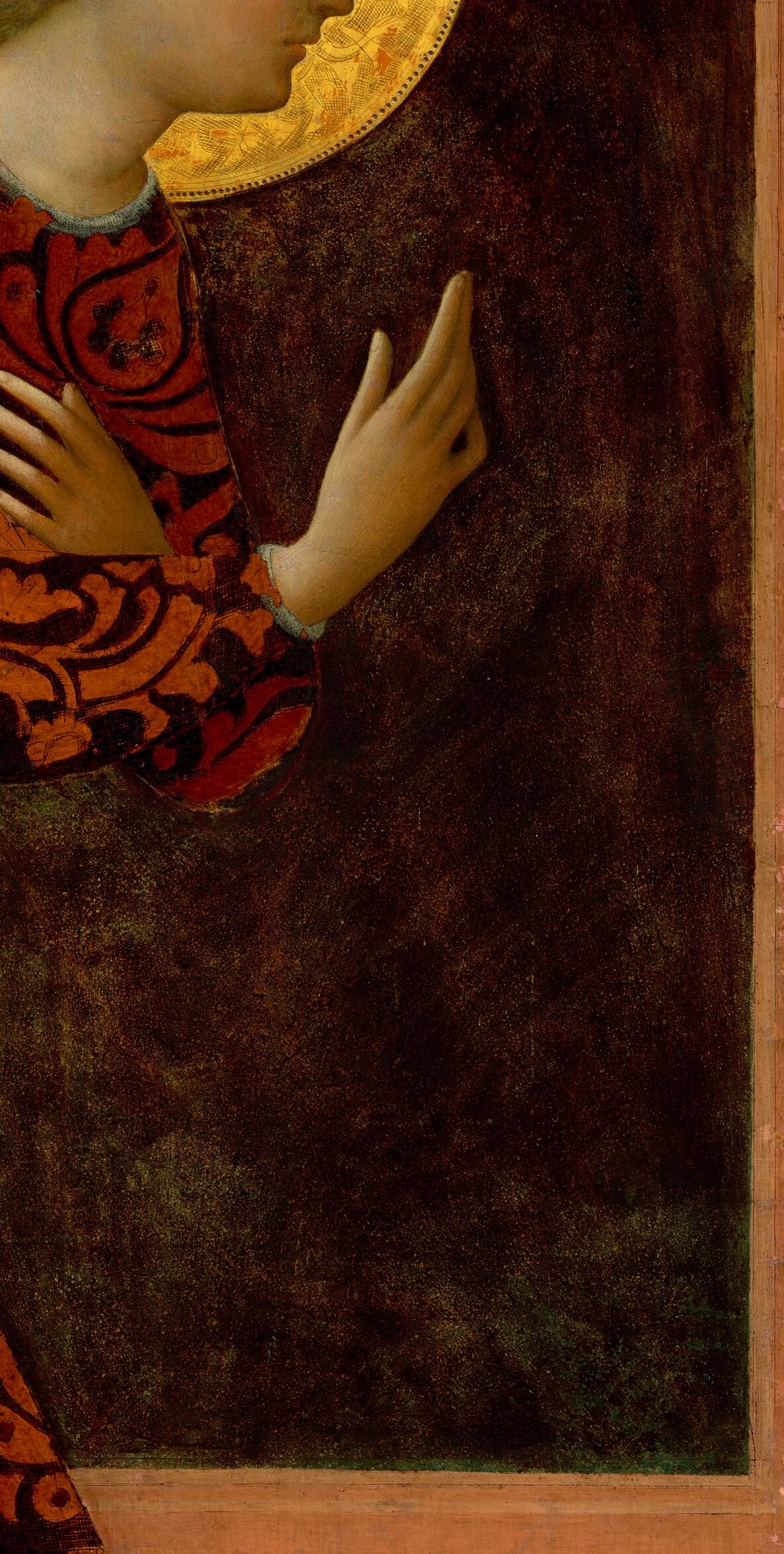
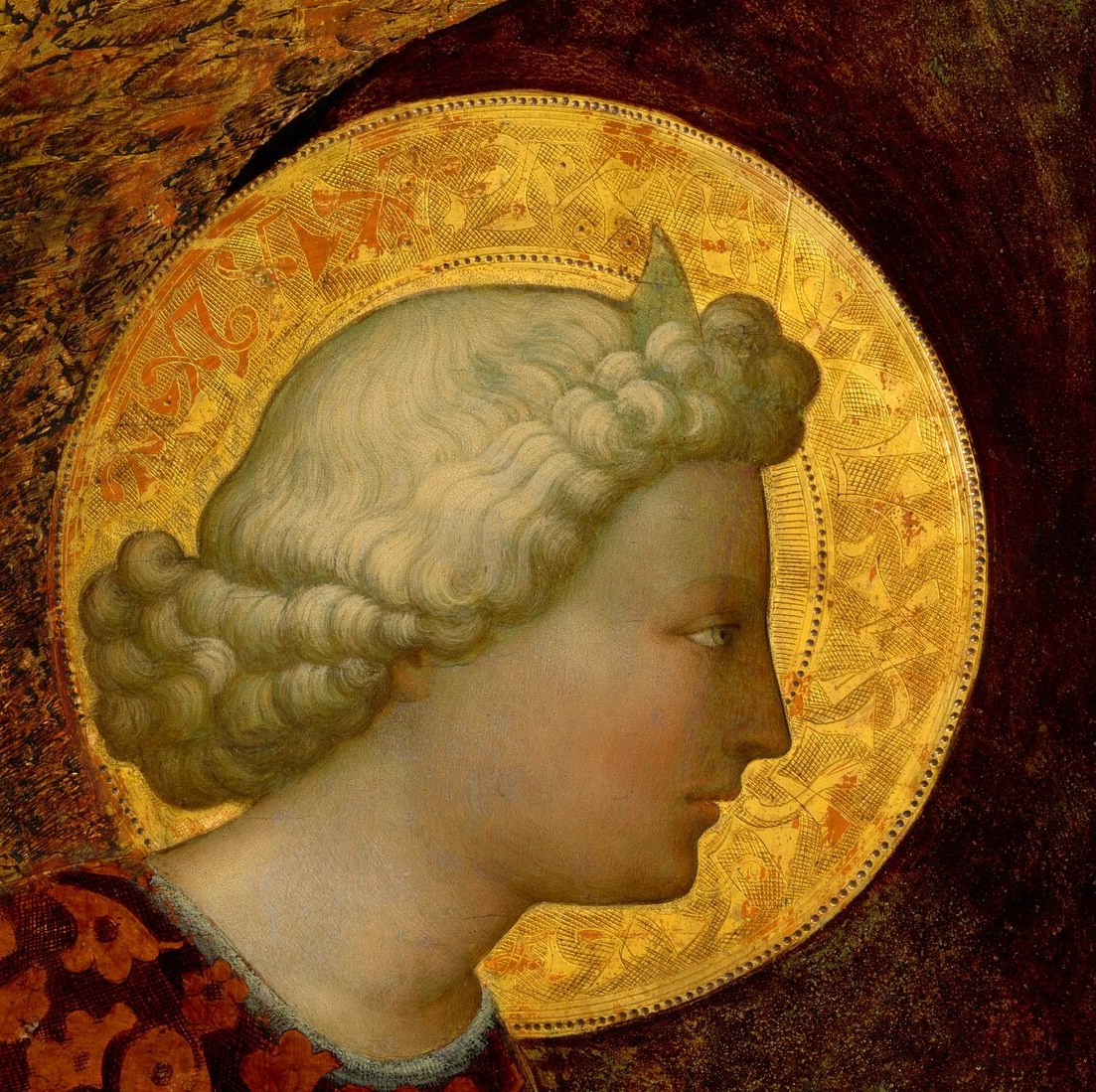
In "The Archangel Gabriel," painted by Masolino da Panicale around 1430, a closer look reveals more than meets the eye. This tempera on poplar panel, housed in a museum, depicts the celestial messenger with a serene demeanor and elaborate attire.
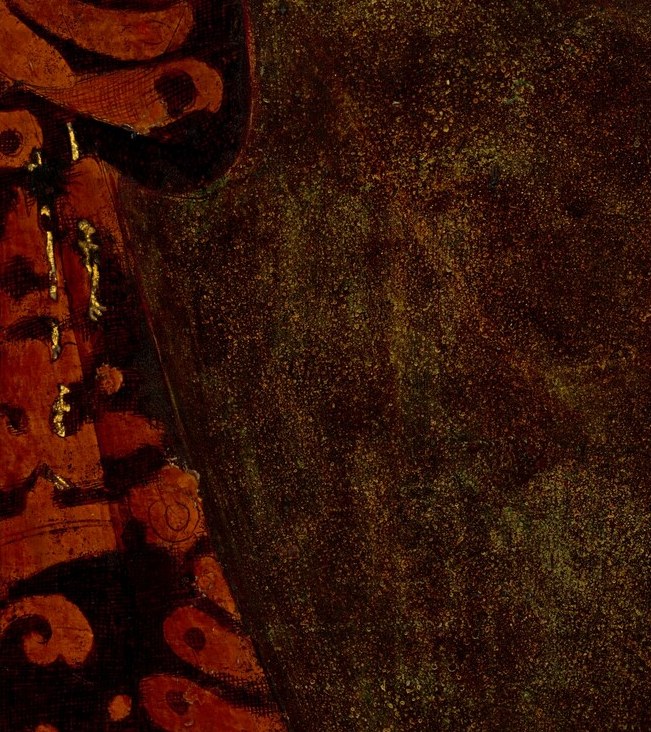
While the intricate patterns on Gabriel's red robe and the delicate rendering of his features are immediately captivating, the background holds a subtle surprise. What appears to be a textured, dark wall is actually rendered with gold, subtly highlighting Gabriel's divine presence.
Masolino da Panicale was an early Renaissance artist, known for his softer edges and gentle colors. He often worked on commissions for churches, using tempera, a medium that allowed for precise details in figures and fabrics. This painting showcases his characteristic quiet beauty and attention to detail.
Masolino, who often finished other artists' projects, had a unique way of making figures feel both grounded and otherworldly. What other details do you notice in his work?
Details
Transcript
This is Archangel Gabriel, announcing his divine message. Masolino da Panicale painted it around 1430. He used tempera paint, in thin, quick-drying layers. Notice the rich, swirling pattern on his red robe. But look closely at the dark background wall. Its texture is made of gold, not just paint.