Allegory of Government: Wisdom Defeating Discord by Jacob de Wit
This is Jacob de Wit's Allegory of Government: Wisdom Defeating Discord, painted in 1734 and now at The Metropolitan Museum of Art. It was not made for a church or a palace gallery. It was commissioned as a ceiling piece for a government hall in Amsterdam, where the city's most powerful merchants and regents would stand beneath it and conduct the business of the Dutch Republic.
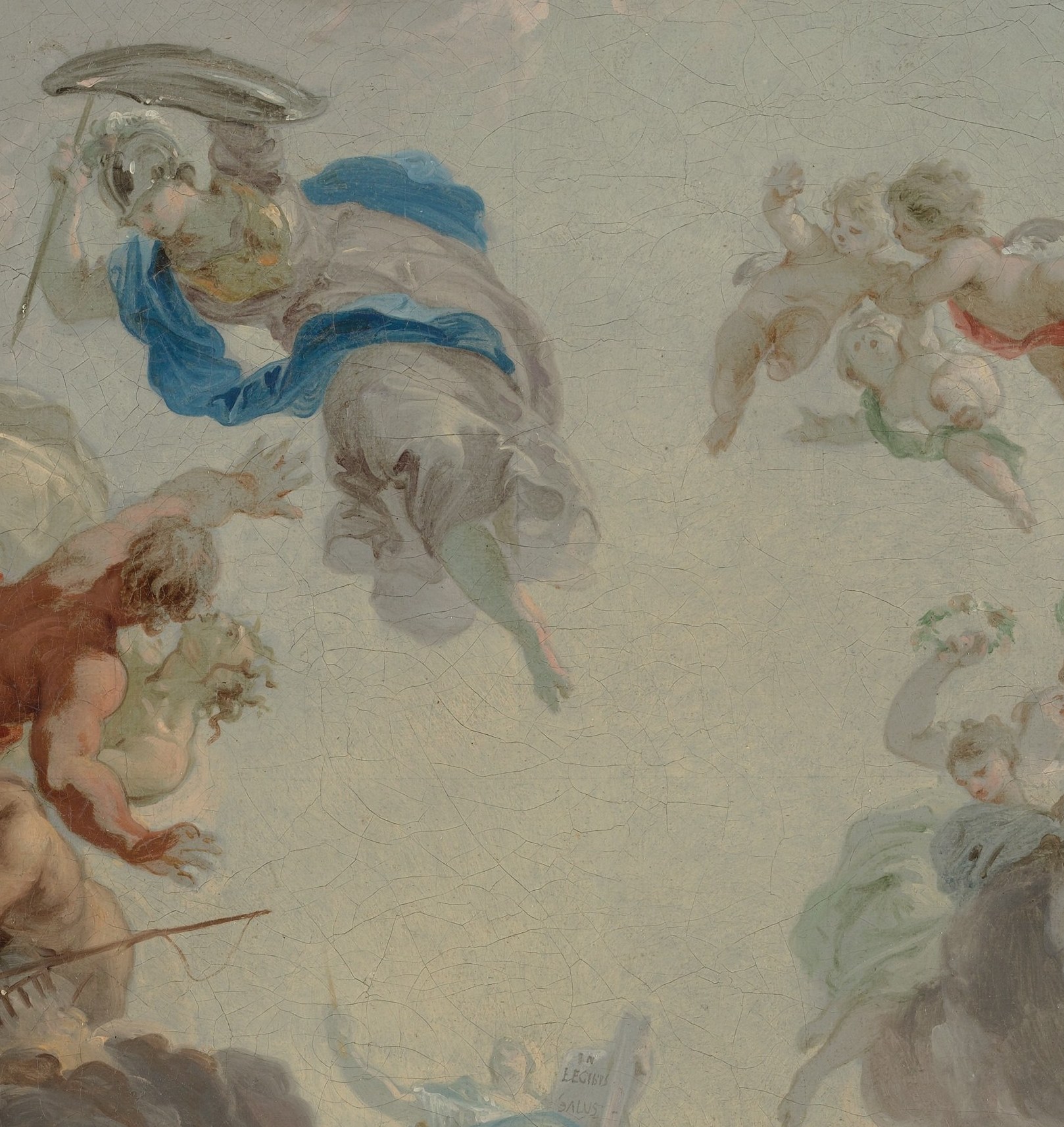
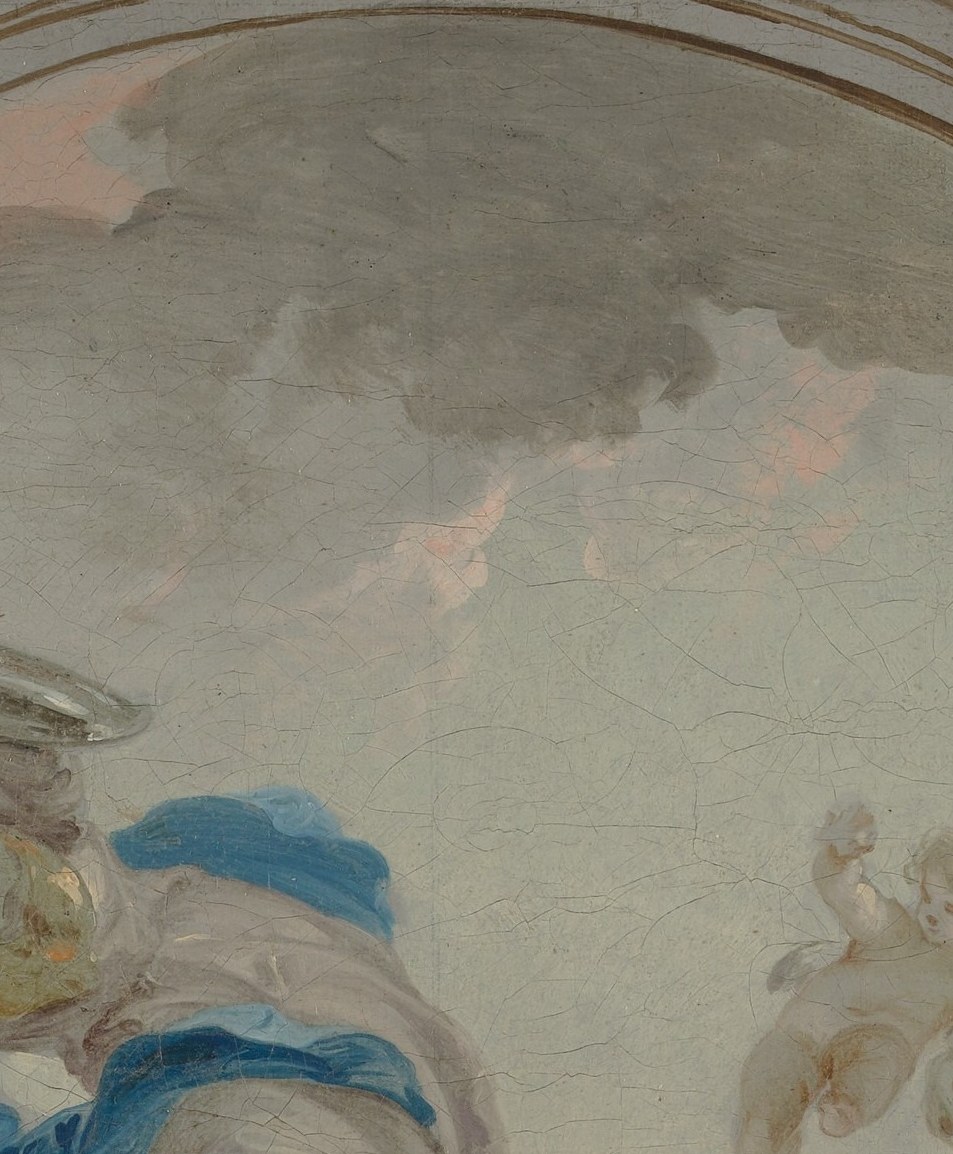
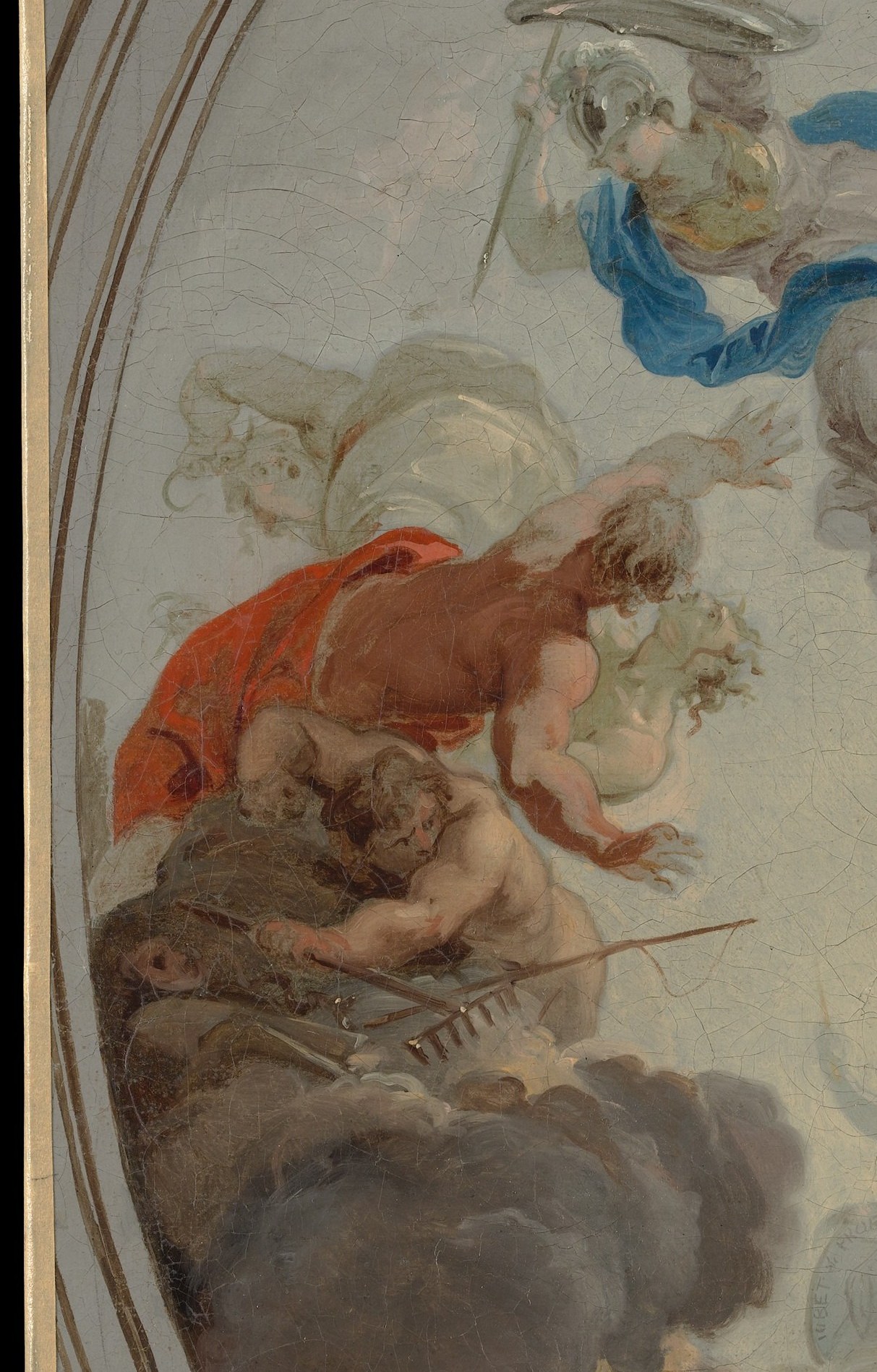
Look first at the radiant opening at the center. De Wit was a master of quadratura, the art of painting architectural illusion on a flat surface. That golden light is not real, but it is designed to make you feel you are standing under an open oculus. Now find the blue-plumed figure at the apex. That is Minerva, Wisdom, holding a mirror. She is not passively contemplating truth; she is actively driving Discord downward. The writhing figure in hot red beneath her is the personification of political chaos. De Wit made the moral structure of the whole composition legible from any angle below: light over dark, blue over red, order over disorder.
Jacob de Wit was Amsterdam's preeminent interior decorator in the early 18th century, known for his religious scenes and his uncanny ability to make oil paint read as stone relief or open sky. Allegories of good government were a long tradition in Dutch civic spaces, a visual contract between power and the people who must trust it. This painting hung where laws were debated. Its message was not subtle. Every regent who looked up saw Wisdom triumphant and Discord in rout, and everyone understood which side they were meant to be on.
A painting that once presided over the actual machinery of government now hangs in a museum. But the question it asks has not aged a day: what happens when the people in the room forget the allegory above their heads?
Details

Transcript
It looks like a fresco on a palace ceiling. But this was painted on canvas, for a government hall in Amsterdam. Jacob de Wit was the city's master of painted illusion. He floods the center with light to make flat canvas feel like an open sky. At the apex, a figure in blue. Wisdom, armored with a mirror and a plumed helmet. She drives down a figure in violent red: Discord, her rival. The city's merchants and regents stood under this painting every day. It was not decoration. It was a warning.