Two Wings of a Triptych with the Donor, Thomas Isaacq, accompanied by Saint Thomas (left, outer wing), and the Donor's Wife accompanied by Saint Margaret (right, outer wing) by Master of the Legend of the Magdalene
These two panels, painted around 1507 by the anonymous Master of the Legend of the Magdalene, offer a fascinating glimpse into early 16th-century life and devotional practices. Originally parts of a larger triptych, they depict the donor Thomas Isaacq with Saint Thomas and his wife with Saint Margaret.
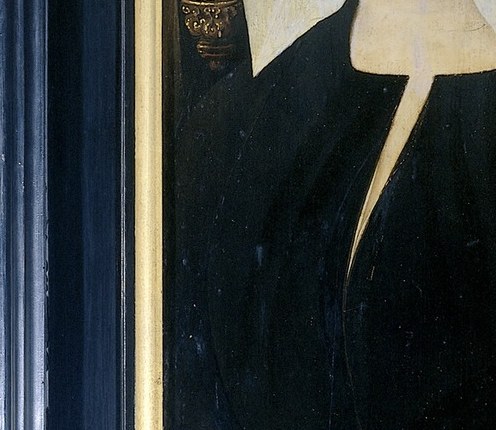
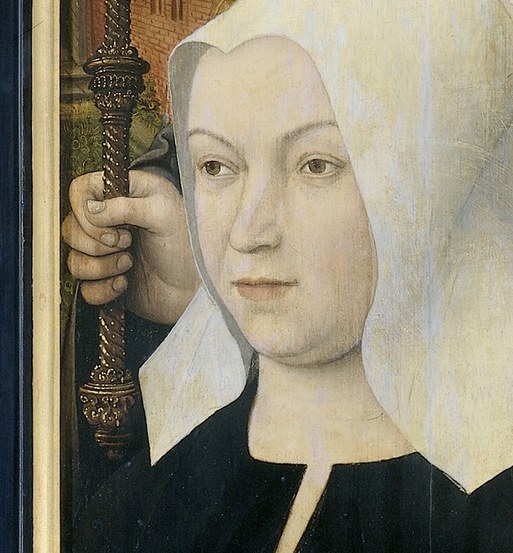
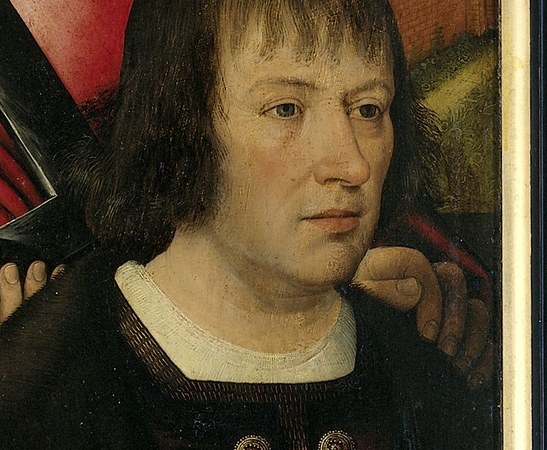
Notice the meticulously rendered clothing, which reflects the fashion of the Low Countries in the early 1500s. From Thomas Isaacq's dark, rich garment to his wife's crisp white veil, these details not only showcase the artist's skill but also provide historical context for the figures.
Donor portraits like these were common in the Northern Renaissance, allowing patrons to visibly align themselves with spiritual virtues and assert their social status through their chosen saints. This work captures the blend of the sacred and the contemporary, placing its holy figures within a recognizably earthly setting.
What other subtle details do you notice that speak to the era?
Details
Transcript
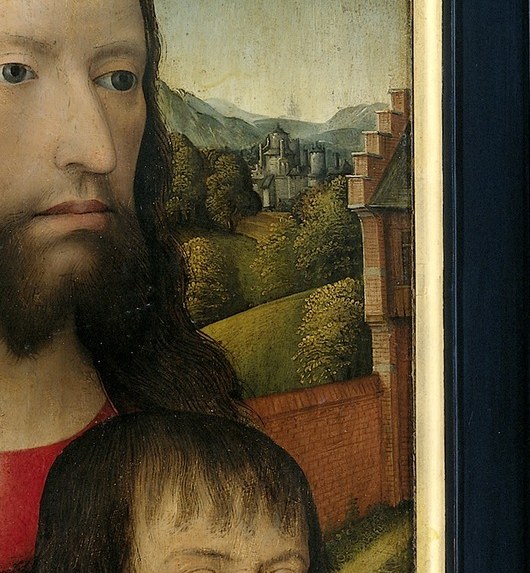
These are two wings of a triptych, painted around 1507. The panels show a donor and his wife with their patron saints. The inscription states this is from the 'First Half 16th Century'. They are dressed in the fashion of early 1500s Low Countries. Her white veil, for instance, shows contemporary fabric and style. The distant town in the landscape hints at the world outside. These commissioned portraits linked patrons to holy figures, then as now.