Portrait of a Woman by Jean-Baptiste Isabey (French, 1767–1855)
View the artwork: Portrait of a Woman →
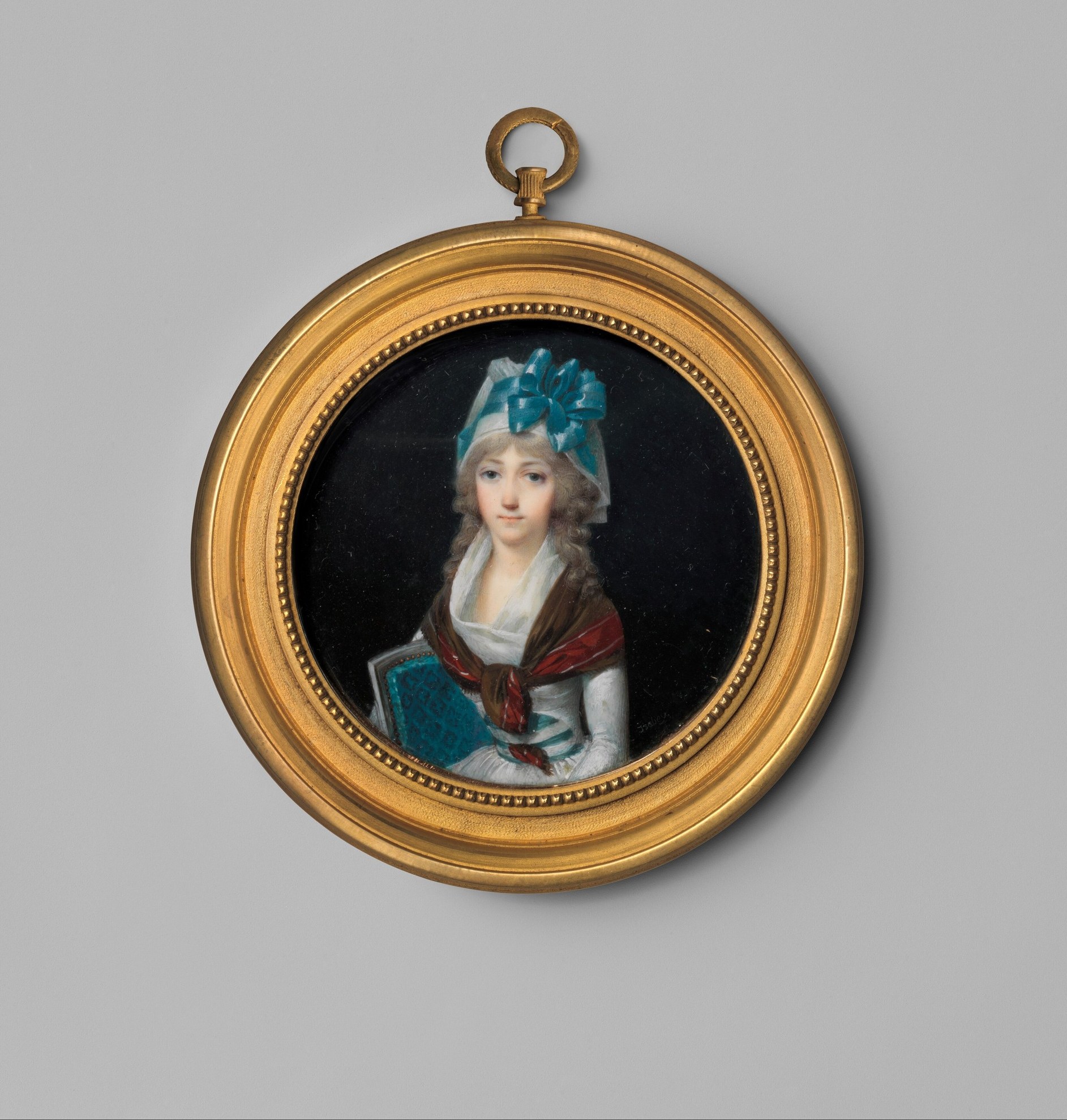
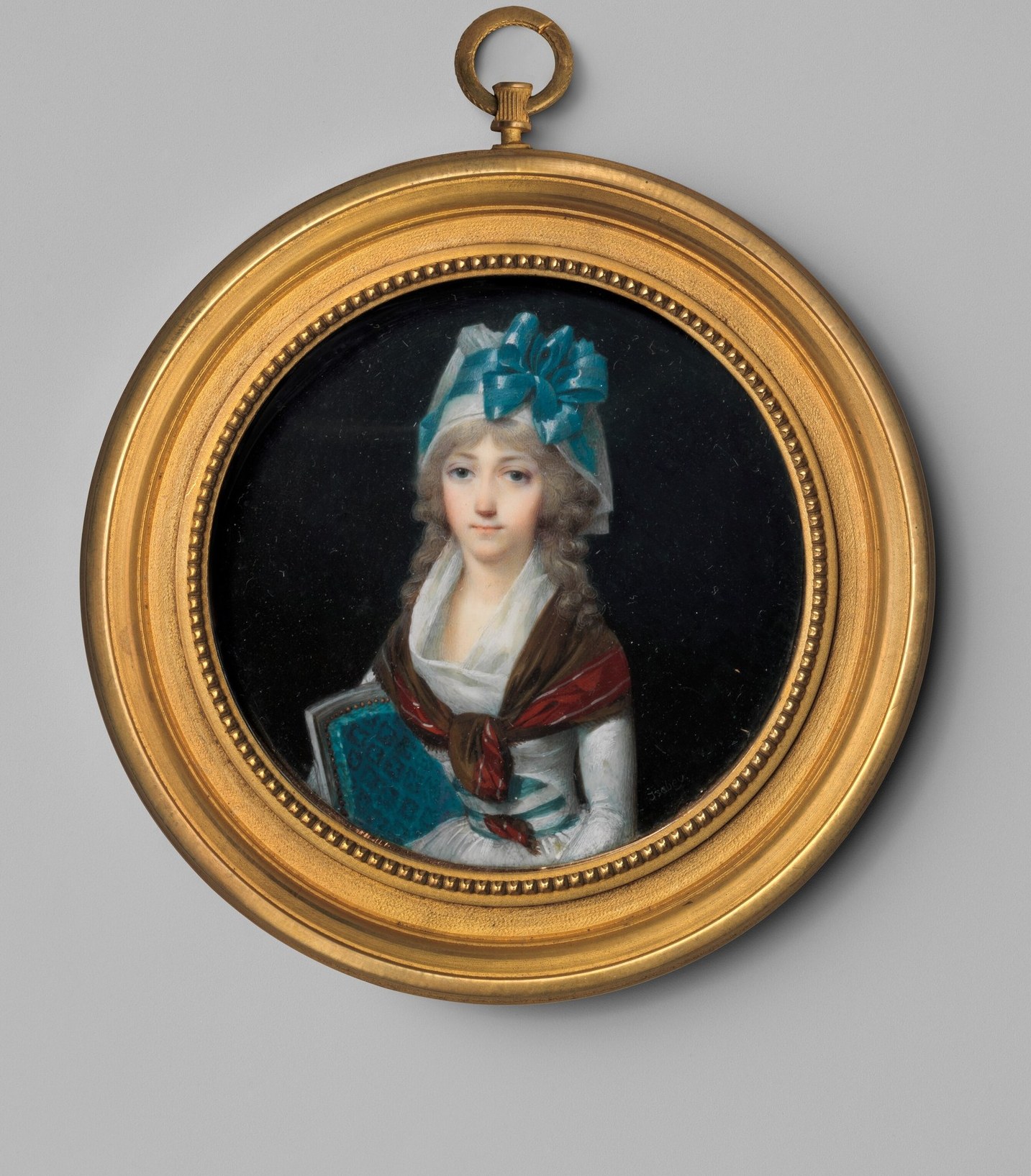
This is Jean-Baptiste Isabey's "Portrait of a Woman," painted around 1795 and now at the Metropolitan Museum of Art. It measures just 73 millimeters across, smaller than a teacup, yet it tells us exactly what the first days after the French Revolution looked like.
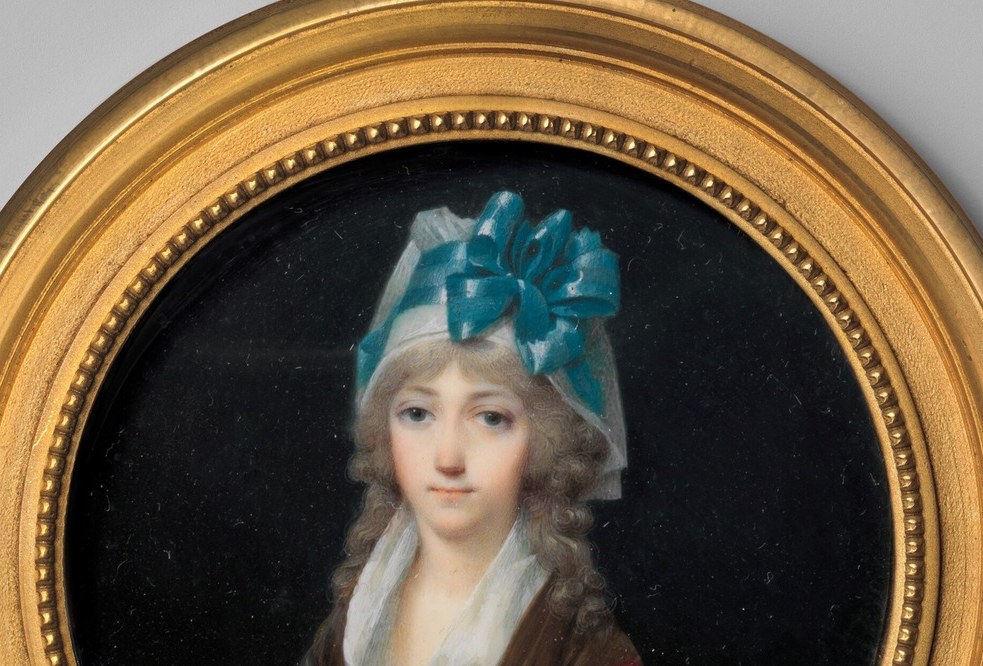
Look at the blue feathered headdress. That is pure Directory fashion, datable to a narrow window between 1794 and 1796, when France swung from the powdered wigs of the ancien régime toward lighter, neo-antique ornament. Her hair is powdered too, but just barely, powder was already going out. The portrait sits precisely on the hinge between two worlds.
Isabey had painted snuffboxes for Marie Antoinette. He survived the Terror by making himself indispensable to whoever held power, eventually designing Napoleon's coronation regalia. In 1795, though, he painted this unknown woman on a thin ivory disk, one of the first artists to exploit ivory's warm translucency for skin tones impossible on vellum.
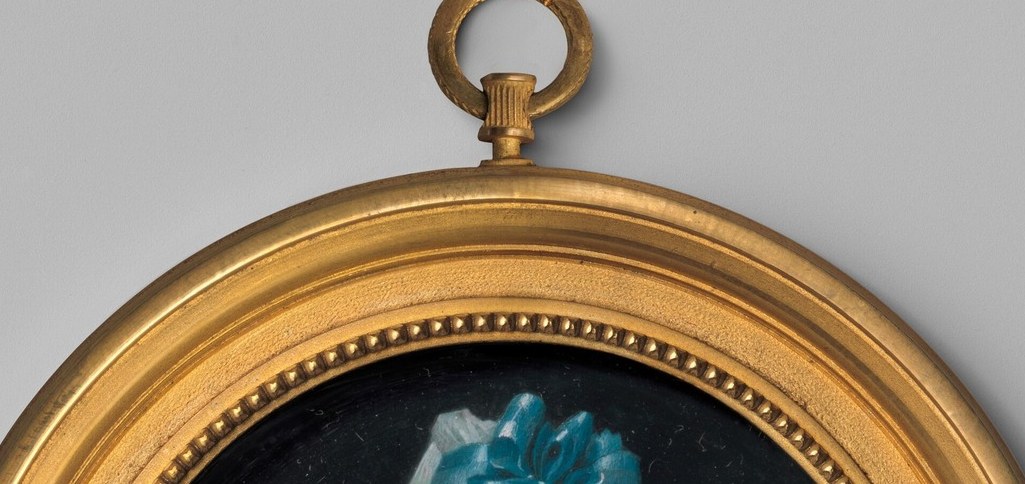
We do not know who she was. The gold suspension loop at the top tells us the miniature was worn, hung on a chain, probably as a love token or diplomatic gift, her identity known only to its recipient. That direct, unsmiling gaze has held its secret for over two centuries.
#arthistory #miniatureportrait #isabey
Details
Transcript
France, 1795. The Revolution is over, but no one knows what comes next. This woman wears the answer. Her blue feathered cap is pure Directory fashion, dated precisely to 1794-96. Her powdered hair was already going out of style. This is the hinge between two Frances. The painter worked for Marie Antoinette. He survived the Terror and painted this instead. She looks directly at you. Most sitters of the time looked away. The gold loop at the top means this was worn, not hung, a gift meant for one person only.