The Juniata, Evening by Moran, Thomas
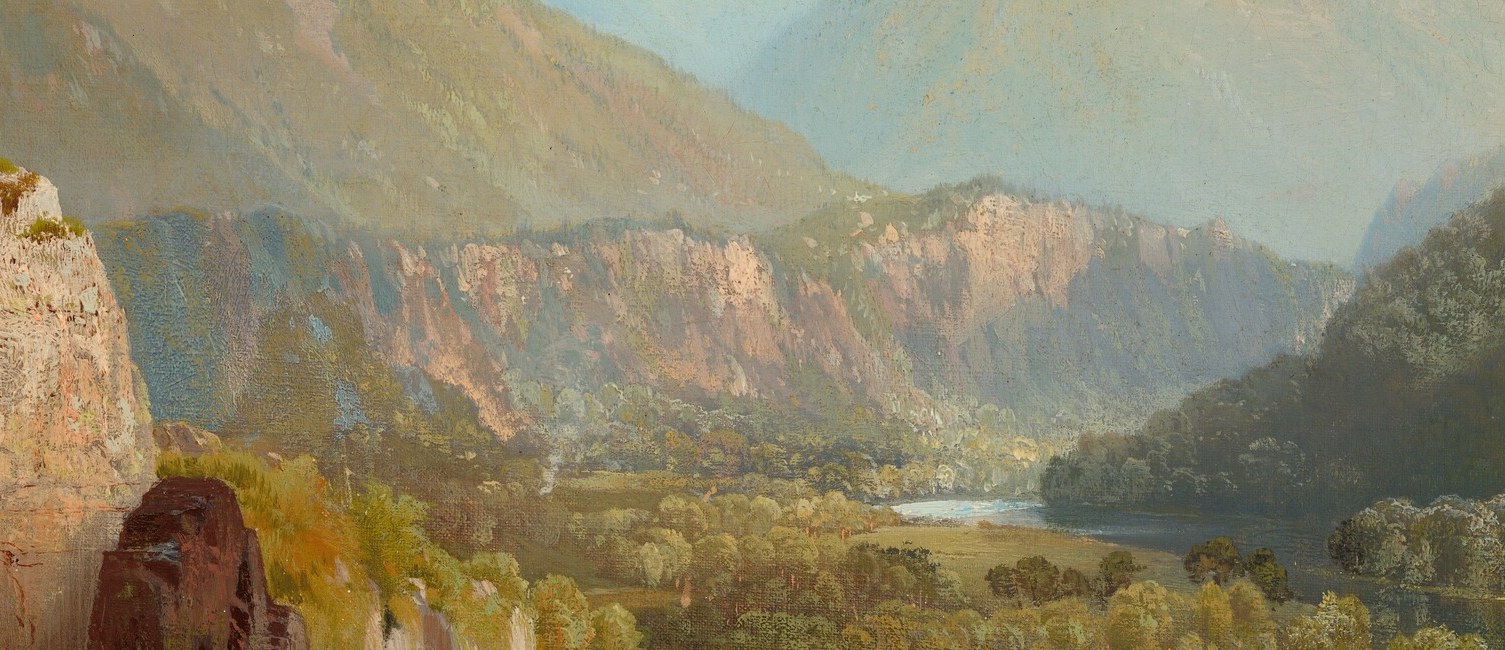
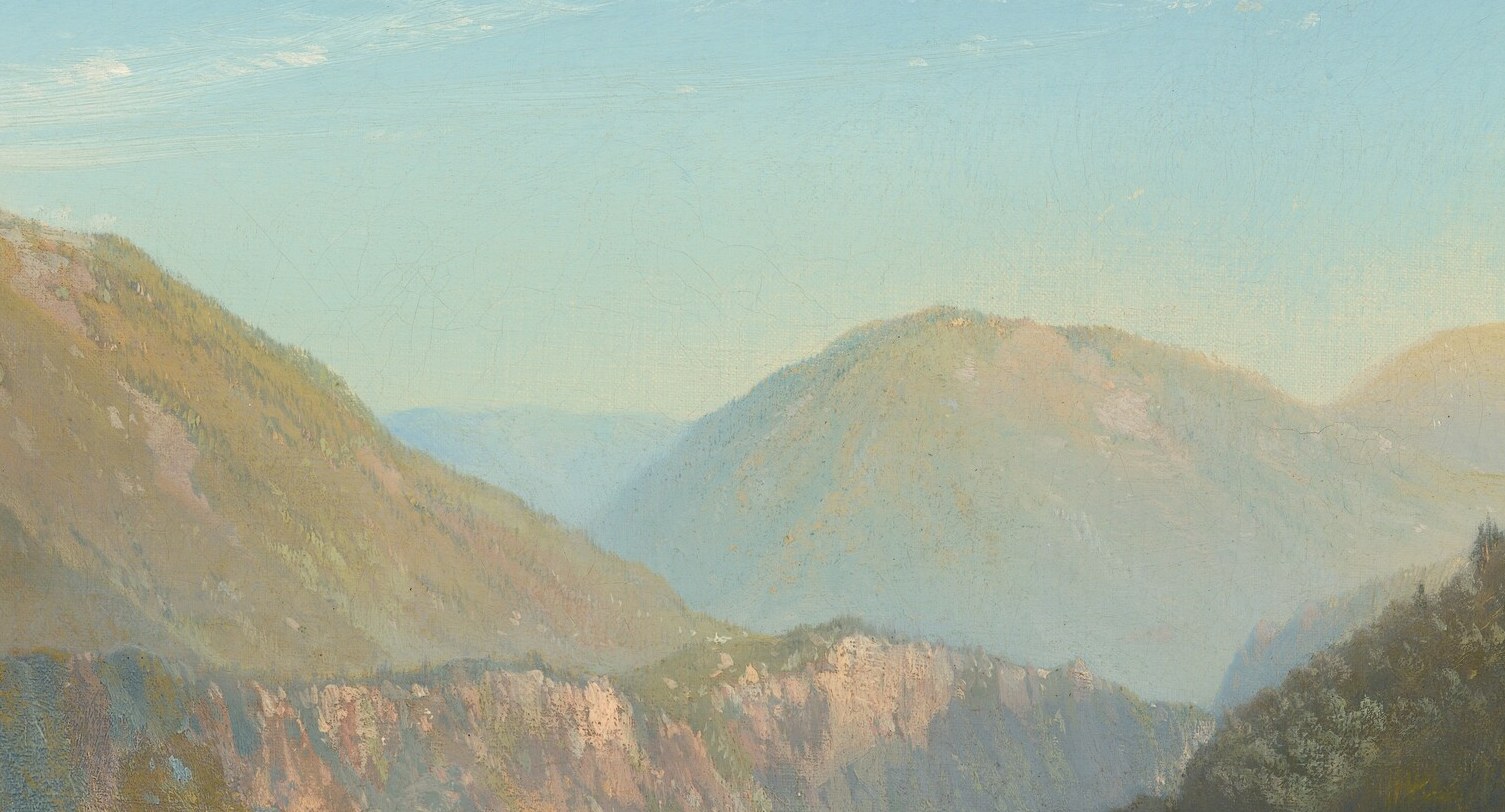
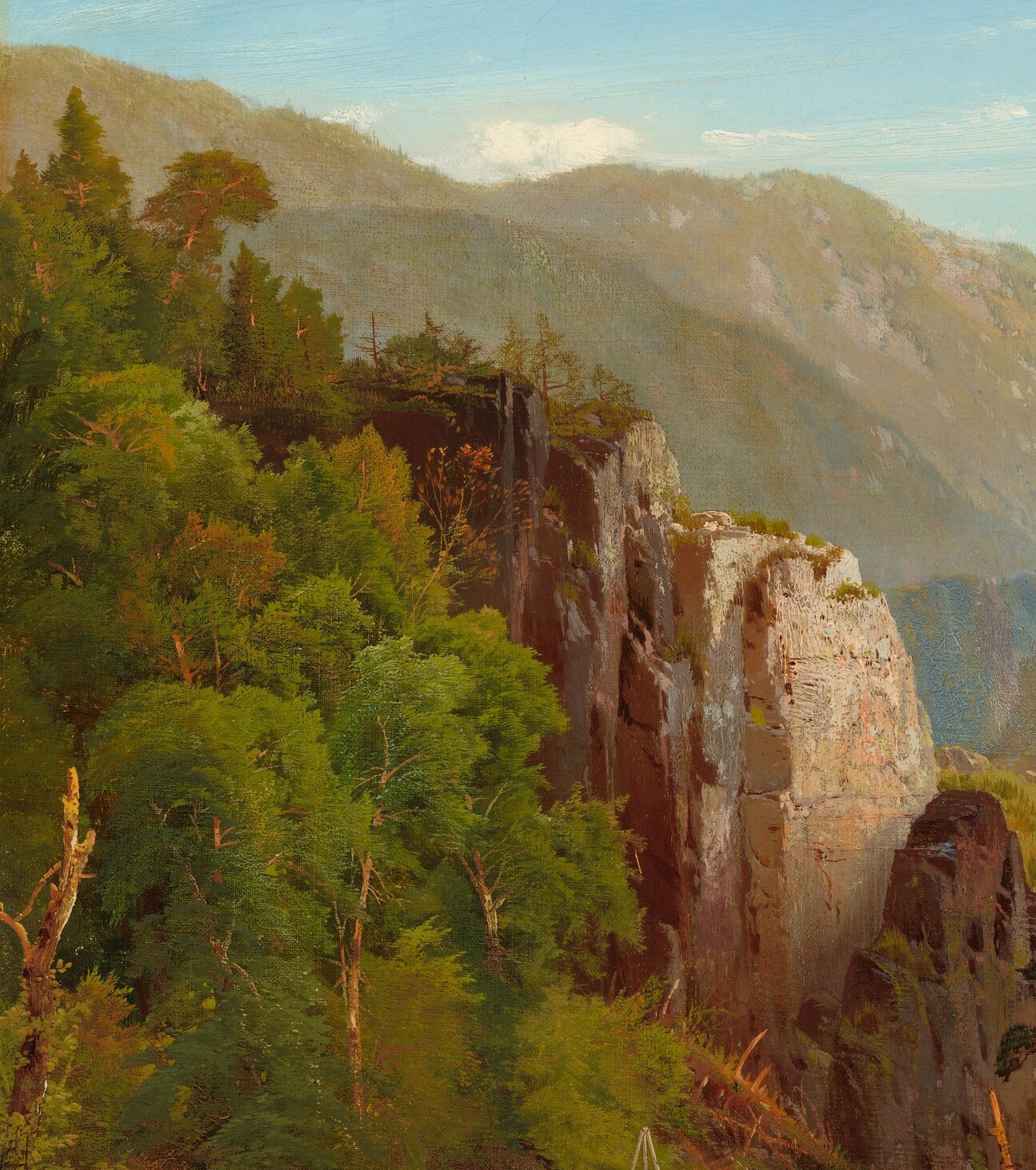
The Juniata, Evening by Thomas Moran, 1864, hangs in the collection of the National Gallery of Art. It is a Hudson River School landscape painted before the artist ever saw the Rocky Mountains, the subject he would eventually become famous for.
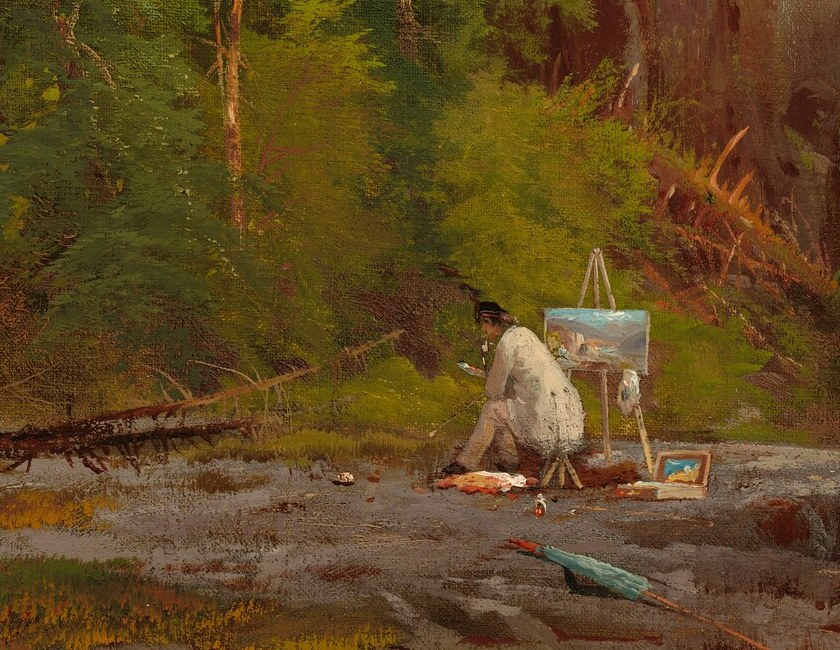
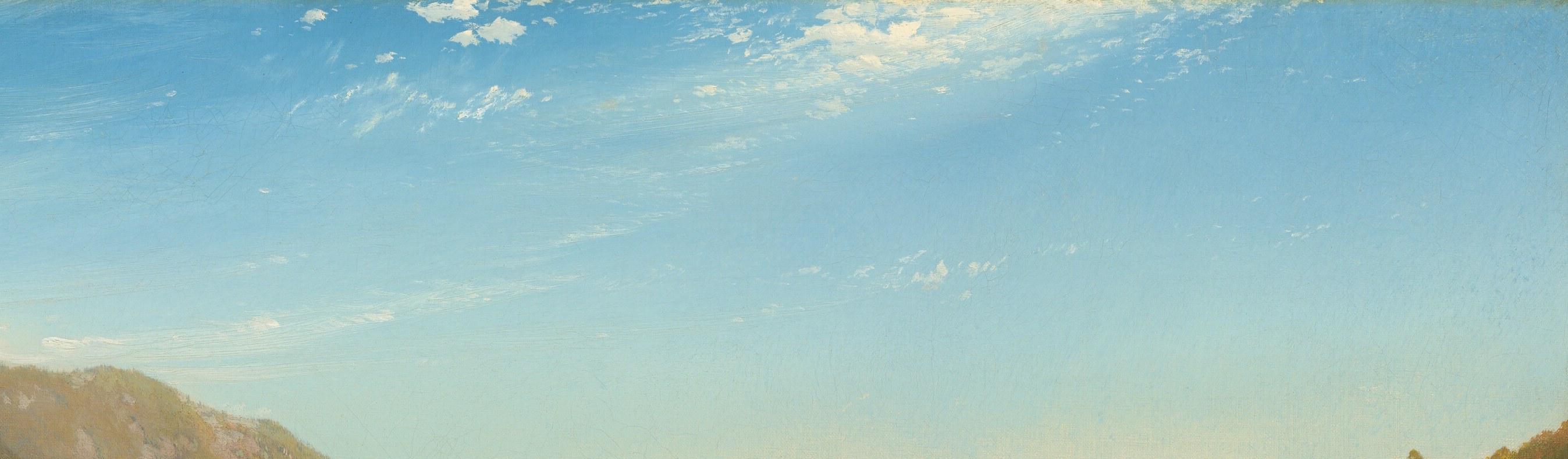
Look first at the luminous gap in the mountains where the sky burns through. Moran pooled his most brilliant paint in that one passage, and the entire composition tugs the eye toward it. Then let your gaze drop to the river winding through the valley floor, and finally to the shadow beneath the left cliff, where a ruined stone arch and two tiny figures barely register against the rock.
Moran was twenty-seven when he painted this, still working as a commercial illustrator in New York. The Civil War was in its third year. While some Hudson River painters turned toward national allegory, Moran went quiet, a specific river in central Pennsylvania, a specific time of day, a landscape already fading into memory as the railroads pushed in.
In 1924, two years before the artist's death, this large canvas was recorded selling at auction for seventy-five dollars. Today a major Moran western landscape can reach eight figures. But this painting is the document of what he knew how to do before he ever went west.
Details
Transcript
Before he painted the Rockies, Thomas Moran painted this. 1864. The Civil War was still burning. He stayed in Pennsylvania. The Juniata River catches the last heat of the evening. His light pools exactly where the mountain walls part. These tiny figures in the shadow are easy to miss. Sixty years later, this early work sold at auction for $75.