A King Charles Spaniel by Manet, Edouard
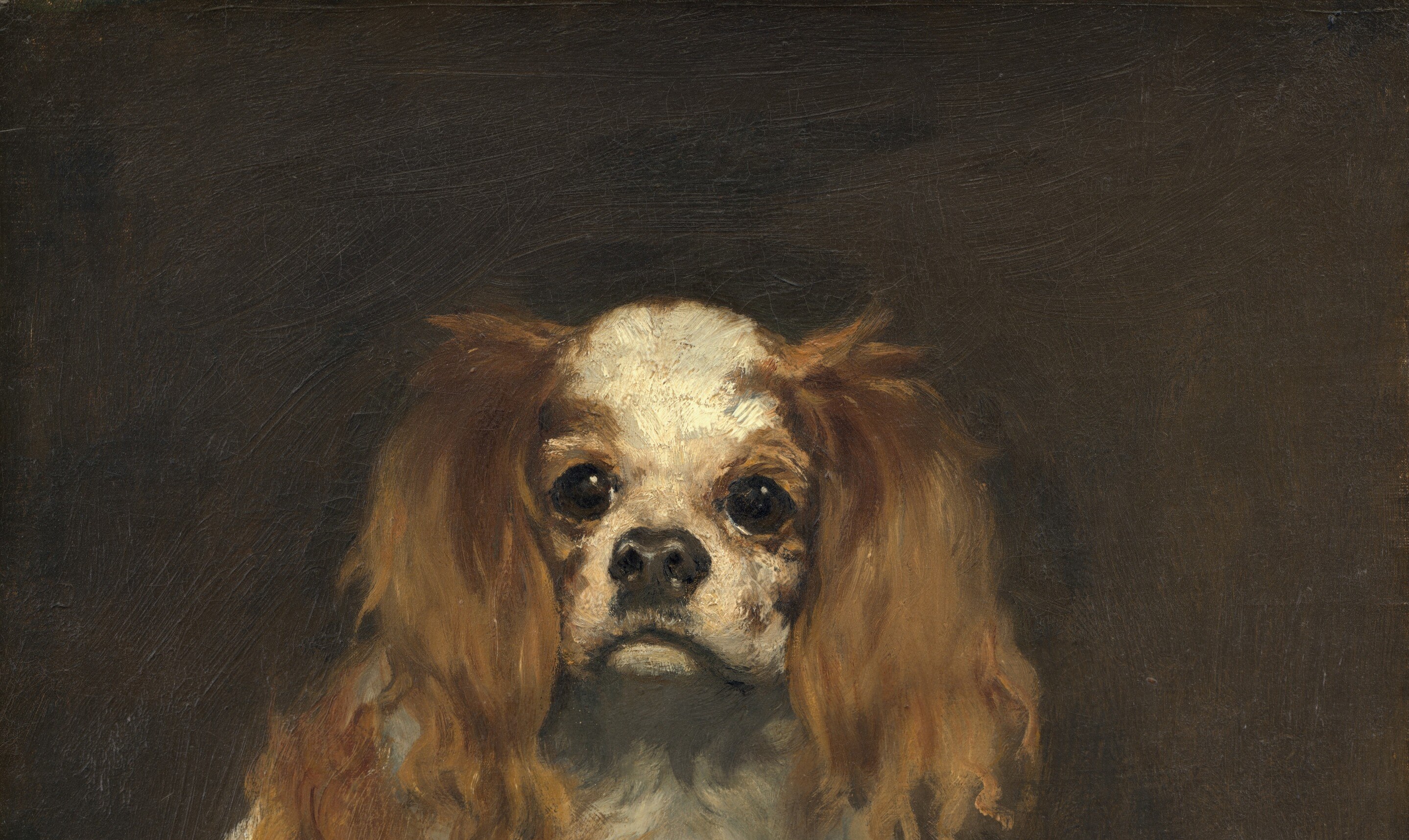
Édouard Manet's 'A King Charles Spaniel,' painted around 1866 and now at the Art Institute of Chicago, immortalizes a beloved pet with a surprising intensity usually reserved for human portraits.
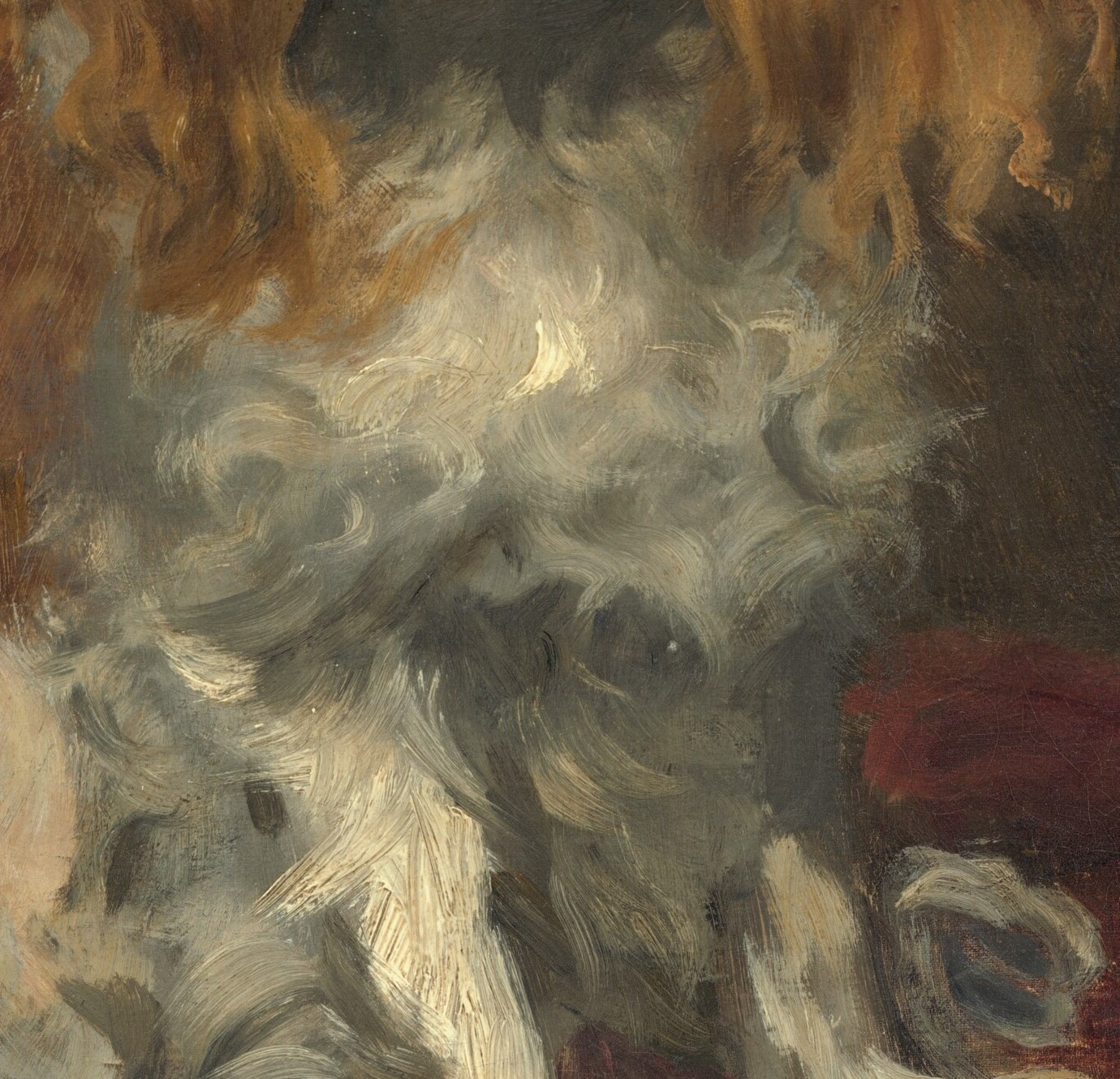
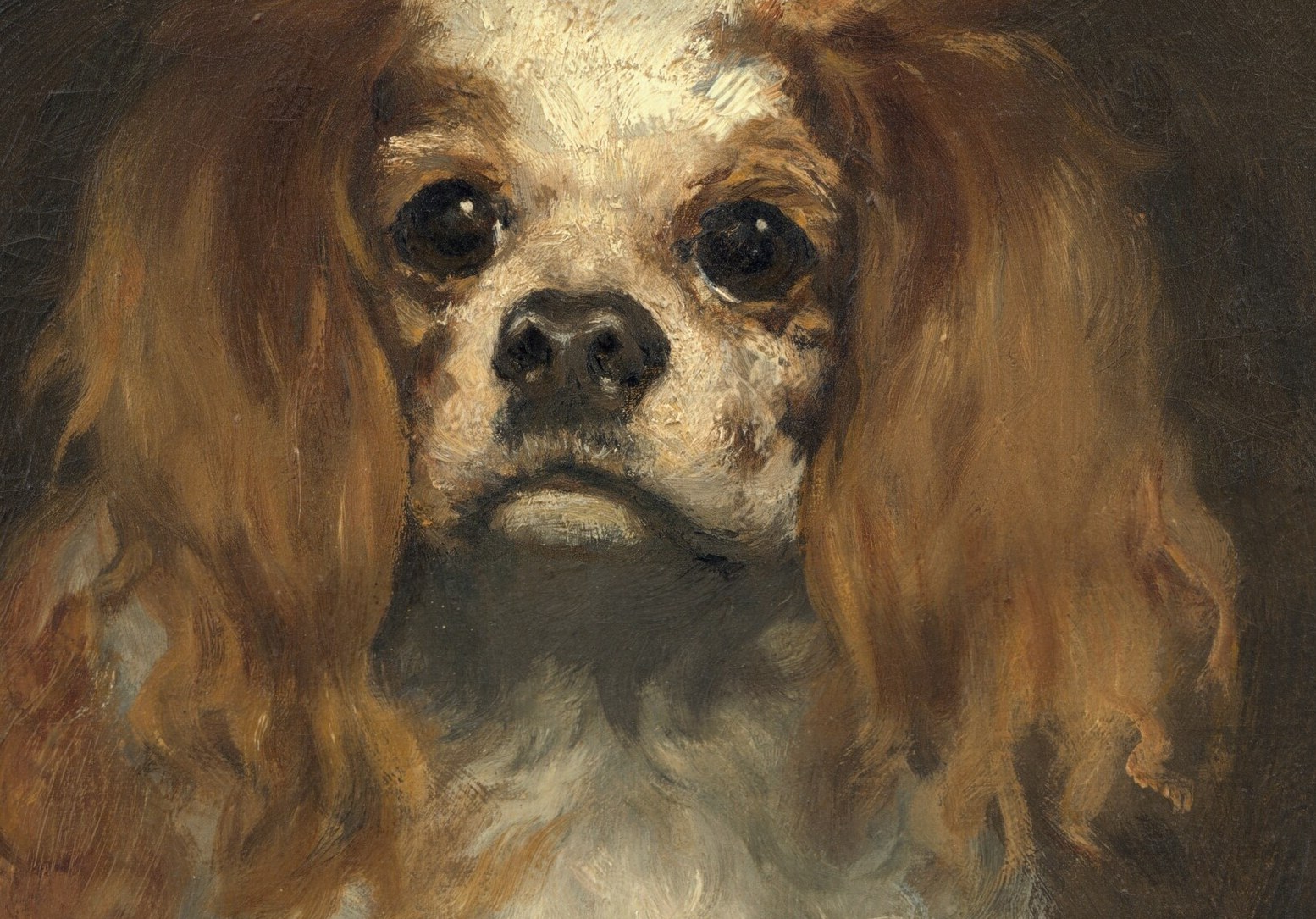
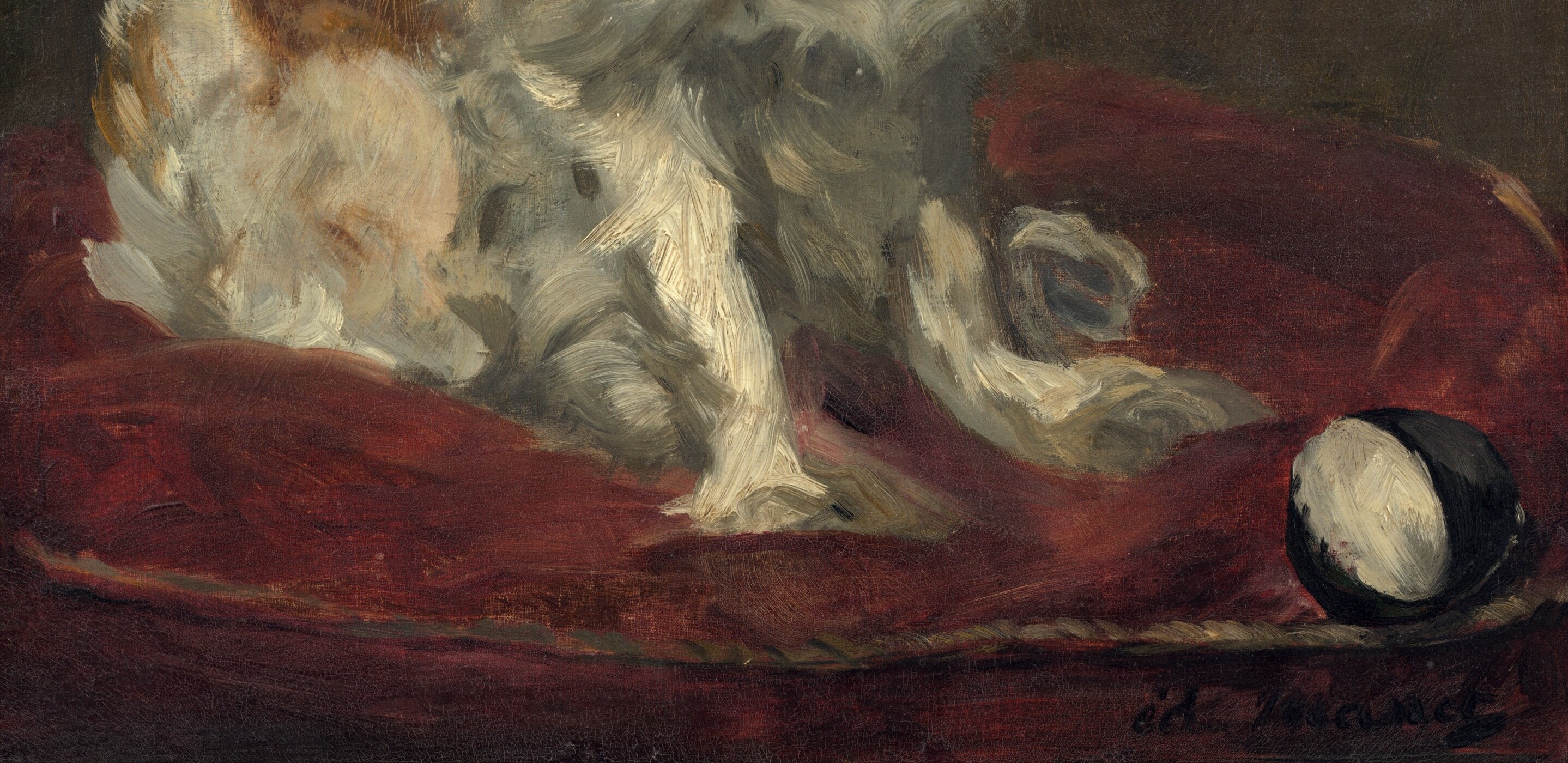
Manet's signature loose brushstrokes bring the dog's soft fur and alert expression to life. Observe the gentle yet watchful gaze in its dark eyes, engaging the viewer directly, as if the animal is posing patiently for its master.
This work reflects Manet's interest in modern life and his move towards a more direct, painterly style, foreshadowing Impressionism. He treats a domestic subject with the same compositional rigor as his grander works, isolating the dog against a stark background to emphasize its presence.
It's a beautiful example of how an artist can find profound dignity and emotional depth in an everyday subject. What do you see in its eyes?
Details
Transcript
This small spaniel was the painter's constant companion. He captures its fur with loose, energetic brushstrokes. Manet focused intently on the dog's gentle, alert expression. Its dark, watchful eyes engage you directly. A quiet moment, captured by a master.