The Game of the Cooking Pot by Longhi, Pietro
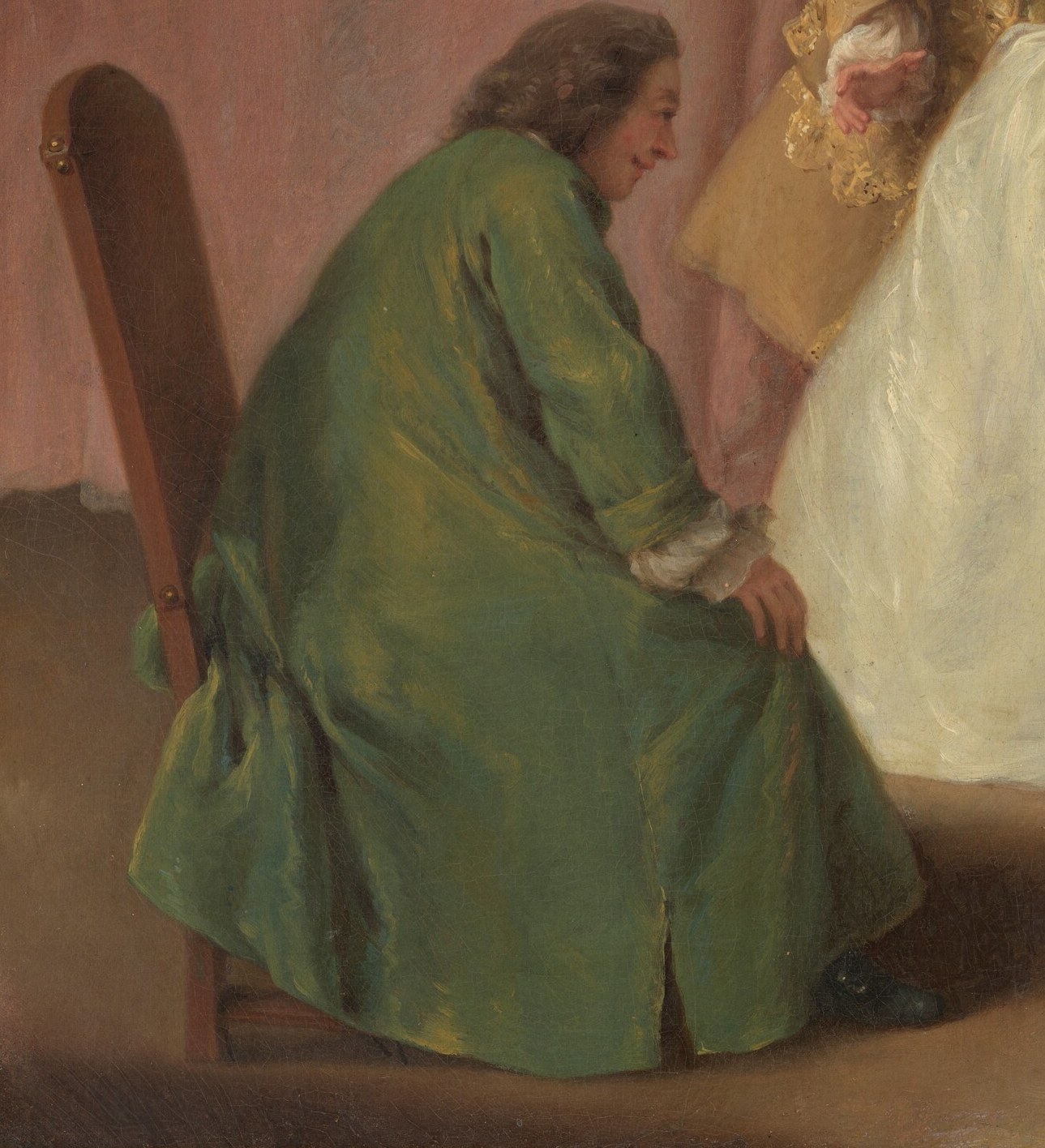
They called it The Game of the Cooking Pot. In a Venetian interior around 1744, Pietro Longhi painted a blindfolded woman stumbling toward a small brown pot while elegantly dressed companions look on. It seems innocent enough, until you learn that mid-18th-century church authorities found it anything but.
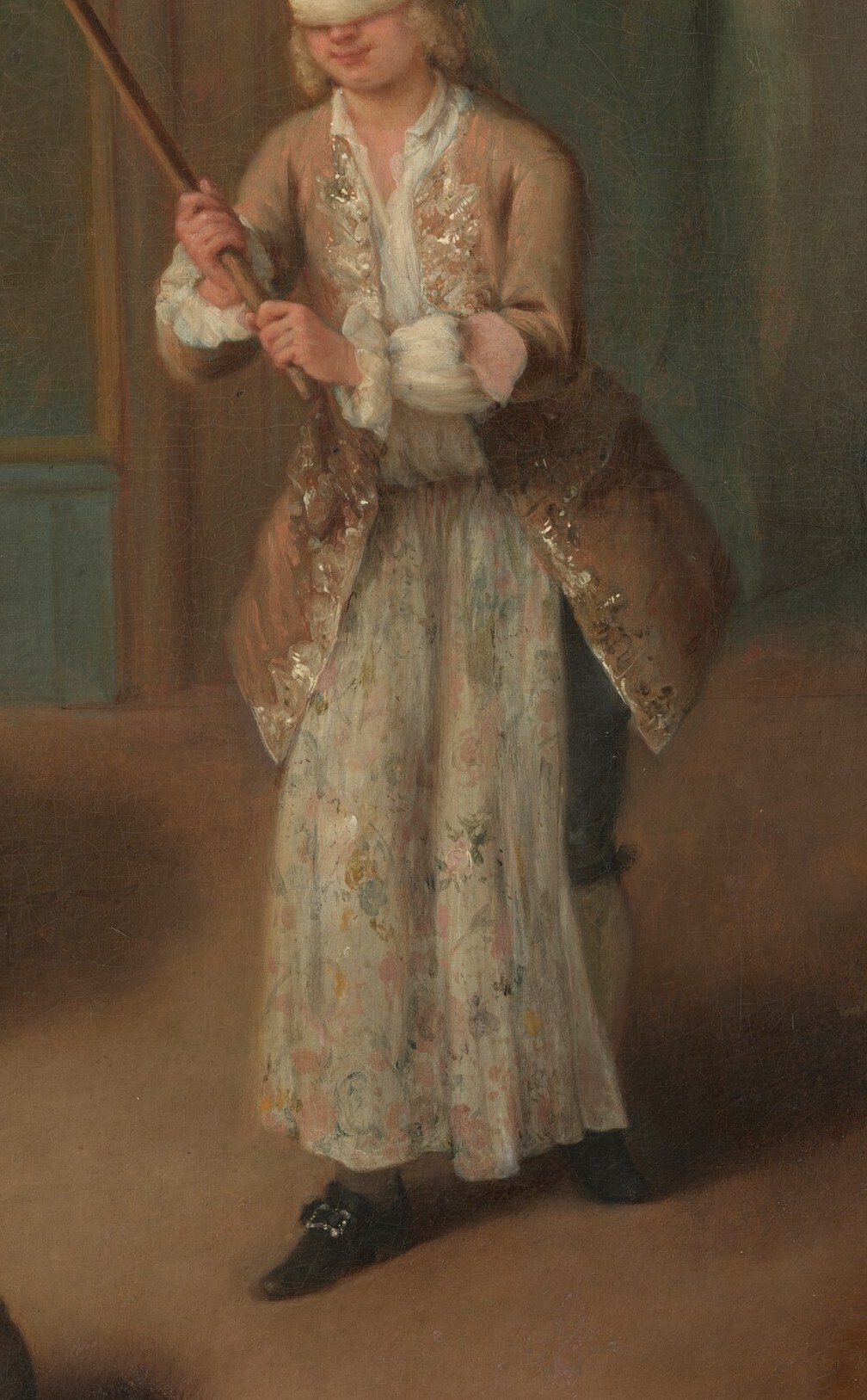
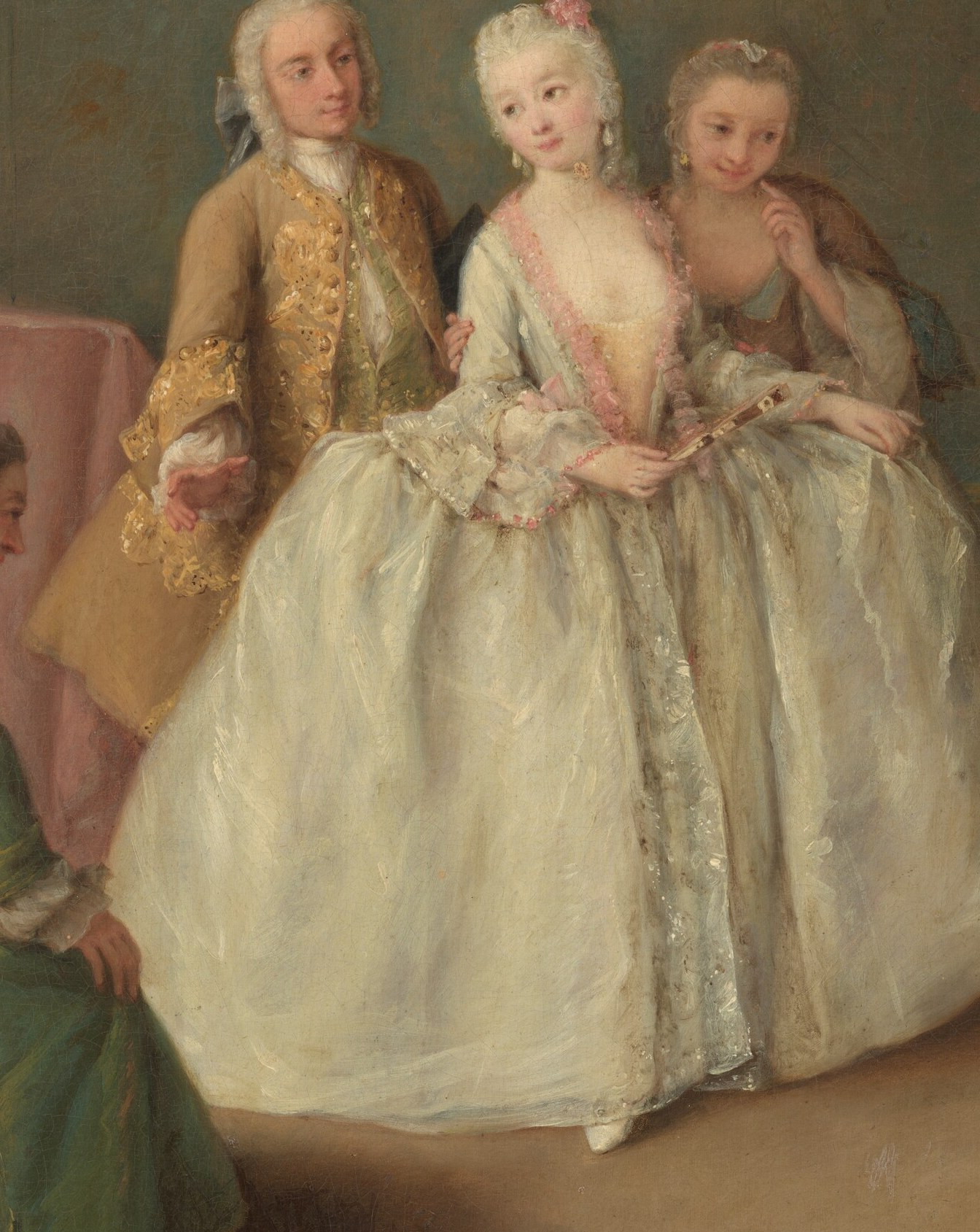
Look at the woman in the elaborate white dress. She is the center of the composition, her layered translucent gown and pink bow catching the subdued light. Her blindfold and outstretched stick are the clues: this is a parlor game of seeking a hidden object, a common aristocratic pastime.
The Church, however, interpreted the blindfold as a symbol of moral and carnal blindness. In a period when Venice was wrestling with libertine excess, Longhi’s little genre scene was publicly denounced for its perceived indecency. The scandal was small by modern standards, but it was enough to make the artist change course.
After this work, Longhi abandoned the subject of games entirely. He spent the rest of his career painting the city’s dentists, apothecaries, quack doctors, and even Clara the rhinoceros. A painter of Venetian leisure became, by necessity, a painter of its safer curiosities.
Details
Transcript
It looks like an ordinary parlor game. Blindfolded, a woman gropes toward a hidden pot. Venice, 1744. This was called the Game of the Cooking Pot. But the Church saw the blindfold as more than play. They ruled it a symbol of carnal blindness. The painting was denounced. Longhi never painted another game. He turned to apothecaries and rhinos.