The Virgin of El Camino with St. Fermín and St. Saturnino by Nicolás Enríquez
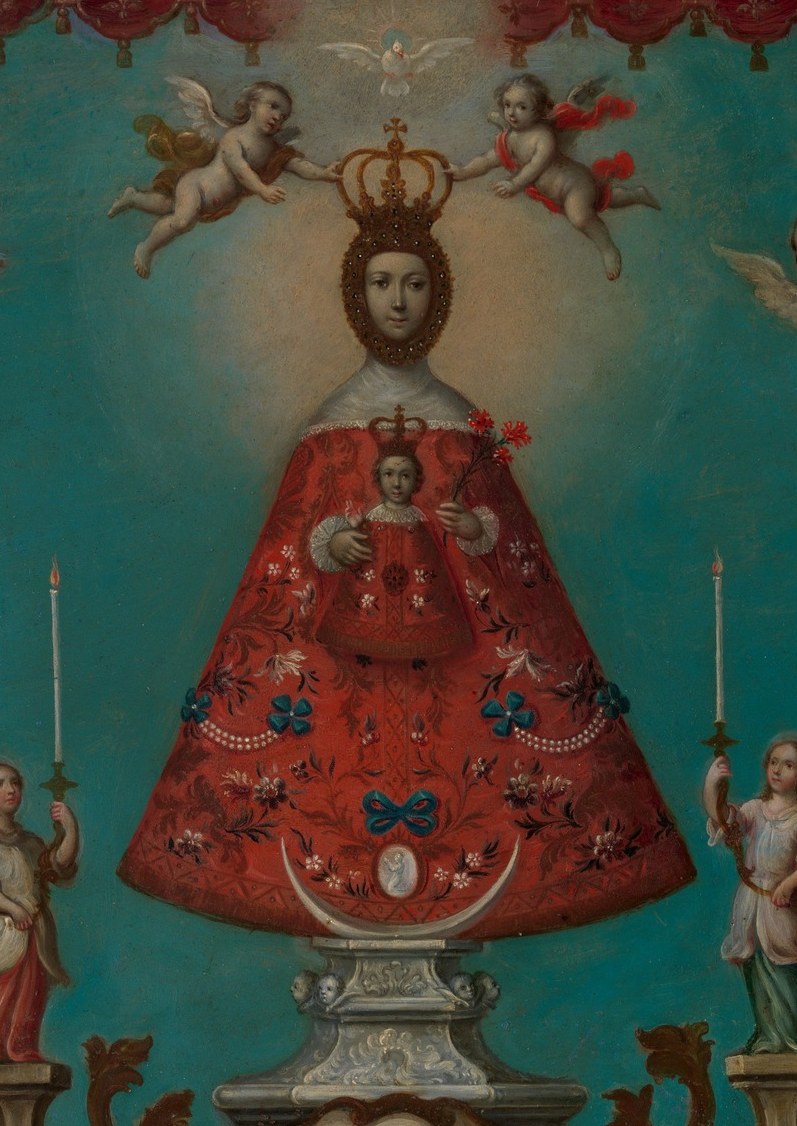
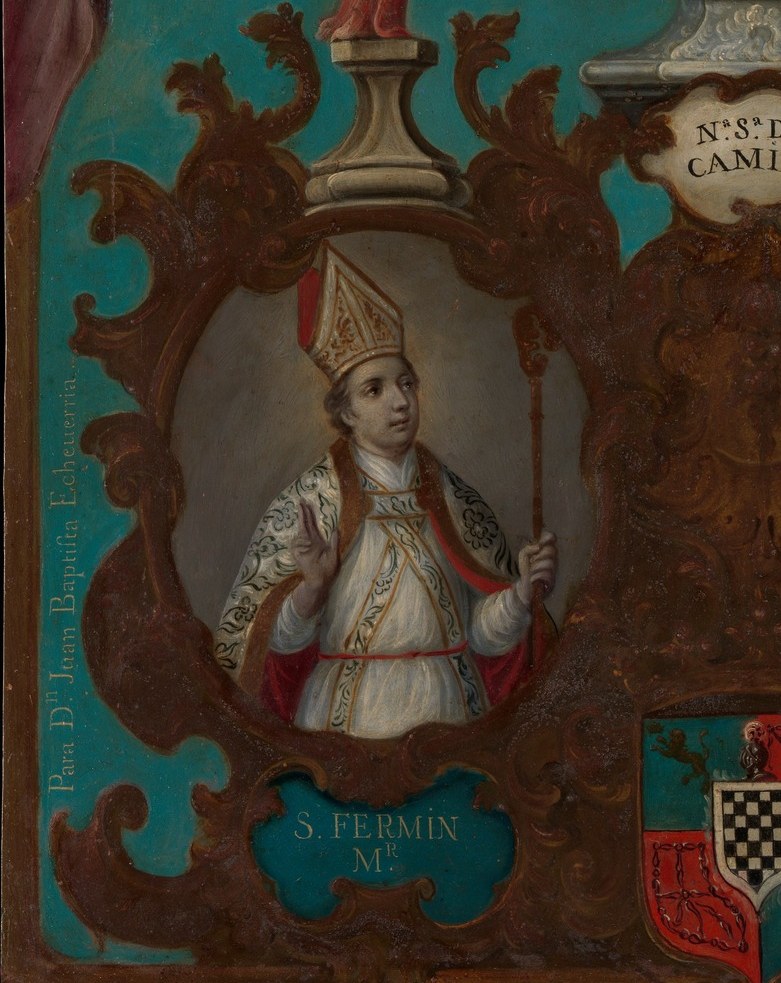
This is The Virgin of El Camino with St. Fermín and St. Saturnino, painted in 1773 by Nicolás Enríquez and now at The Metropolitan Museum of Art. It is not a narrative scene but a devotional portrait of a specific object: a venerated cult statue of the Virgin of El Camino, dressed in textiles and regalia that the artist rendered with startling precision in oil paint.
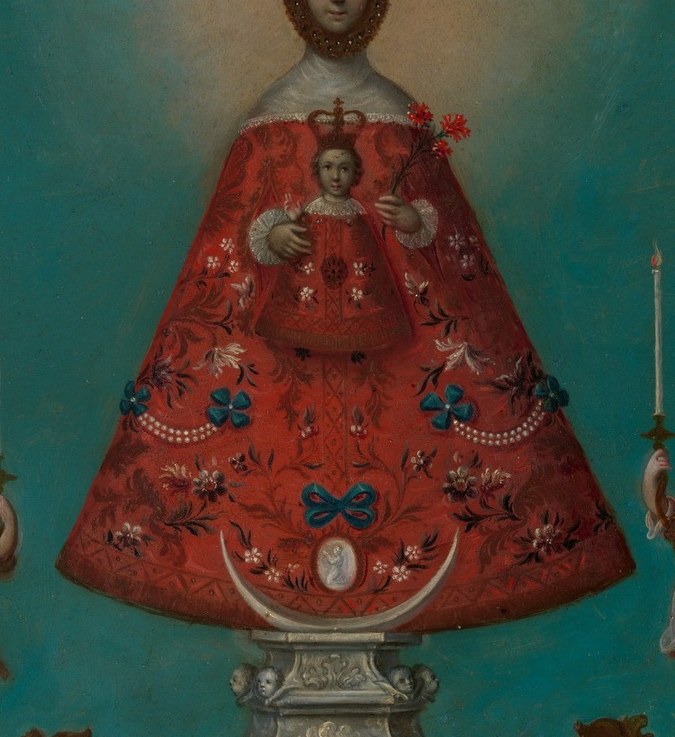
Notice the Virgin’s red floral gown. Enríquez was not painting draped fabric; he was copying the embroidered vestments that worshipers actually dressed the physical statue in. The flatness of her face and the rigid pose are intentional. They tell you this is a sacred effigy placed on a pedestal, flanked by saints and angels in a balanced, symmetrical composition.
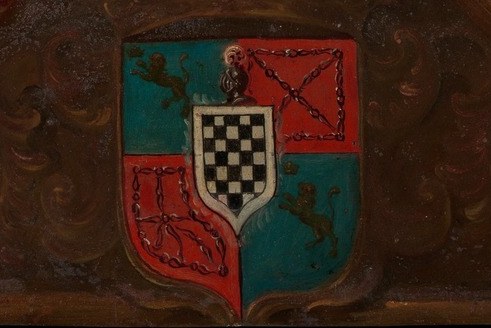
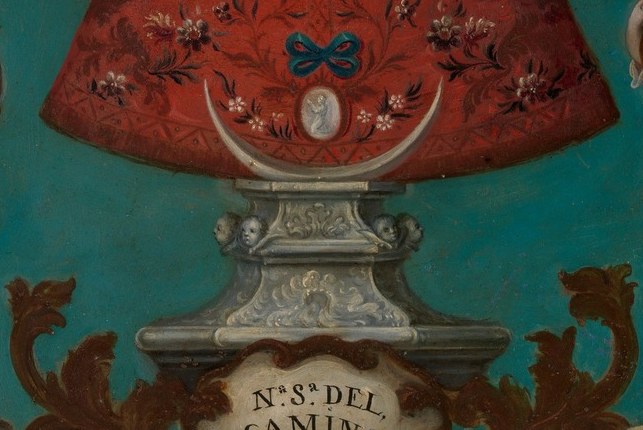
The real key to the painting is almost invisible at normal viewing distance. At the very bottom edge sits a heraldic coat of arms and a text cartouche inscribed beneath the Virgin’s pedestal. These details name the confraternity or patron who funded the work, grounding a heavenly vision in a specific city, a specific year, and a specific group of people who paid for it.
Next time you stand before a grand devotional painting, look at the bottom edge. The donors often left their mark where only the observant would find it.
Details
Transcript
At first glance, a solemn, familiar scene. The Virgin of El Camino, crowned and enthroned. She wears a red gown painted to mimic real embroidered silk. A statue dressed for worship, not a woman. Painted in Mexico City, 1773, for a local confraternity. Now look closely at the very bottom edge. A heraldic shield sits beneath the Virgin, almost hidden in shadow. Below her pedestal, a painted inscription names the patrons.