Portrait of a Man of the Moncheaux Family by http://www.wikidata.org/.well-known/genid/6e859ee1a959647e1d239a00de257202
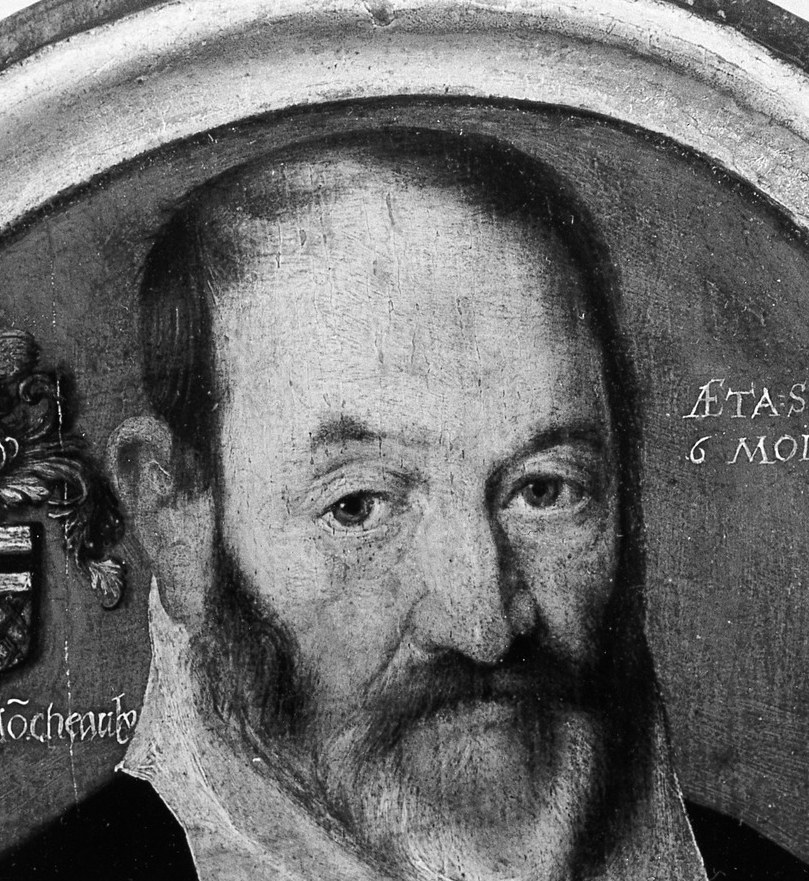
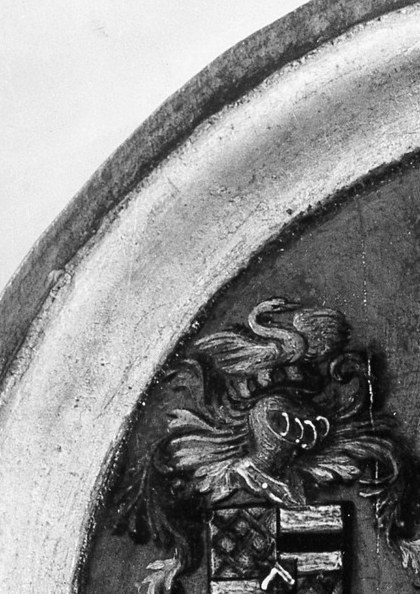
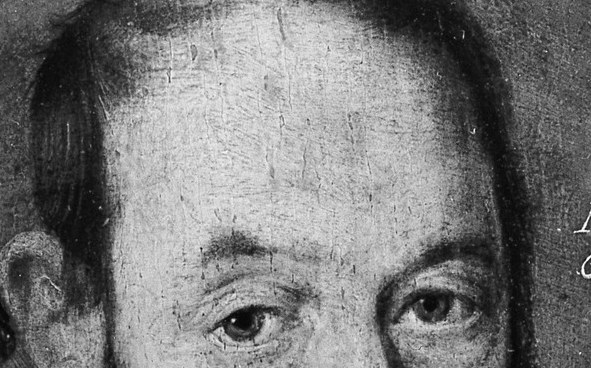
A portrait painted in 1605 in the war-torn Low Countries, now in the collection of the Bowes Museum. On the surface, it delivers what Flemish patrons paid for: a stern, dignified likeness with a family coat of arms fixed in the upper corner, announcing noble lineage. But a single detail changes the whole reading.
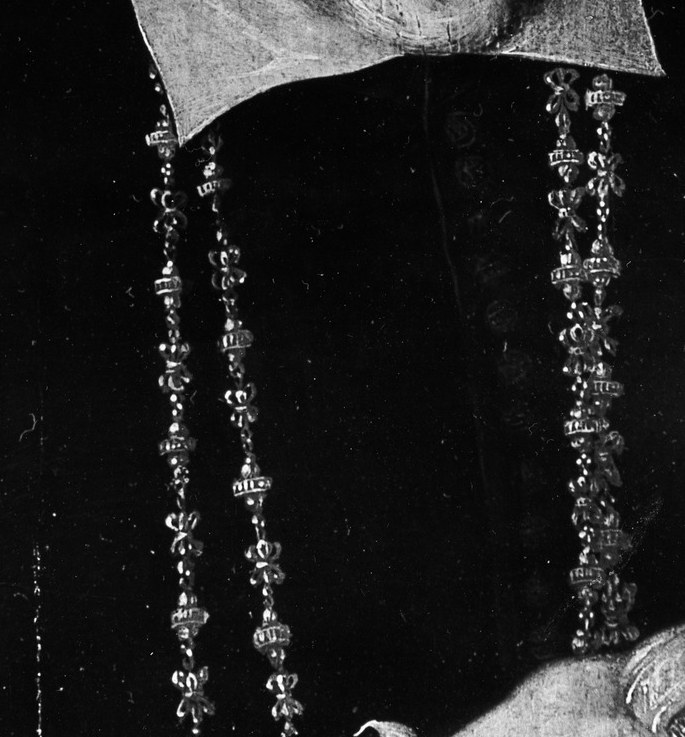
Look at the beaded cord falling across the dark coat. It is a rosary, worn conspicuously outside the clothing. This is not a private devotional object tucked away, it is a public declaration. At a time when the Dutch Revolt had split the region into Protestant north and Catholic south, openly displaying a rosary was a confessional act with political consequences. The sitter wants you to know exactly where he stands.
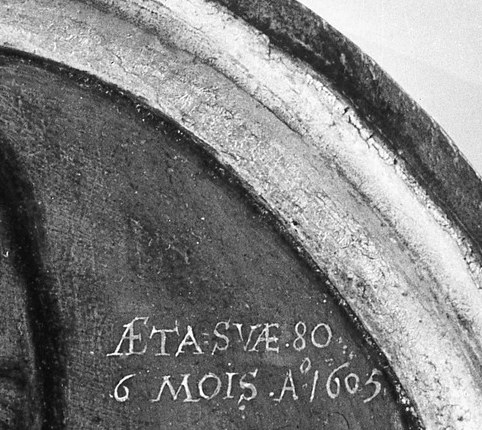
The man's identity is recorded in the title: a member of the Moncheaux family. His somber expression and the date beside his head anchor him firmly in the early seventeenth century. The coat of arms behind him, with its shield and crown, reinforces a heritage he was evidently unwilling to abandon or disguise. The small object in his right hand remains ambiguous, perhaps a glove, perhaps a ring, another small cipher of rank.
This is a portrait that does more than remember a face. It records a decision, made in a dangerous time, to be seen as what you are.
Details
Transcript
His face is a document, precise as a date. The inscription beside him reads: 1605. A time when the Low Countries were a war zone of faith. Look at what hangs around his neck. A rosary. Worn openly by a man in public office. His family arms are fixed behind him, declaring loyalty forever. A direct gaze that never flinched, even when flinching was safer.