The Adoration of the Magi by Paolo Farinati
Paolo Farinati's *The Adoration of the Magi*, painted in 1593, is a masterclass in coded meaning, held in the Rijksmuseum collection. Beyond its beautiful composition, the painting uses the traditional gifts of the Magi to tell a deeper story about the infant Jesus.
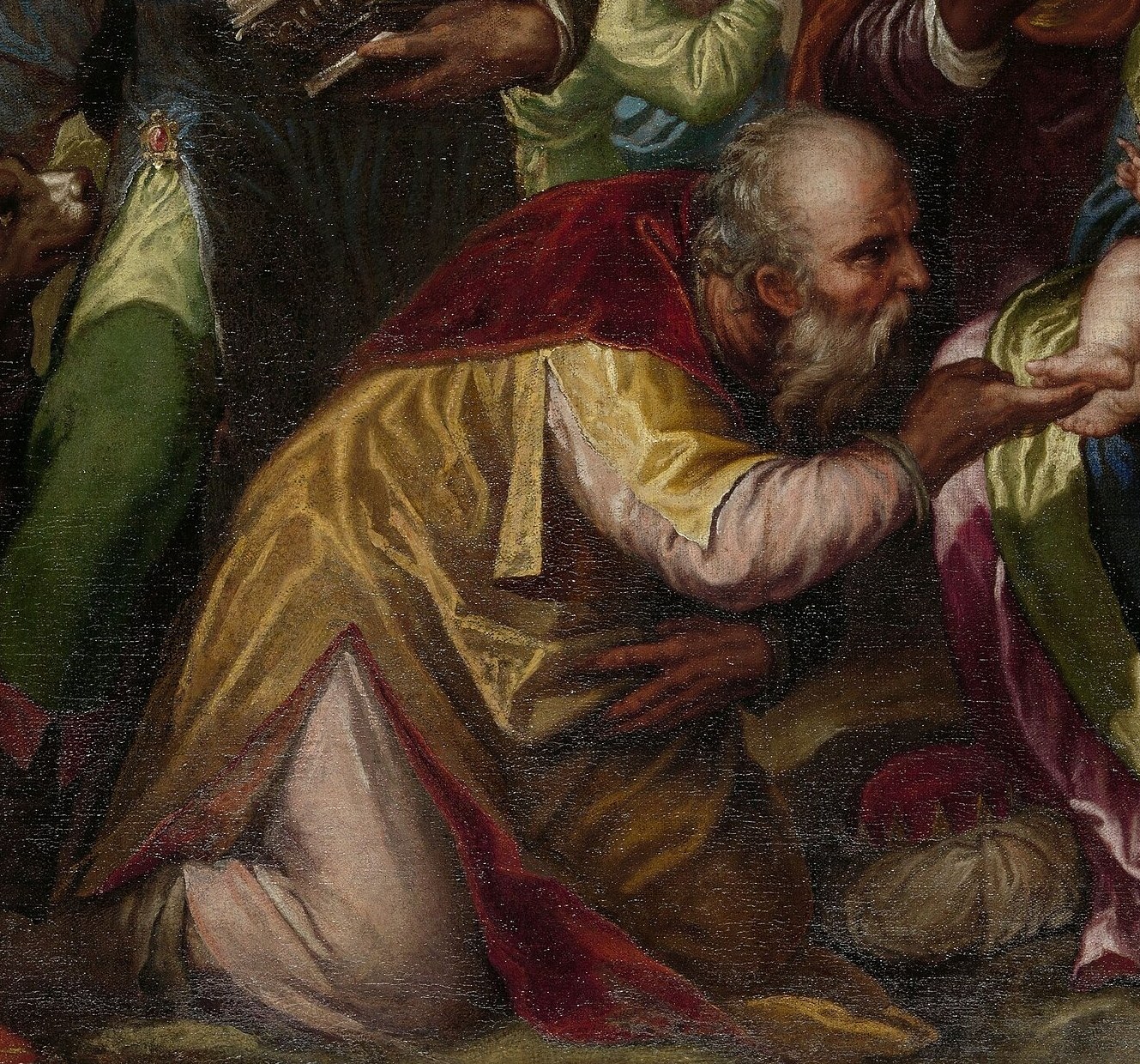
Look closely at the gifts presented by the three wise men. The first king offers gold, a clear symbol of royalty. The richly decorated box he holds contains frankincense, an incense used in worship, signifying Christ's divinity. The third Magus, often seen in the background, is depicted carrying myrrh, a fragrant resin used for anointing the dead.
These three gifts are not just offerings; they are prophecies. Gold declares Jesus's kingship, frankincense points to his divine nature, and myrrh foretells his ultimate sacrifice. Farinati, a prominent Italian Mannerist painter, skillfully wove this layered symbolism into his elegant composition.
What other hidden meanings do you see in the details of this magnificent work?
Details
Transcript
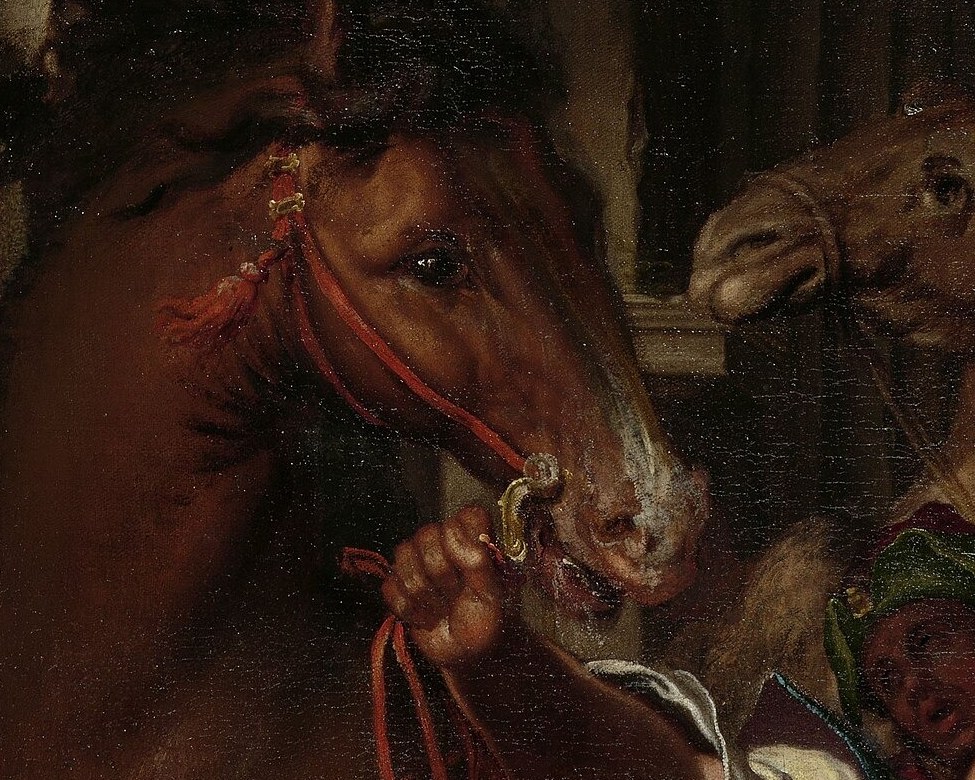
This painting tells a familiar story, but with coded meaning. The kneeling king offers gold, a symbol of Christ's royalty. His ornate gift box holds frankincense, for Christ's divinity. A third Magus (behind the horse) carries myrrh, a burial spice. The three gifts foretell Jesus's life: king, God, and sacrifice. This painter was a master of the Mannerist style in 16th-century Italy.