Study of Butterfly and Insects by Kessel the Elder, Jan van
This is Jan van Kessel the Elder's "Study of Butterfly and Insects," painted around 1655 in oil on copper. The single most striking thing about it is that it was made with genuine scientific intent. In the 17th century, curiosity about the natural world was exploding, and paintings like this functioned as serious studies of entomology alongside their artistic merit.
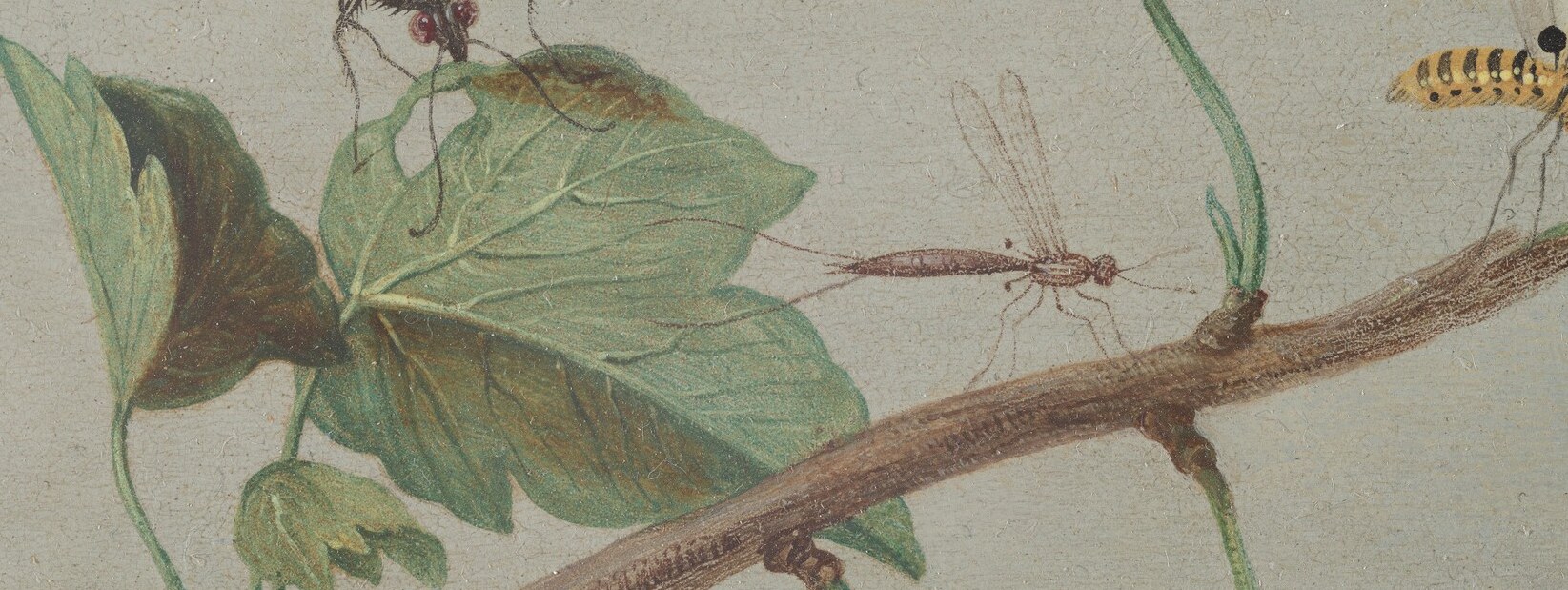
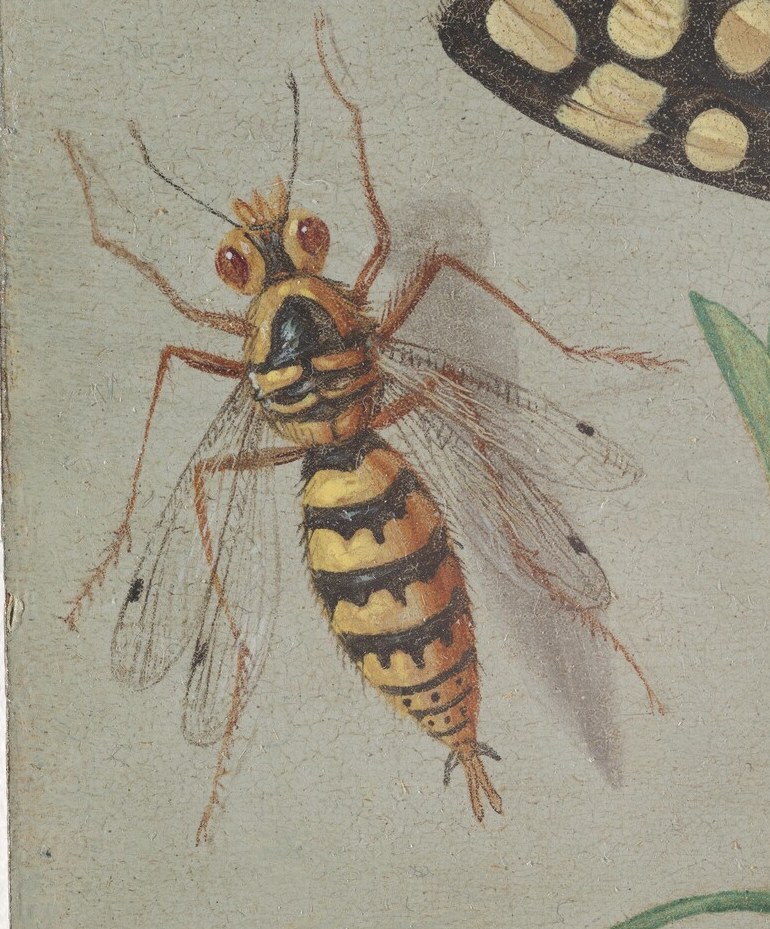
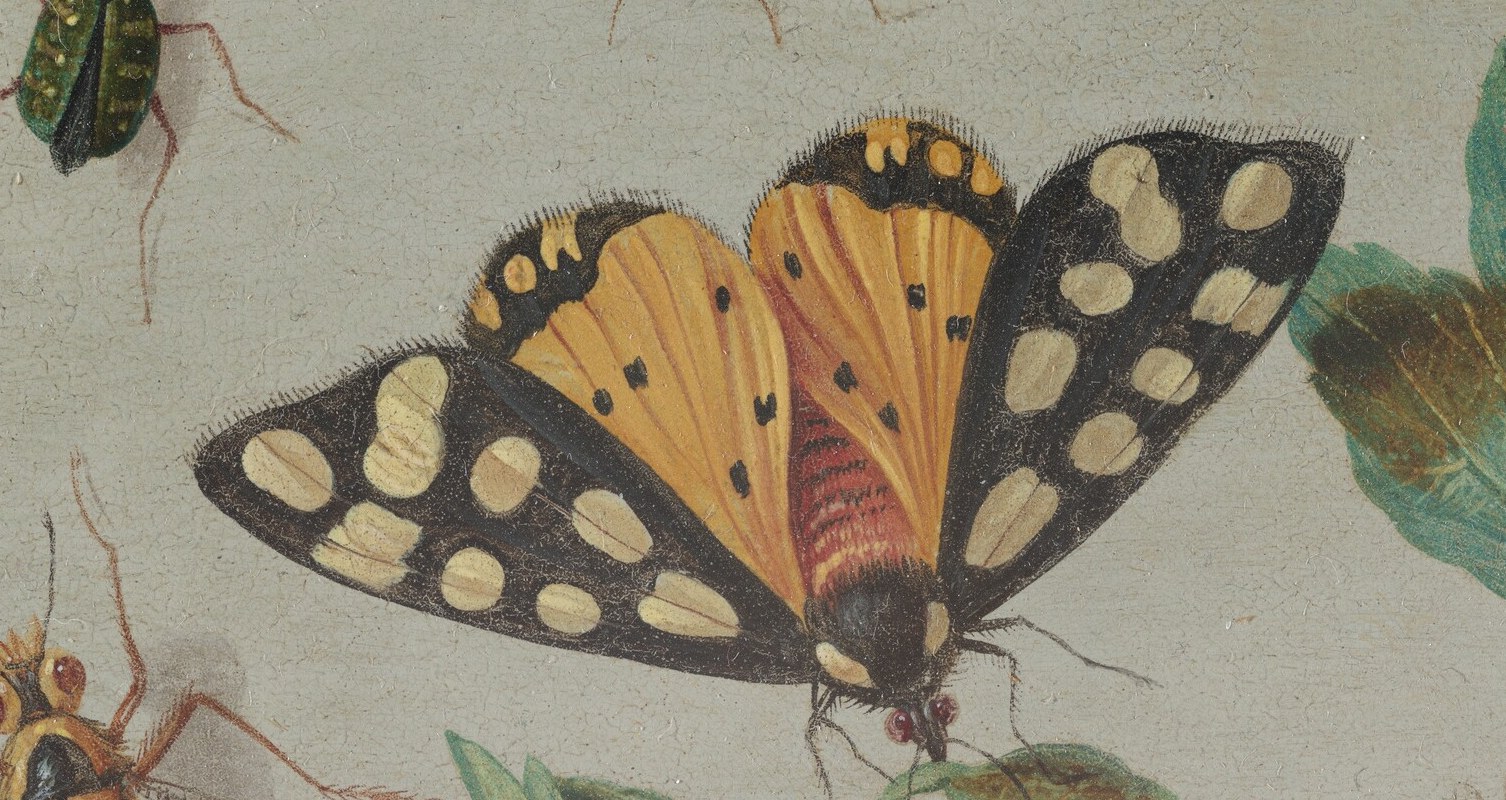
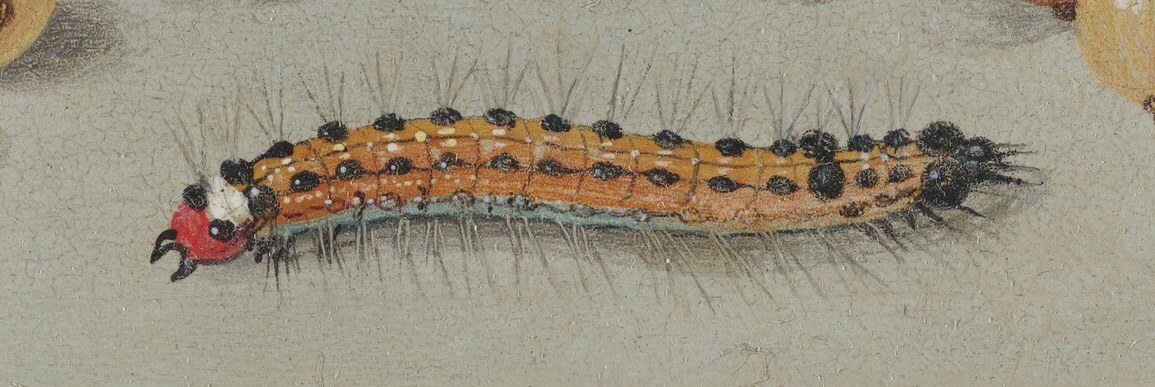
Look closely at the branch running across the composition. Van Kessel has gathered a yellow-striped wasp, a large yellow butterfly, a caterpillar with a bright red head, beetles, and a delicate dragonfly onto a single cluster of yellow berries. The precision is extraordinary. Working on copper, rather than canvas, allowed him to achieve a luminous finish and near-microscopic detail in the insects' legs, antennae, and wing venation.
Jan van Kessel the Elder, a Flemish painter, came from a dynasty of artists and specialized in these natural history subjects. He was working during a period when the boundaries between art and science were still fluid. This study was not made for a massive public auction; its provenance lacks the dramatic price wars or daring thefts that make headlines. Instead, its value has been a quieter, steady recognition of its blend of Baroque craftsmanship and Enlightenment-era observation.
It is a portrait of a small, thriving ecosystem, painted by someone who really looked. Next time you see a bug on a leaf, how many legs do you see? Van Kessel saw all of them.
Details
Transcript
Not every old master is a face in a gilded frame. A branch, a few berries, and a whole world of insects. Look at the wasp. Every leg, every wing vein, accounted for. Jan van Kessel painted nature with scientific precision. He worked on copper. The smooth surface let him paint hair-width details. In the 1650s, a painting like this was a serious study, not just decoration. No auction battles, no thefts. This one held its quiet value for 370 years.