The Prodigal Son by Puvis de Chavannes, Pierre
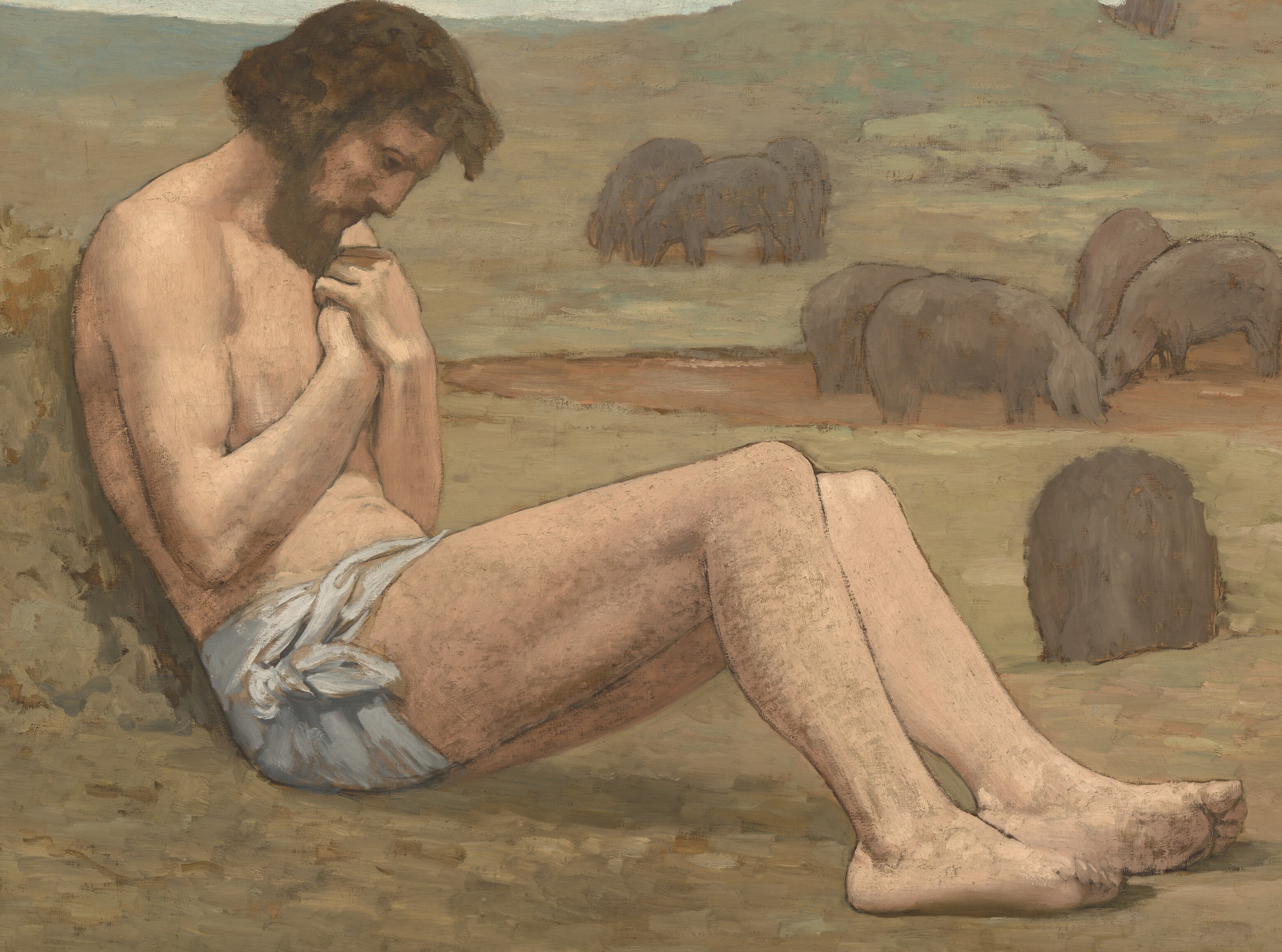
Pierre Puvis de Chavannes's "The Prodigal Son," painted around 1879, captures a moment of profound human despair and repentance from the biblical narrative. This oil on linen work, housed in a prominent museum, reflects the artist's restrained yet expressive approach to storytelling.
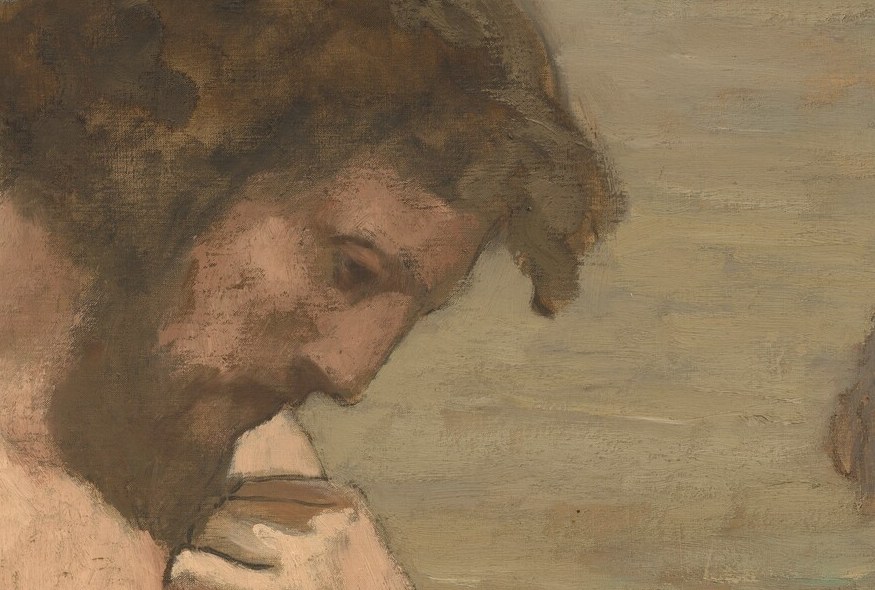
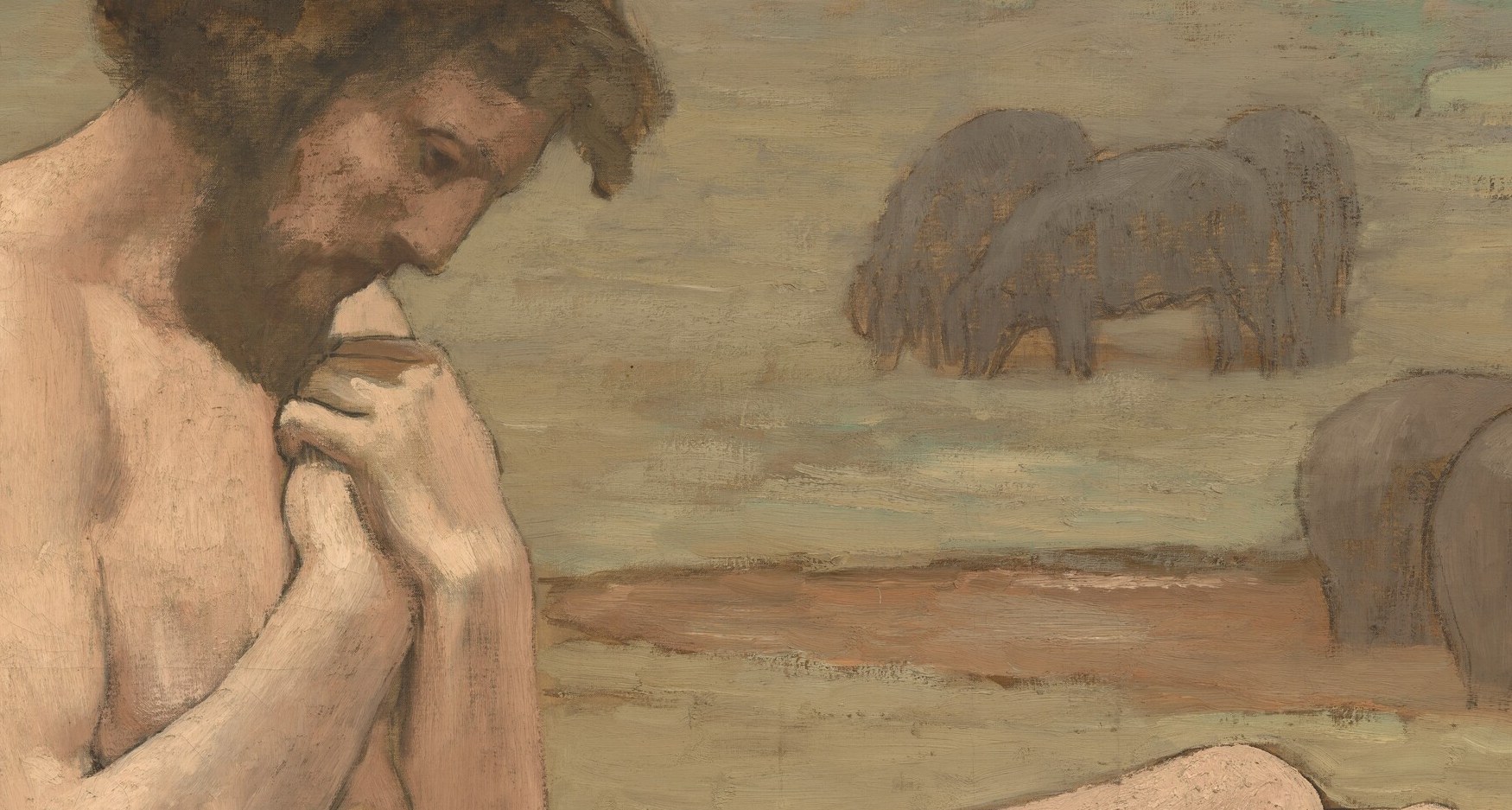
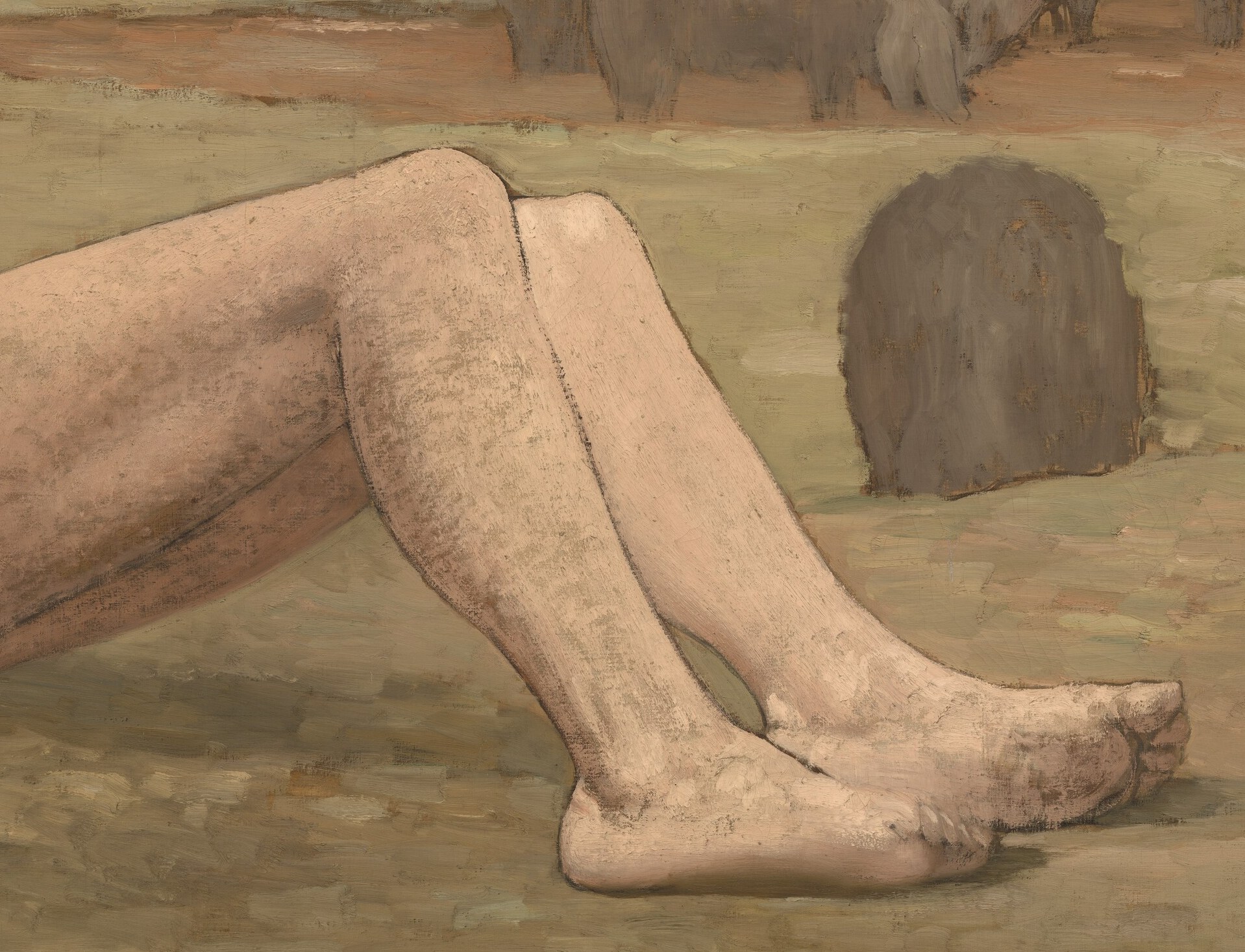
Observe the son's slumped posture and clasped hands, which powerfully convey his inner turmoil and deep regret. His downcast face, shadowed with shame, completes this poignant image of a man at his lowest point. The torn loincloth and bare legs further emphasize his fallen state.
Puvis de Chavannes, a leading French muralist, was celebrated for his ability to blend classical composition with a modern, introspective sensibility. Émile Zola described his work as 'an art made of reason, passion, and will,' a sentiment perfectly embodied in this contemplative scene. The barren, rolling hills and the distant pigs underscore the isolation and lowliness of his situation.
This painting invites us to reflect on themes of loss, repentance, and the quiet weight of human experience. What emotions does this solitary figure evoke in you?
Details
Transcript
A familiar story, painted around 1879. This painter often explored profound human states. The son's slumped posture shows his deep despair. His clasped hands convey inner turmoil and a desperate plea. His downcast face, shadowed by shame and regret. In the distance, the pigs he tends, a symbol of his fall. The desolate landscape mirrors his spiritual emptiness. A quiet moment of repentance, a human reckoning.