Girl with the Red Hat by Vermeer, Johannes
This is Johannes Vermeer's Girl with the Red Hat, painted around 1669 and now in the National Gallery of Art in Washington, D.C. It is not a portrait in the conventional sense but a 'tronie', a character study in fanciful dress, where the young woman's identity matters far less than the expressive quality of her gaze.
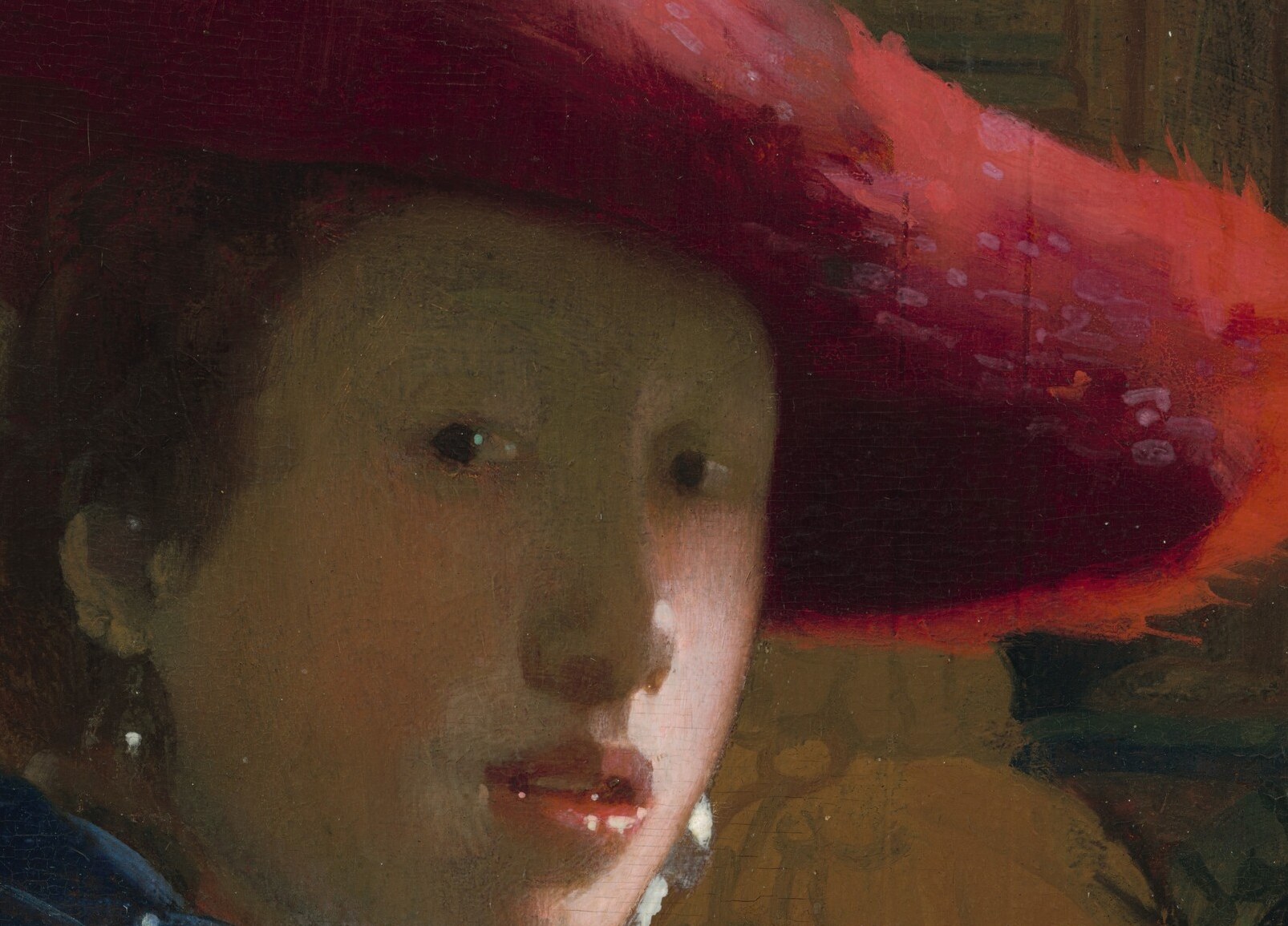
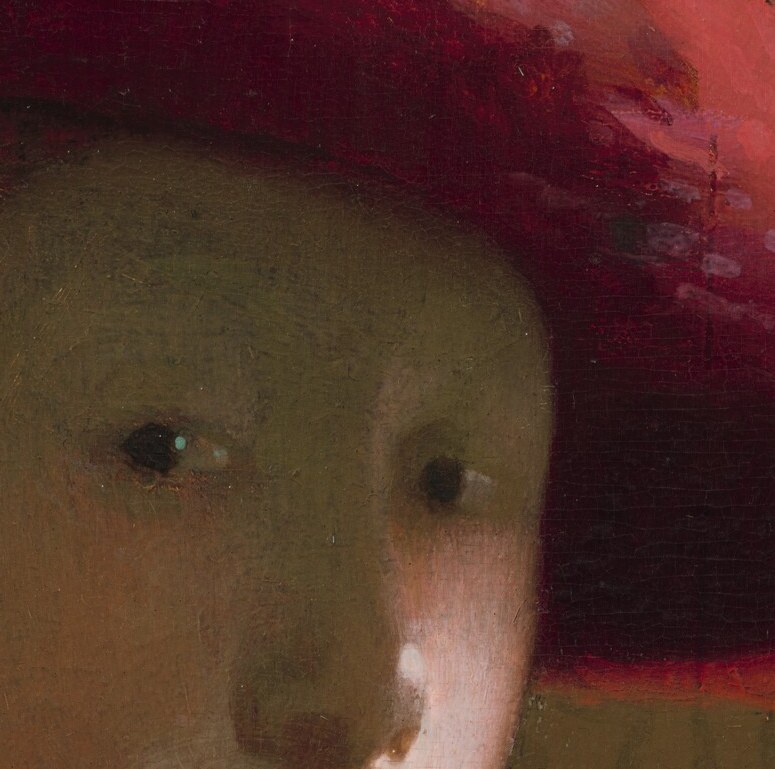
Look first at her eyes. The connection is immediate and a little startling. She glances over her shoulder with parted lips, as if you just called her name. Then look for the single white catchlight Vermeer placed in her right eye. It is a tiny, almost mechanical dot, but it creates the illusion of a wet, reflective surface and makes the painted face feel genuinely present.
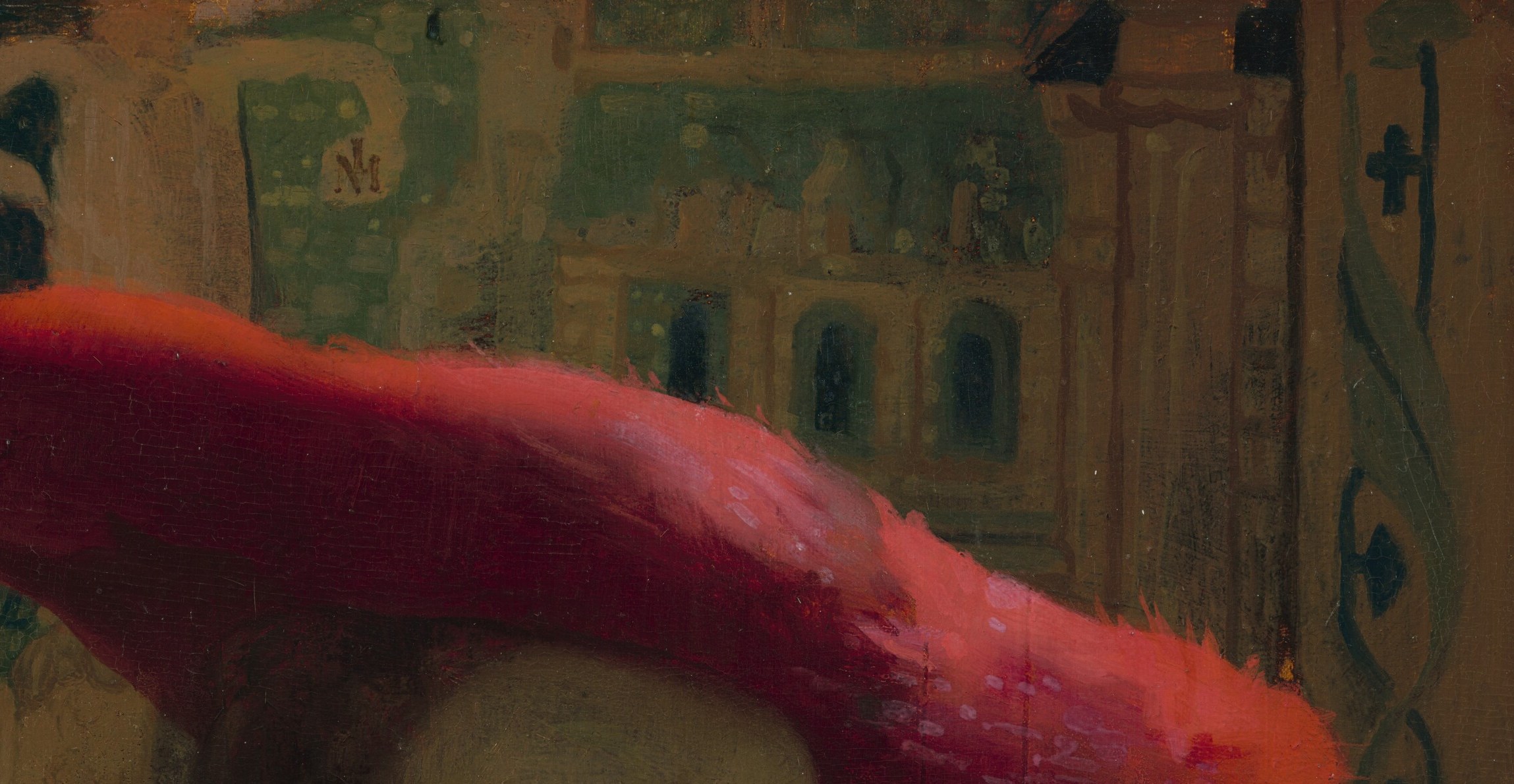
The painting itself is small and painted on a recycled wood panel rather than Vermeer's more common canvas. This unusual support led to decades of scholarly debate about whether it was truly his work. Recent study by the National Gallery and Dutch experts has settled the question: the panel is a genuine Vermeer.
He left behind only about 35 paintings. Each one is quiet and deliberate, catching a fleeting moment, a glance, a breath, the soft fall of light, and holding it still. This one does it with a girl in a red hat, on a humble scrap of wood.
Details


Transcript
She catches you before you catch her. The look is direct, unguarded. Not a portrait. A fantasy. Vermeer painted this on a recycled scrap of wood. For years, experts argued it wasn't even his. But look at the tiny catchlight in her eye. That single dot of white makes her feel alive. His trick. Only about thirty-five of his paintings survive. This is one of them.