The Bucintoro by Canaletto
Canaletto's The Bucintoro (1745), housed at the National Gallery, is a vibrant cityscape that captures the Feast of the Ascension. The painting masterfully encodes messages of Venetian power and its mastery over the Adriatic Sea.
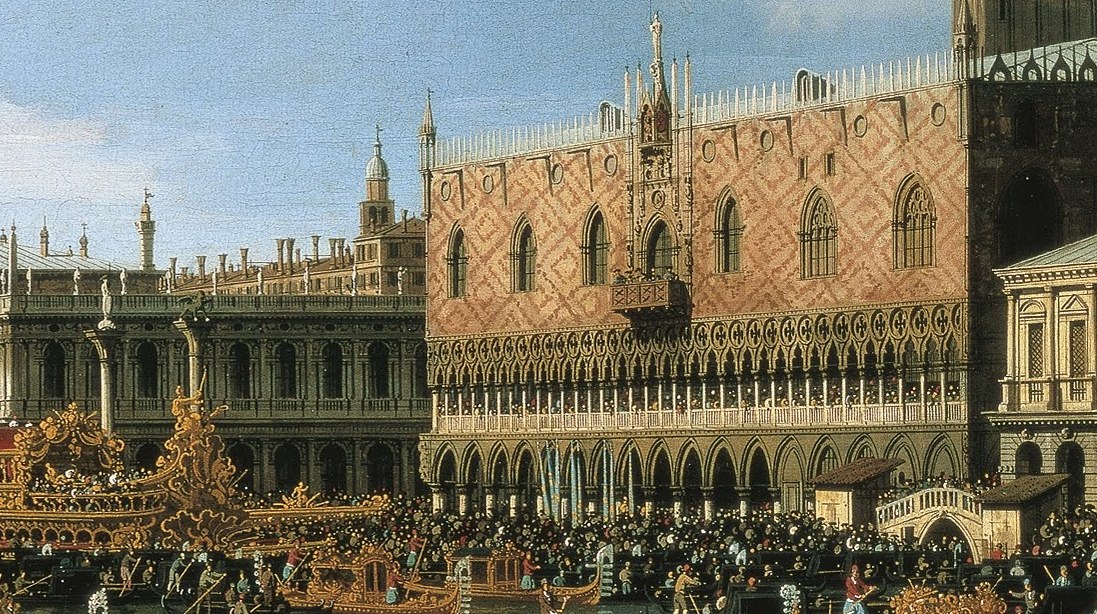
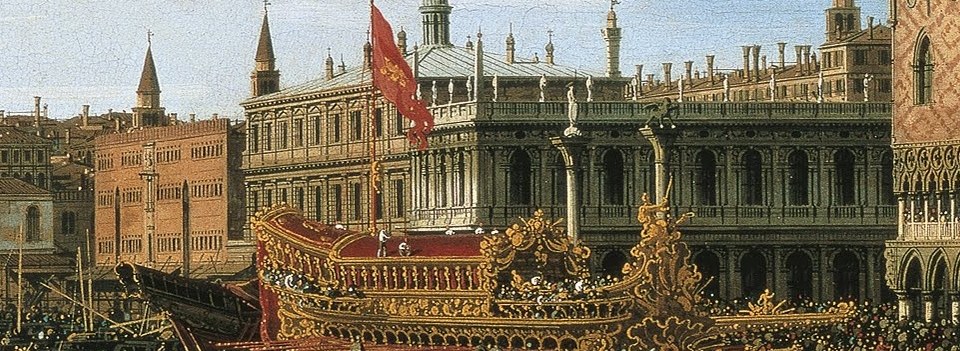
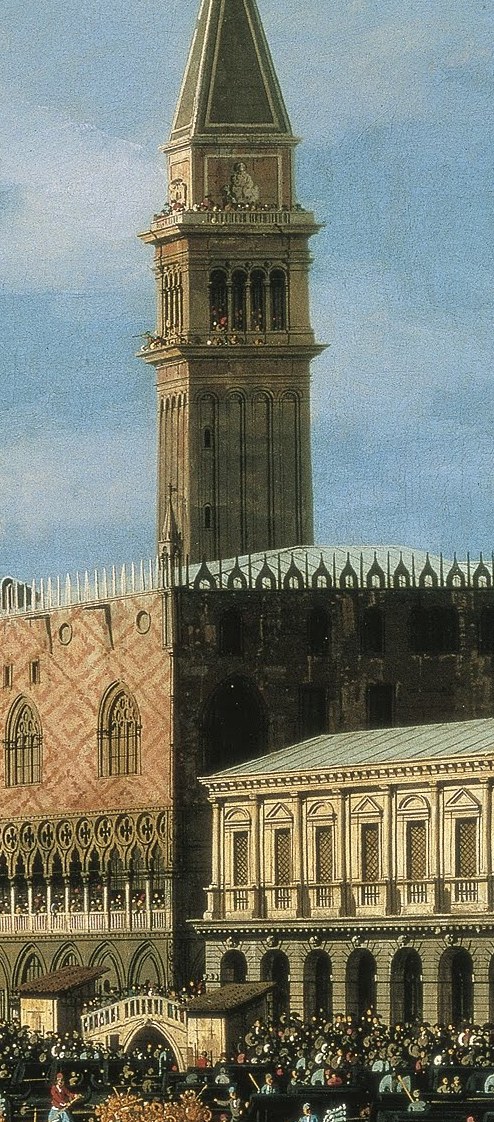
Look at the opulent Bucintoro barge, the ceremonial vessel at the heart of the scene. Its gilded form and numerous flags, especially the prominent red one, signify authority. The surrounding ships and the imposing Doge's Palace in the background further reinforce Venice's might and its dominion.
Canaletto, a master of the veduta genre, specialized in detailed views of Venice. This painting, created during the Rococo period, not only documents the city's architecture but also its rich ceremonial life, appealing to Grand Tour travelers.
Through these symbolic elements, Canaletto presents an idealized yet potent vision of Venice's historical grandeur.
Details
Transcript
Venice's Grand Canal hosts a grand ceremony. The Doge's Palace represents Venetian power. The Bucintoro barge symbolizes dominion over the sea. A red flag signifies authority and pride. The distant ships hint at global trade. The Feast of the Ascension was its main event. Canaletto painted Venice's ceremonial life.