Mme Vuillard Sewing by the Window, rue Truffaut by Édouard Vuillard

This painting, "Mme Vuillard Sewing by the Window, rue Truffaut" (1899), shows the artist's elderly mother absorbed in needlework inside their Paris apartment. For a long time, its quiet domesticity was the whole story.

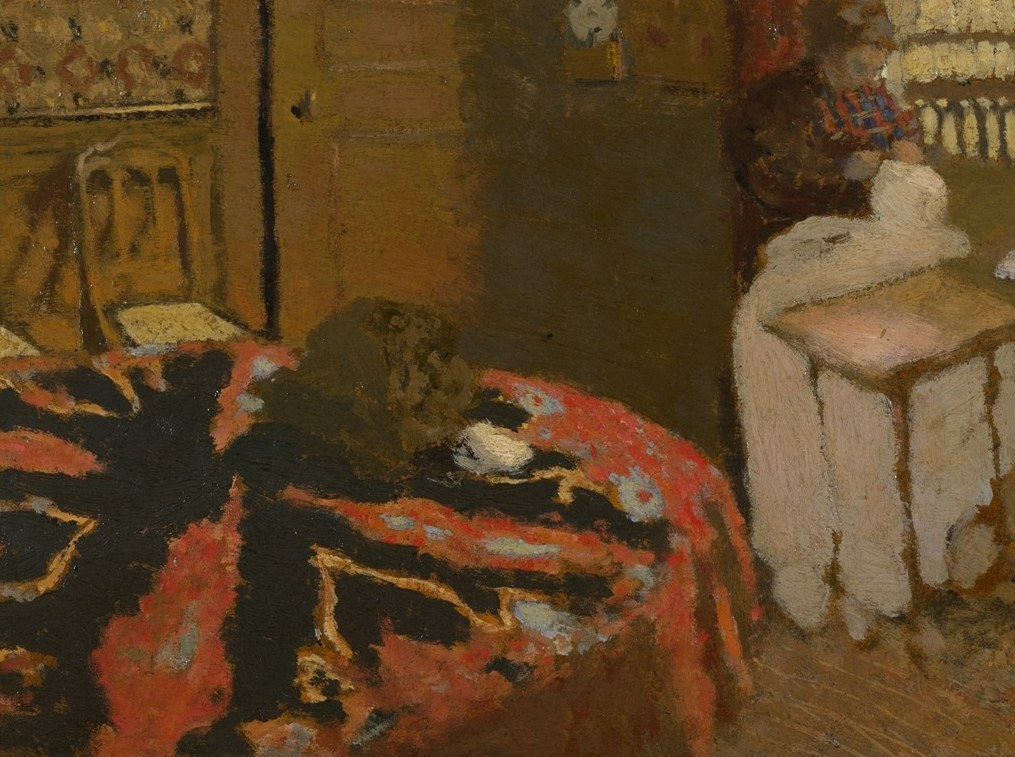
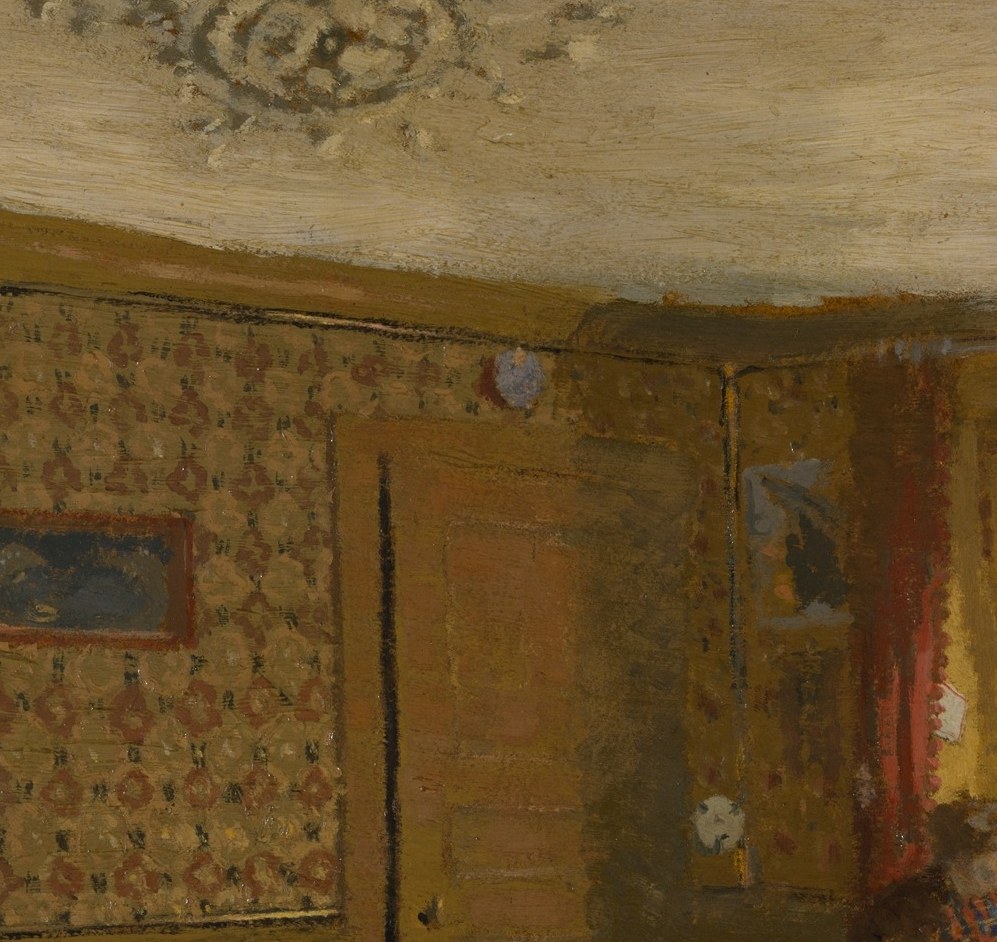
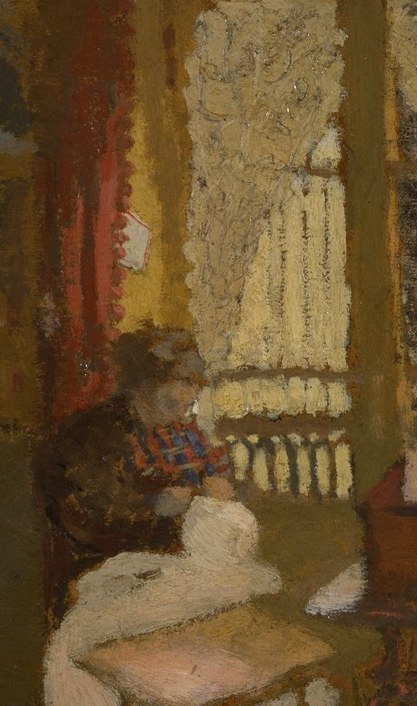
Look at the red patterned bedspread in the foreground, dense, almost aggressive against the muted walls. Now look at the figure herself, bathed in the single shaft of window light. Vuillard was a Nabi painter, devoted to dissolving the boundary between a person and the wallpaper, between a body and the room it occupies.

During the Nazi occupation of France, Vuillard's work was targeted. This painting was looted. Its recovery took decades, and it was only during a routine museum examination, long after it had been returned and placed back on display, that conservators discovered a swastika scratched into the reverse of the canvas. The scar of the theft had been hidden behind the placid surface the whole time.

It now hangs in a public collection, its stillness undisturbed. You'd never know the violence it carried in its frame.

#arthistory #vuillard #recoveredart

Details
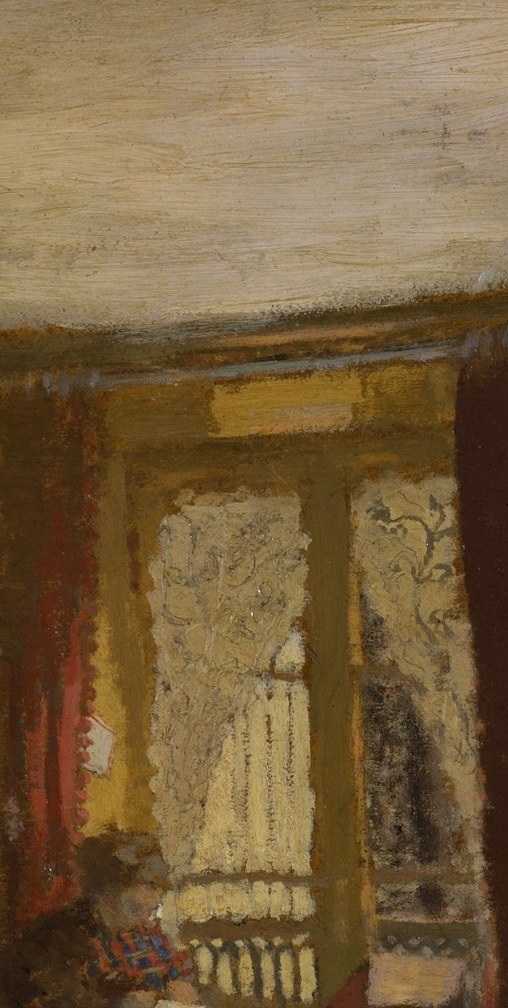
The single light source that organizes the whole composition; its radiance bleaches the curtains and silhouettes the figure, creating a threshold between private interior and outside world.
The most chromatically aggressive element , the bold pattern competes with the figure for attention and flattens pictorial depth in a deliberate Nabi strategy.
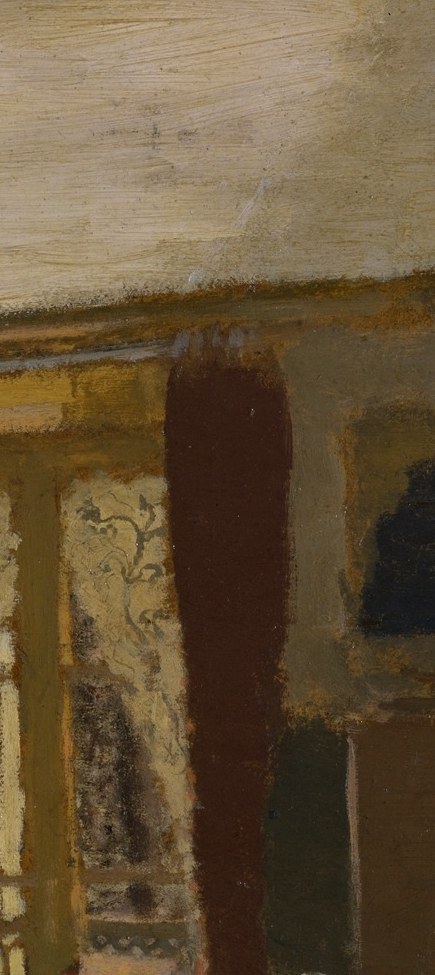
Vuillard's signature move: the wallpaper is painted with the same attention as the figure, actively absorbing her into itself , the boundary between person and décor is the conceptual subject of the work.
The human anchor of the painting, partially unclothed and absorbed in her task; small against the room yet commanding the only burst of natural light , she dissolves into the setting in classic Nabi fashion.
Vuillard renders the fabric almost as pure impasto light; their texture passage rewards close examination as brushwork shifts from flat to luminous.
Transcript

For years, it hung quietly in a public museum. A domestic scene. A mother sewing by the window. But Vuillard was Jewish under the Occupation, and when the Nazis came, the painting vanished. Decades later, an X-ray found a swastika scratched into the back. The mark of a looter, hidden under the quiet surface.