Artwork
Mme Vuillard Sewing by the Window, rue Truffaut
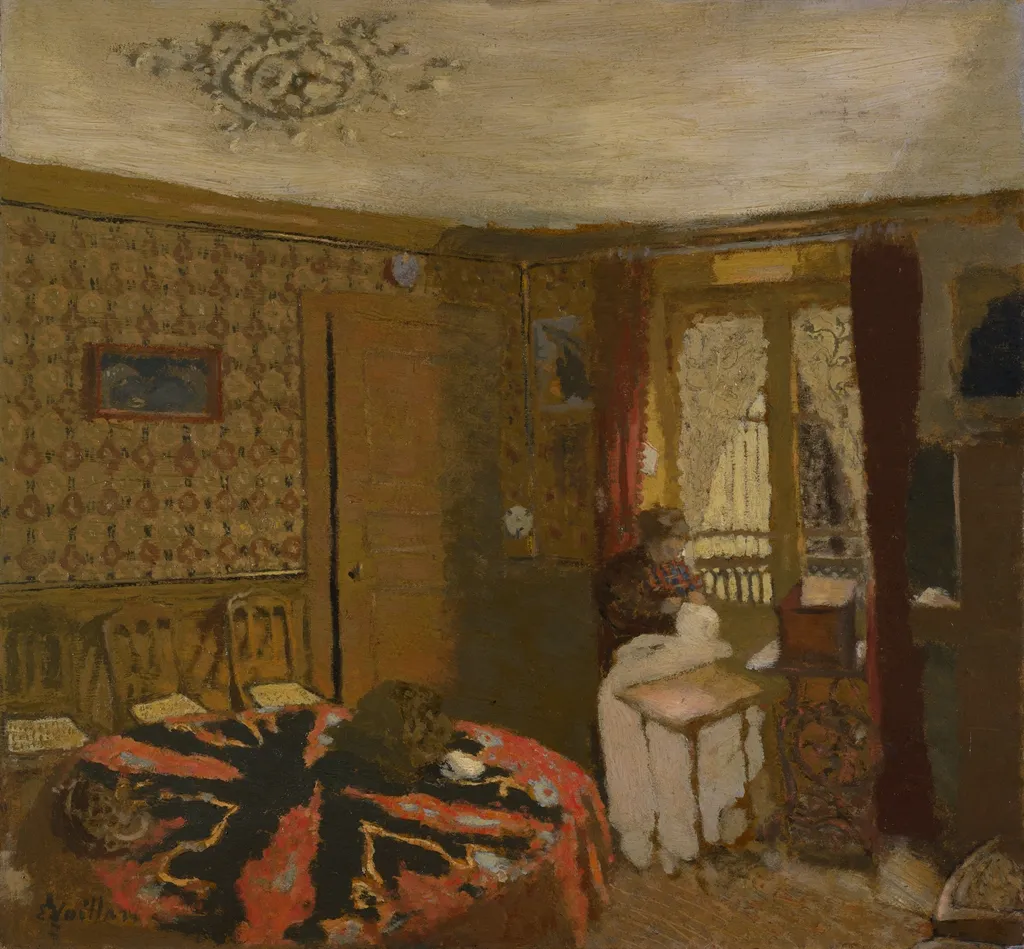
Mme Vuillard Sewing by the Window, rue Truffaut is an unspecified painting by the Post-Impressionist artist Édouard Vuillard. It dates from 1900 and is held in the collection of the Metropolitan Museum of Art.
About this work
Subject & Meaning
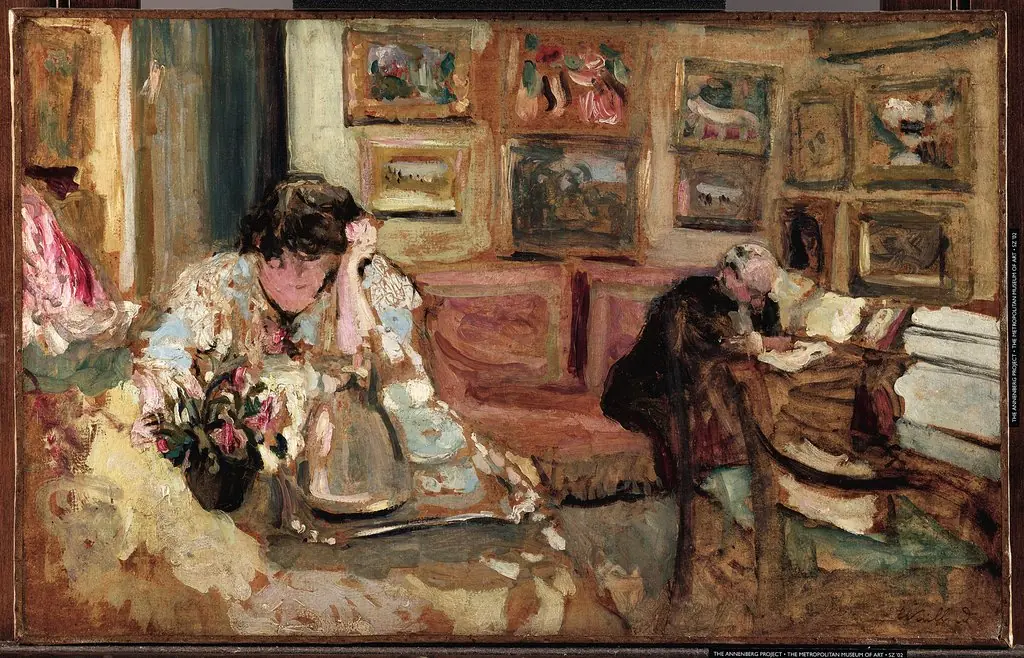
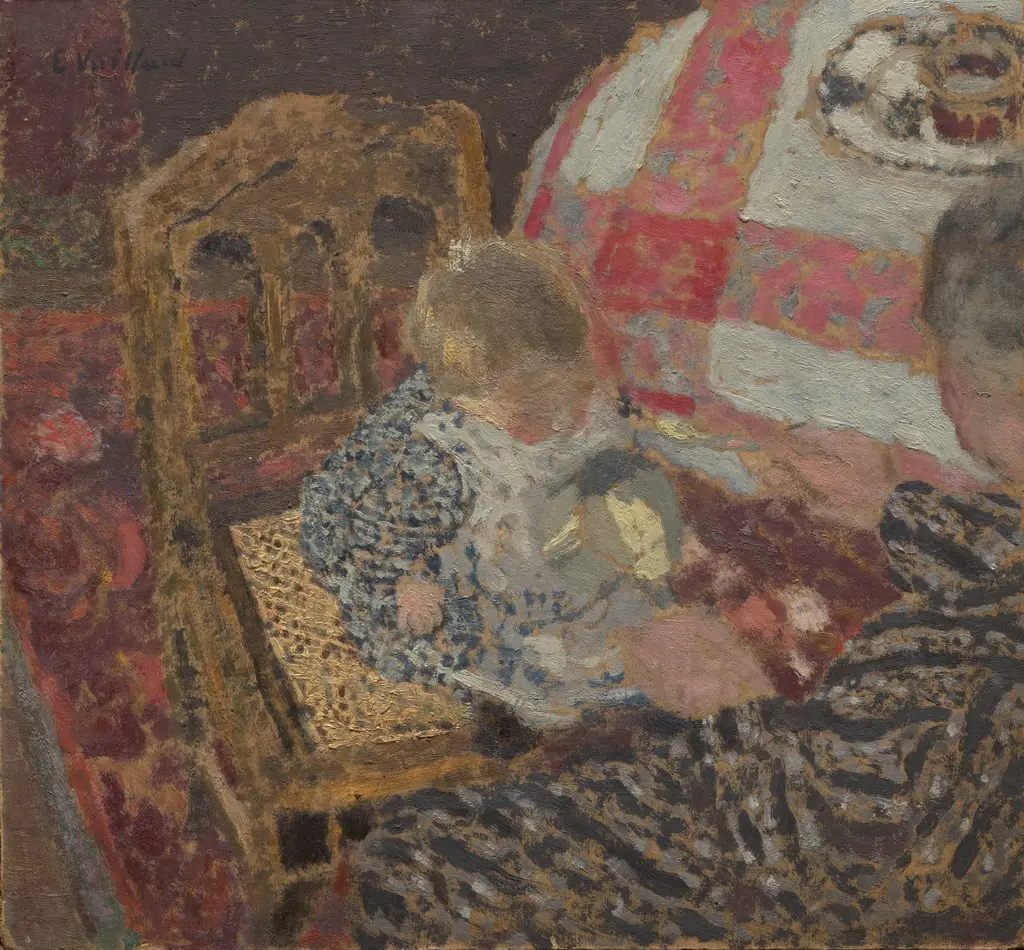
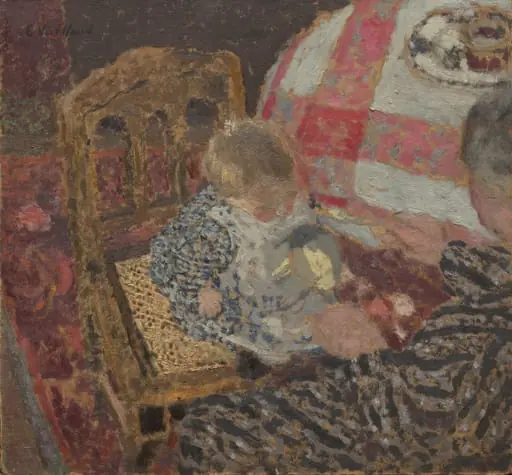
Mme Vuillard Sewing by the Window, rue Truffaut portrays a woman engaged in sewing beside a window within a domestic interior. The scene includes a tablecloth, curtain, and lace, highlighting the quiet, textile‑focused atmosphere of the space. The work presents an intimate view of everyday life, emphasizing the interplay of light and fabric within a private setting.
History & Provenance
It was previously owned by Robert Lehman, Gaston Bernheim de Villers, and Sam Salz before entering the museum’s holdings in 1975.
Mme Vuillard Sewing by the Window, rue Truffaut was painted by Édouard Vuillard in 1899, as indicated by the work’s inception date and its classification as an oil painting. The painting entered the collection of Gaston Bernheim de Villers, then passed through the hands of dealer Sam Salz before being acquired by financier Robert Lehman, whose bequest brought it to the Metropolitan Museum of Art, where it remains today. No documentary evidence of a specific commission is recorded in the available sources.
The painting is held at the Metropolitan Museum of Art. Its accession number is 1975.1.189, assigned during its acquisition from the Robert Lehman Collection. It was previously owned by Robert Lehman, Gaston Bernheim de Villers, and Sam Salz before entering the museum’s holdings in 1975. The work has not been recorded as part of major public exhibitions in the provided sources.
Overview
Created in 1900, Mme Vuillard Sewing by the Window, rue Truffaut depicts the artist's mother, Marie Vuillard, engaged in domestic needlework within their Parisian apartment. The composition is characterized by a flattened perspective and a dense arrangement of patterns, where the red-and-white tablecloth, striped chair cushion, and floral curtains merge with the warm brown walls to create a unified, tapestry-like surface. Vuillard places the figure in a dimly lit interior, utilizing soft, diffused light that filters through the window to illuminate the scene without creating harsh shadows.
The foreground features a bed with a red blanket, anchoring the viewer's gaze before leading it to the central figure. This work exemplifies Vuillard's mature style within the Post-Impressionist movement, specifically his focus on intimate domestic interiors known as 'intimism.' Painted during a period when the artist frequently returned to the rue Truffaut residence, it reflects his enduring fascination with the psychological atmosphere of family life and the decorative integration of figure and environment.
The painting avoids narrative drama in favor of a quiet, observational stillness, capturing a fleeting moment of daily routine through a sophisticated manipulation of color and pattern.
Technique & Style
The artist employs a distinctive technique characterized by thick, visible brushstrokes that lend a palpable texture to the canvas. This rough application contributes to the painting's "lived-in" quality, emphasizing the materiality of the paint itself. Light predominantly enters from the window, creating subtle shadows and defining the forms within the dimly lit room, enhancing the intimate atmosphere.
Own this work as a print
Artist & collection
Artist
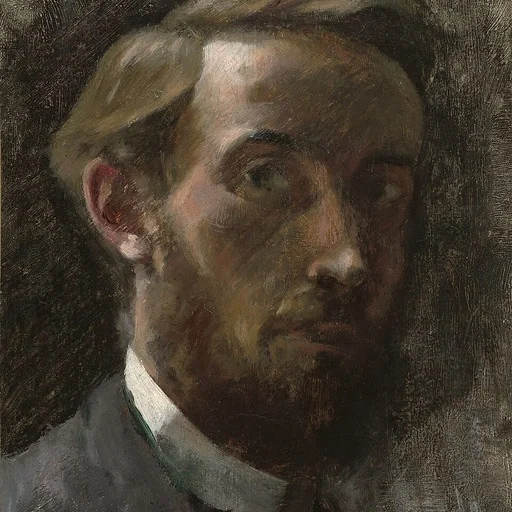
Jean-Édouard Vuillard (French:; 11 November 1868 – 21 June 1940) was a French painter, decorative artist, and printmaker.