Lemons by Hall, George Henry
This is George Henry Hall's *Lemons*, painted in 1884. It is quietly radical. At a time when many American painters still reached for grand European narratives, Hall insisted that three lemons on a wooden table were subject enough. He was right.
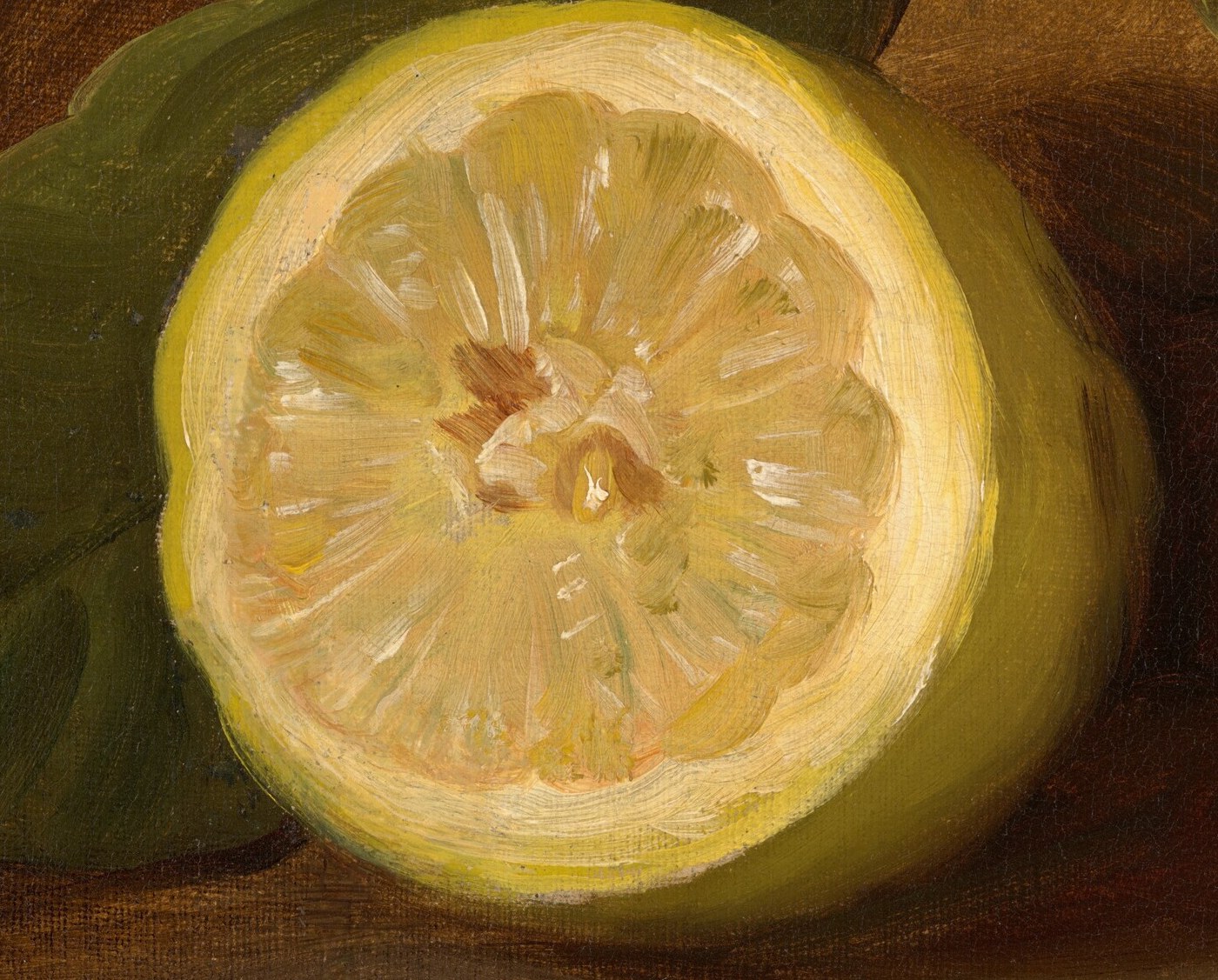
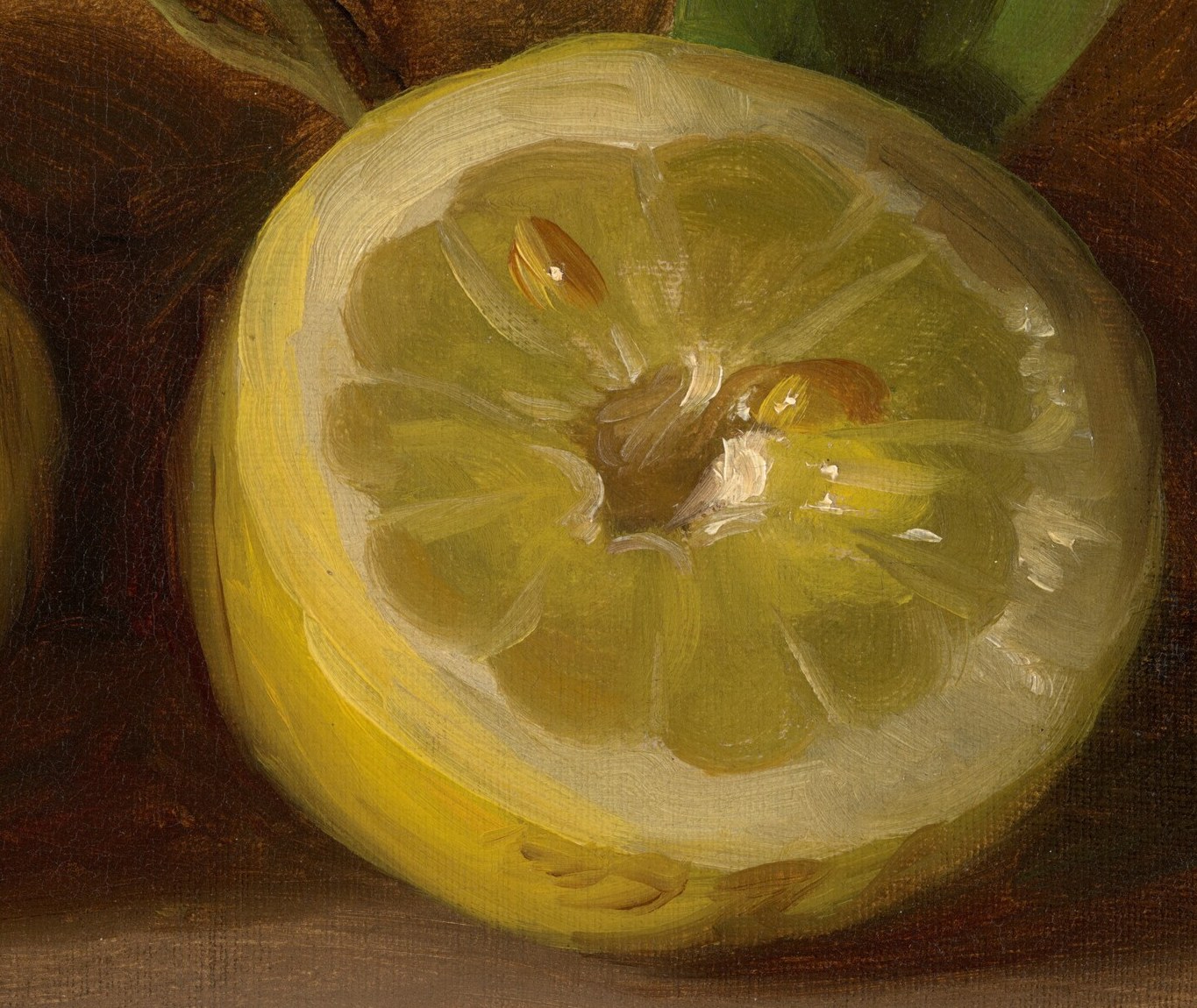
Look at the cut fruit. The left lemon half is a small masterclass in wetness: the glisten on the pulp, the individual seeds set in their membranes, the faint shadow under the torn edge of the pith. The whole lemon behind it catches the full light, and his brushwork gives the rind a texture you can almost feel with your thumbnail. Nothing here is invented for drama; everything is observed.
Hall trained in Düsseldorf and Paris, then split his life between New York and a studio in the Catskills. He sold 1,659 paintings during his lifetime, a quiet, steady output that earned him enough to live simply and paint exactly what he wanted. He never married. Friends said the work was his whole life.
The real price here is not what this canvas sold for. It is the cost of decades of attention. 1,659 paintings, each one an insistence that the ordinary world repays looking.
Details
Transcript
George Henry Hall painted this in 1884. He sold 1,659 paintings over his career. Look at the light he gives a single lemon. The wet pulp, the seeds, the torn pith. Hall never married. He painted every day. Careful observation was the whole project.