Self-portrait by Carlos Esquivel y Rivas
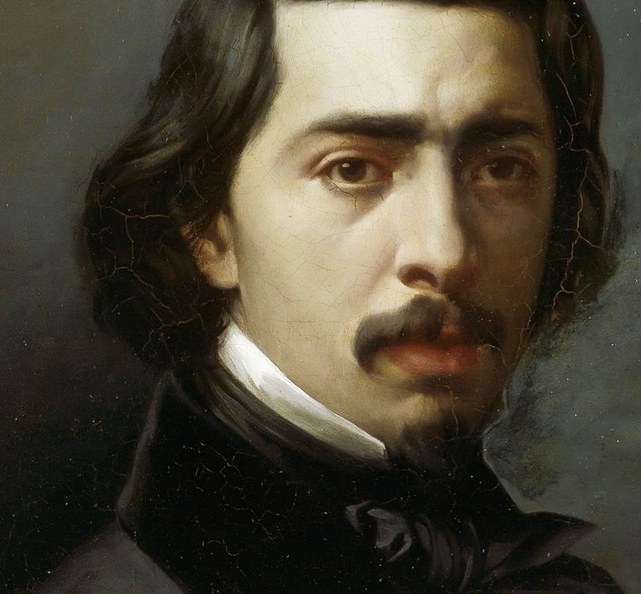
Carlos Esquivel y Rivas's Self-portrait from 1856 is a quiet, intense gaze from the past, held at the Museo del Prado. It’s a profound moment captured just years before his premature death.
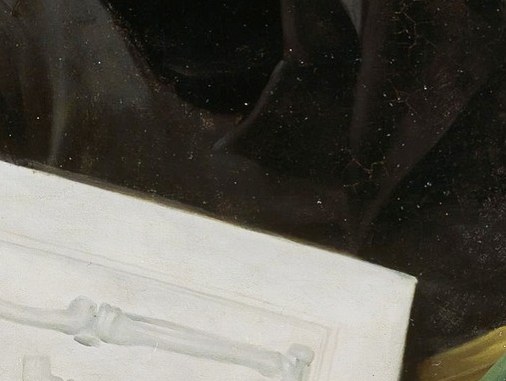
Look at the artist's face, the sharp intelligence in his eyes, and the deliberate way he holds both a drawing and a brush. These are the tools of his dual nature: the draftsman and the painter.
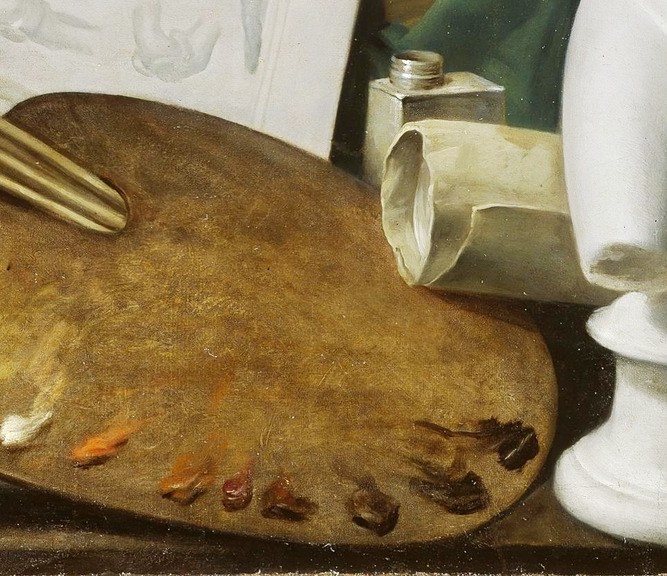
Painted in 1856, Esquivel y Rivas captured himself surrounded by symbols of his craft and intellect. The anatomical drawing and the artist's palette are direct signifiers of his dedication to understanding and creation. He was only thirty-seven when he died, making this self-reflection poignant.
This portrait is a testament to a brief but focused artistic life.
Details
Transcript
He looks at you across time. Intelligence and self-awareness are in his eyes. One hand holds his drawing. The drawing is an anatomical study. His other hand grips a brush. His palette shows his profession. He painted this in 1856. He died young, at thirty-seven.