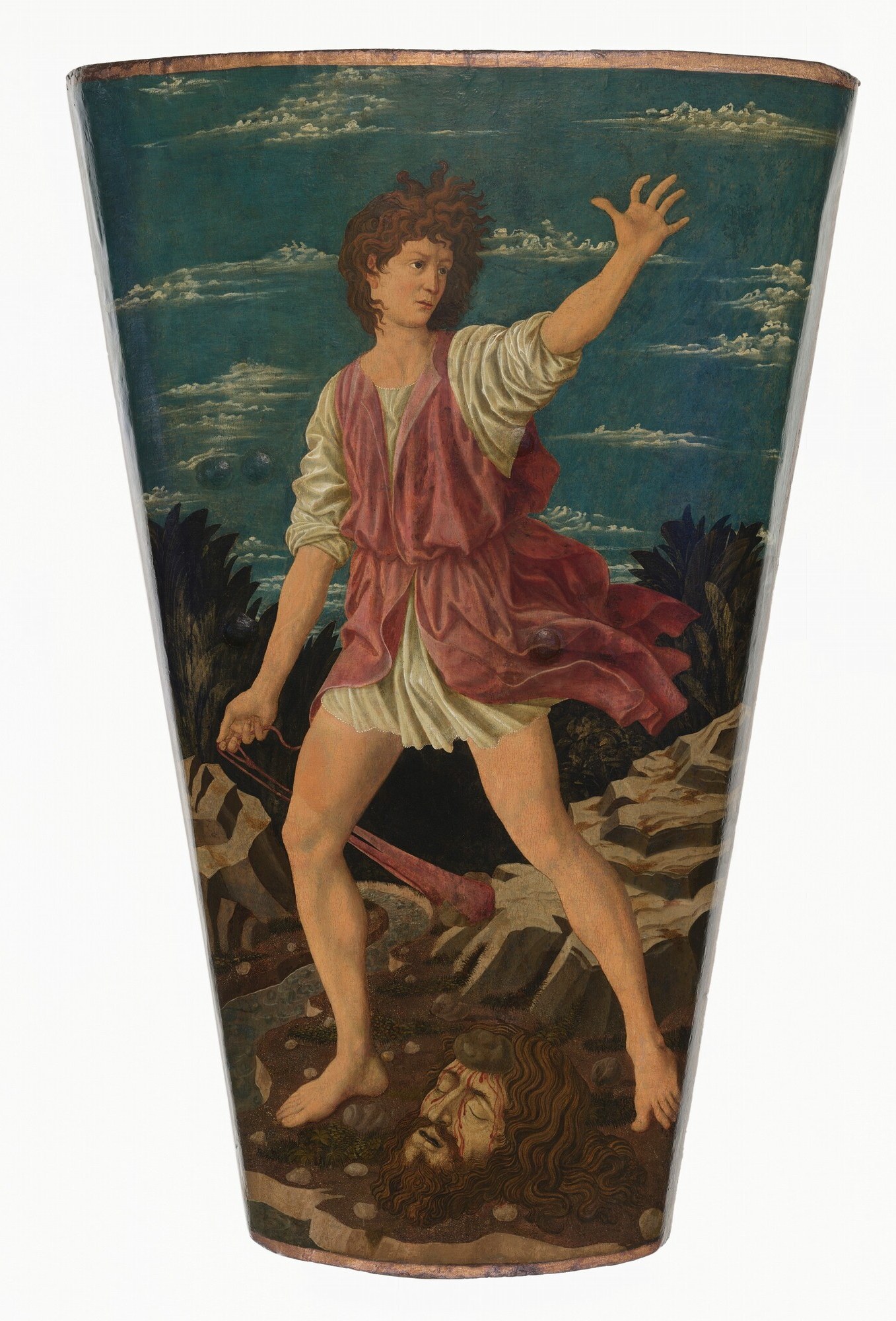
David with the Head of Goliath by Andrea del Castagno
View the artwork: David with the Head of Goliath →
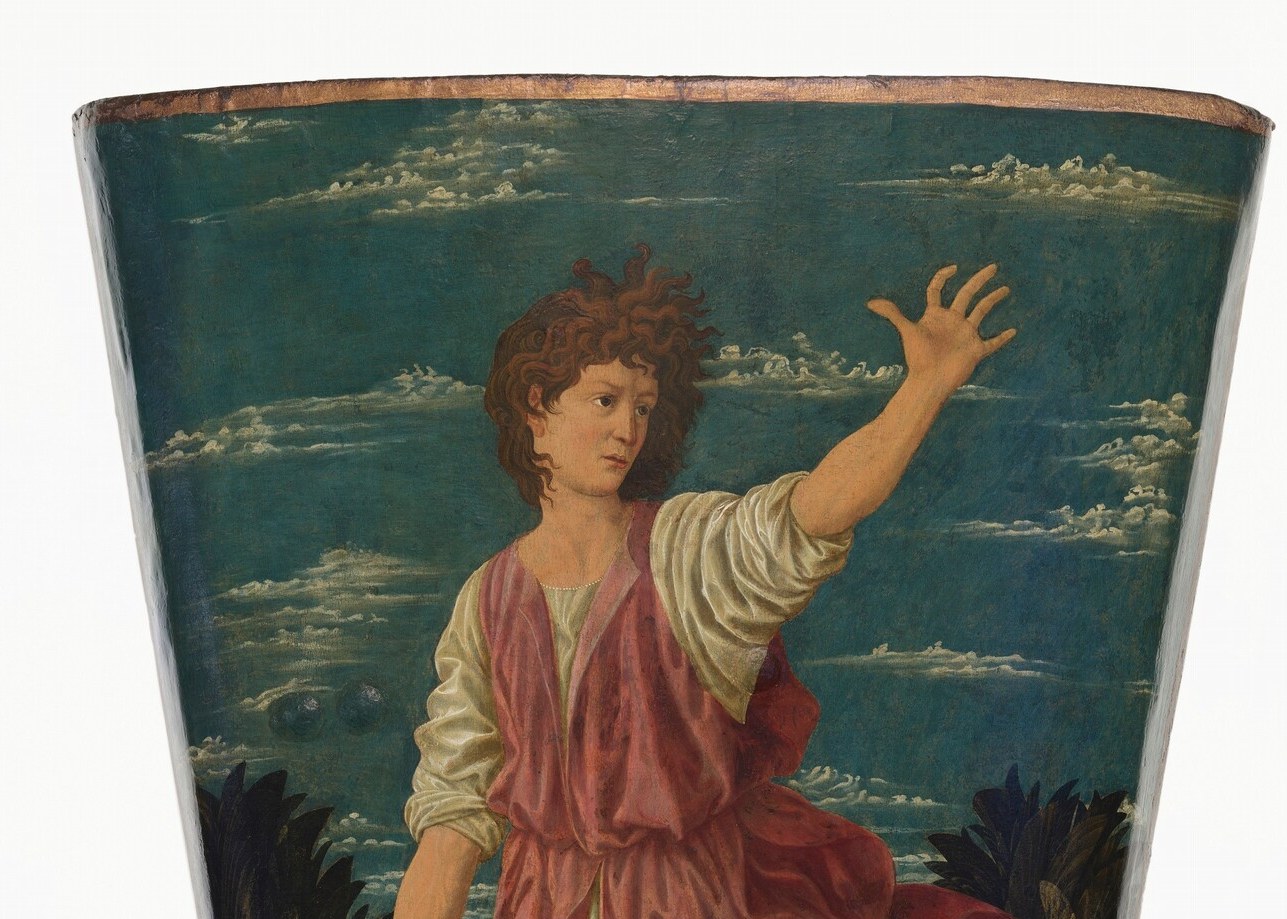
Andrea del Castagno painted this David around 1450. It is tempera on leather stretched over a wooden parade shield, now in the National Gallery of Art, Washington, D.C. But the object itself tells two stories: one biblical, one political.
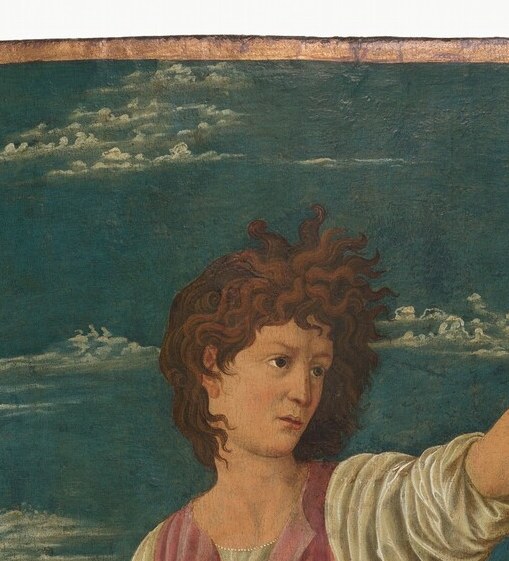
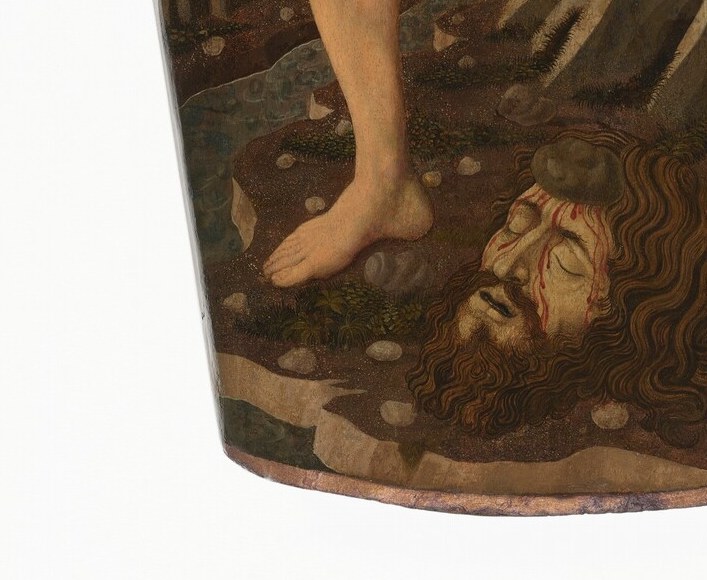
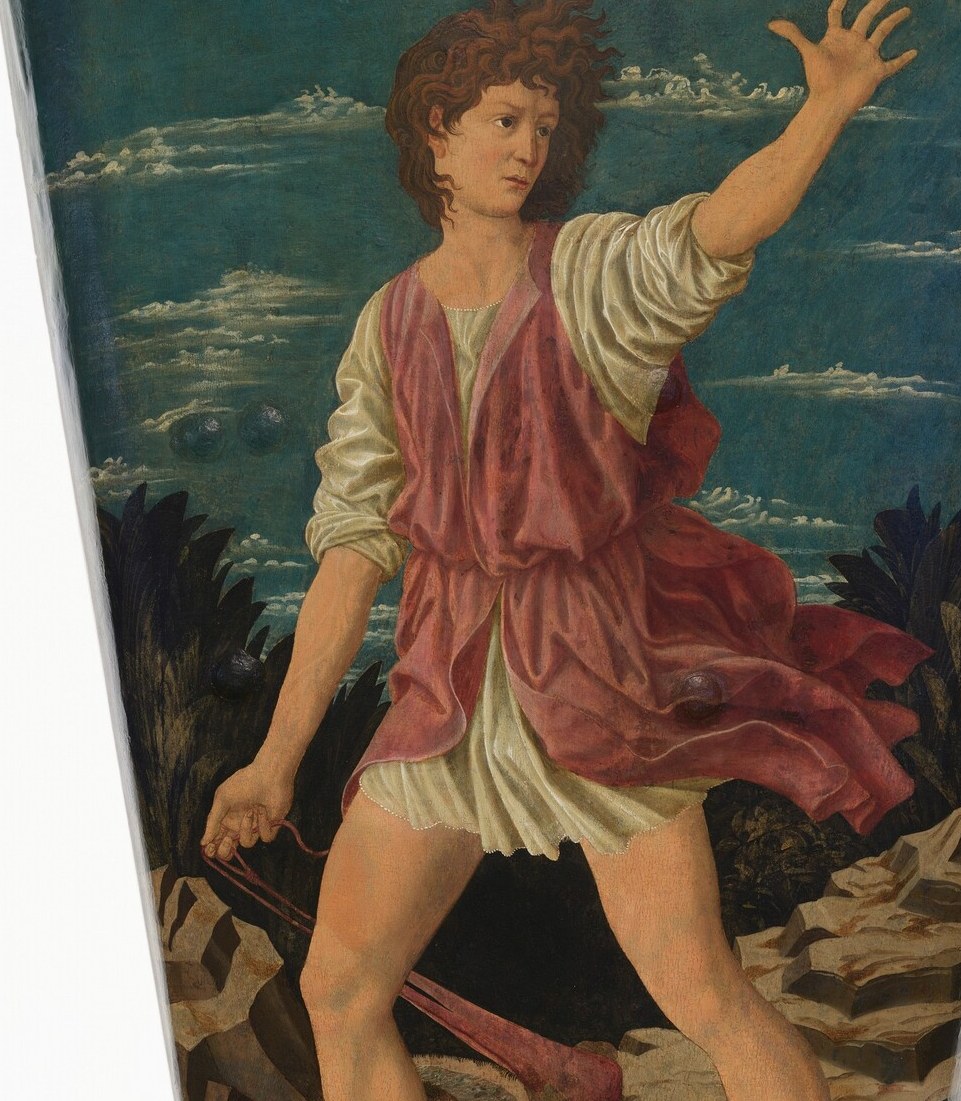
Look first at the odd shape. This is not a rectangular panel painting; the support tapers at the bottom. It is a functional parade shield, the kind carried in processions. Castagno turned a piece of equipment into a stage for a full narrative scene, David triumphant, Goliath's severed head at his feet, a loaded sling in hand, wind whipping the pink tunic.
The shield spent centuries in England at Locko Park, the seat of the Drury-Lowe family. One of its forebears, Sir William Drury, was a commander under Elizabeth I. The later Drury-Lowes were connected to the parliamentarian cause. That same family line helped build the case that brought Charles I to trial and execution in 1649.
So a painted shield about righteous victory over a tyrant, David over Goliath, spent its English life in a household that, in its own history, helped deliver a very real judgment against a king. A moral object and a military one, its provenance adds a layer Castagno could never have foreseen.
#arthistory #renaissance #delcastagno
Details
Transcript
It looks like a battle cry frozen in paint. A young shepherd, giant's head at his feet, wind in his tunic. But the painting is painted on a weapon. A real parade shield, meant to be carried into Florentine streets. For centuries it hung in Locko Park, home of the Drury-Lowes. The same family that helped prosecute King Charles I for treason. Justice, painted onto a shield, kept in a house that helped topple a king.