Artwork
David with the Head of Goliath
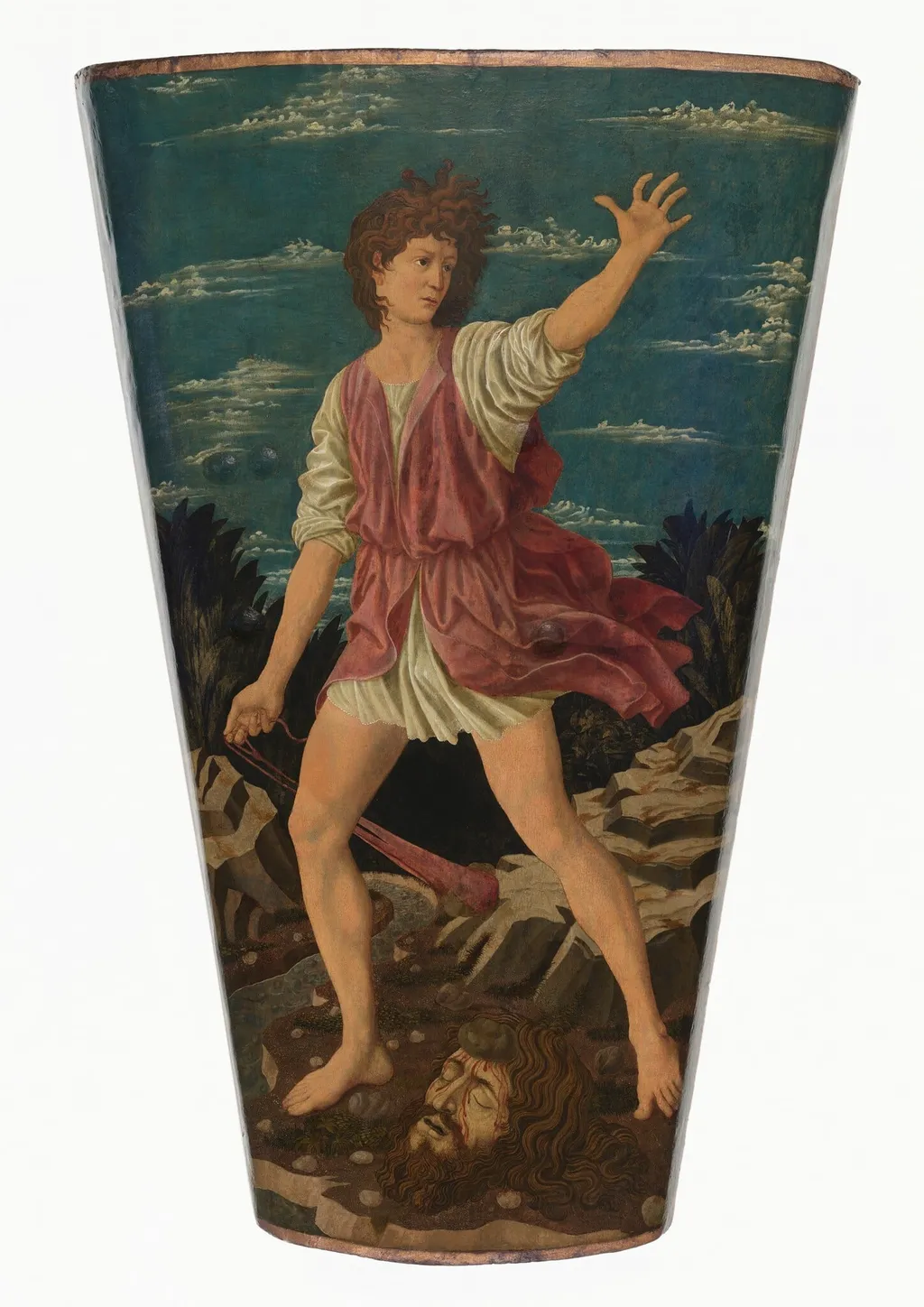
David with the Head of Goliath is a tempera painting by the Early Renaissance artist Andrea del Castagno. It dates from 1452 and is held in the collection of the National Gallery of Art.
About this work
A youth grips a loaded sling, a severed giant's head at his feet, the scene painted on a curved parade shield rather than a panel.
A youth grips a loaded sling, a severed giant's head at his feet, the scene painted on a curved parade shield rather than a panel. Andrea del Castagno worked in tempera on leather around 1450 to 1455, giving David a pose perhaps borrowed from an antique statue. Most parade shields bore coats of arms, so a biblical narrative like this was exceedingly rare. It entered the National Gallery of Art in 1942.
Subject & Meaning
The painting depicts the biblical hero David after his victory over Goliath. Iconographically, David is shown as a youthful athlete poised to sling a stone, while Goliath's severed head already rests at his feet with the stone embedded in its forehead, a prefiguration of victory. In 15th-century Florence, David was a potent civic symbol representing the Republic itself, a small but divinely favored state threatened by larger powers such as Milan or the papacy.
This meaning aligns with the work's function as a ceremonial parade shield, where David's protective role echoed Florence's self-image as a defender of liberty. The classical athletic pose and detailed anatomy further underline heroic virtue and divine selection.
Technique & Style
The painting employs tempera on leather applied to a wooden parade shield, a support shaped with curved edges between a pavise and a kite shield. Andrea del Castagno demonstrates meticulous anatomical rendering, with pronounced chiaroscuro modeling that defines musculature and veins. The figure is depicted as an athlete in a dynamic contrapposto, his flowing garments and the V-shaped background arrangement enhancing a sense of movement.
The ground is carefully detailed with plants, rocks, and a winding stream, while the sky features wispy clouds. The pointed rock formations recall earlier, more archaic examples, such as those seen in Giotto. The shield was crafted for ceremonial use rather than combat, and the narrative composition, showing David poised to strike with Goliath's severed head already at his feet, reflects a sophisticated blend of naturalism and symbolic foreshadowing.
History & Provenance
Created around 1450–1457 as a ceremonial parade shield, the work was purchased in Italy in 1852 by William Drury-Lowe for £6 13s. It remained at Locko Park, Derbyshire, through three generations before being sold through agents to Peter A.B. Widener in January 1913. Widener’s collection eventually passed to his son Joseph, who gifted the painting to the National Gallery of Art, Washington, in 1942.
Context
Andrea del Castagno's David with the Head of Goliath occupies a singular place in Renaissance art as the only known parade shield painted by a major master of the period. Designed for ceremonial display rather than combat, it reflects the Florentine republican symbolism of David as a defender against larger threats, a theme echoed in contemporary statues by Donatello, Verrocchio, and later Michelangelo. Art historians note the work's stylistic synthesis: the athletic, contrapposto pose recalls ancient statuary, while the rocky landscape and sharp chiaroscuro owe debts to Giotto and Castagno's own sculptural approach to anatomy.
This shield thus bridges civic iconography, personal patronage, and the artist's wider engagement with humanist ideals of strength and virtue.
Overview
Andrea del Castagno's David with the Head of Goliath, created between 1450 and 1457, is an unusual painting executed in tempera on a parade shield made of leather and wood. Measuring 115.5 cm in height, with a width of 76.5 cm at the top tapering to 40.6 cm at the bottom, this work departs from conventional panel painting. It is currently housed in the collection of the National Gallery of Art in Washington, D.C., representing a distinctive example of early Renaissance art.
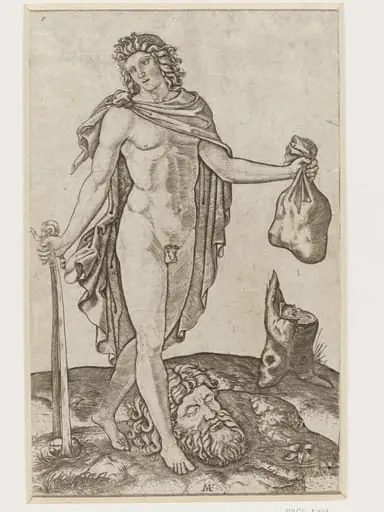
Own this work as a print
Artist & collection

Artist
Andrea del Castagno had a quick, sharp career in 15th-century Florence. He wasn’t the most famous painter of his time, but he stood out for his bold, almost sculptural figures that looked ready to step off the wall. His…

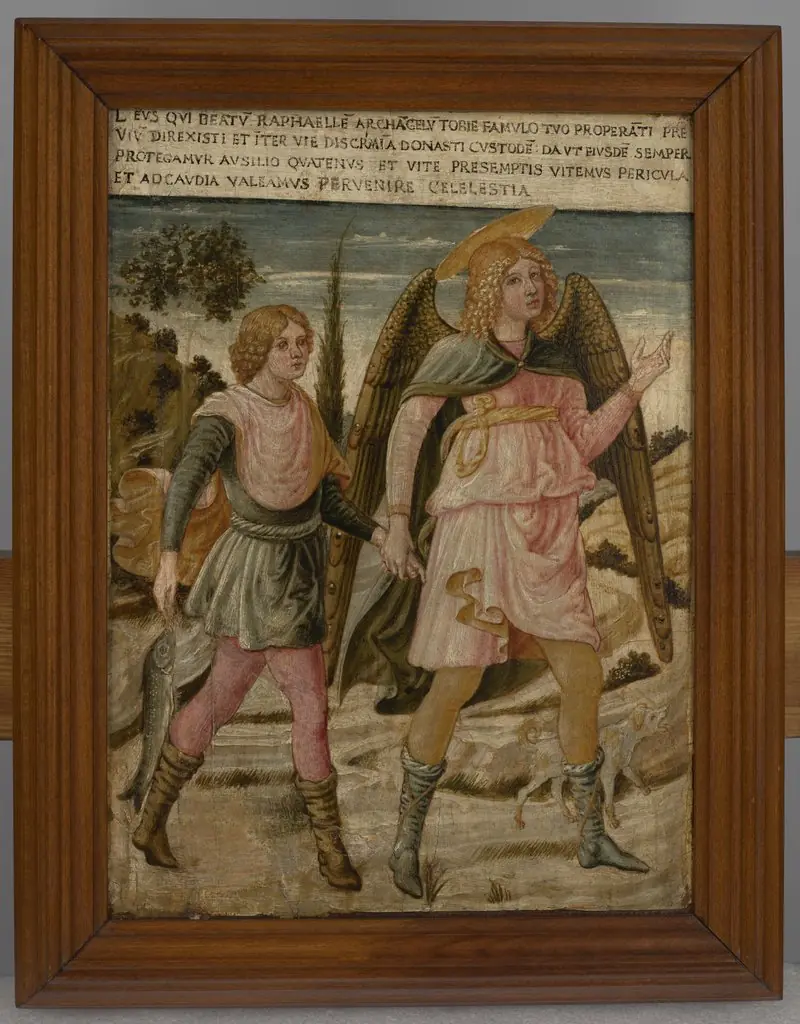 Tobias with Archangel Raphael
 John the Baptist
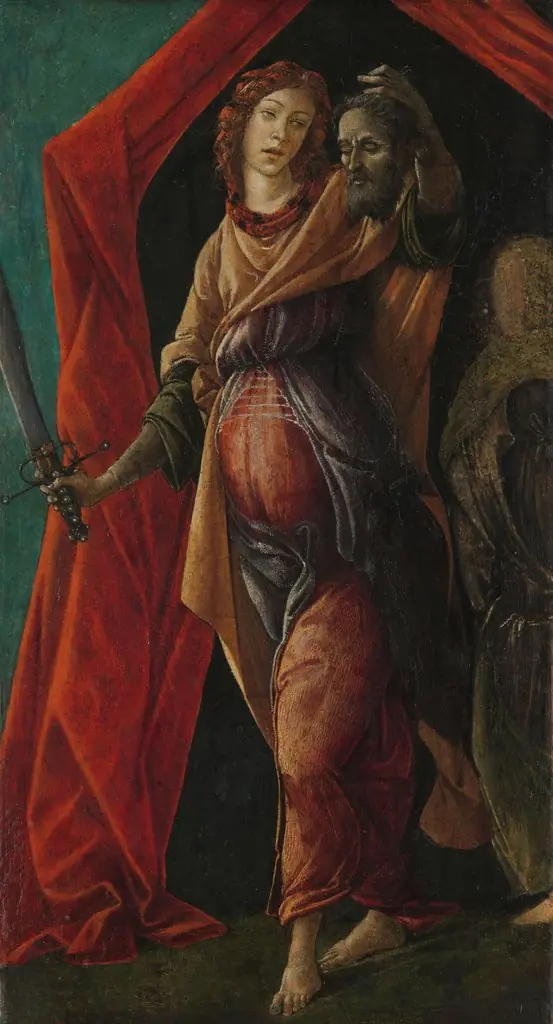 Judit with the Head of Holofernes
 Copy of a detail of the Ghent Altarpiece, The Hermits, by Hubert and Jan van Eyck in the church of St. Bavon, Ghent.
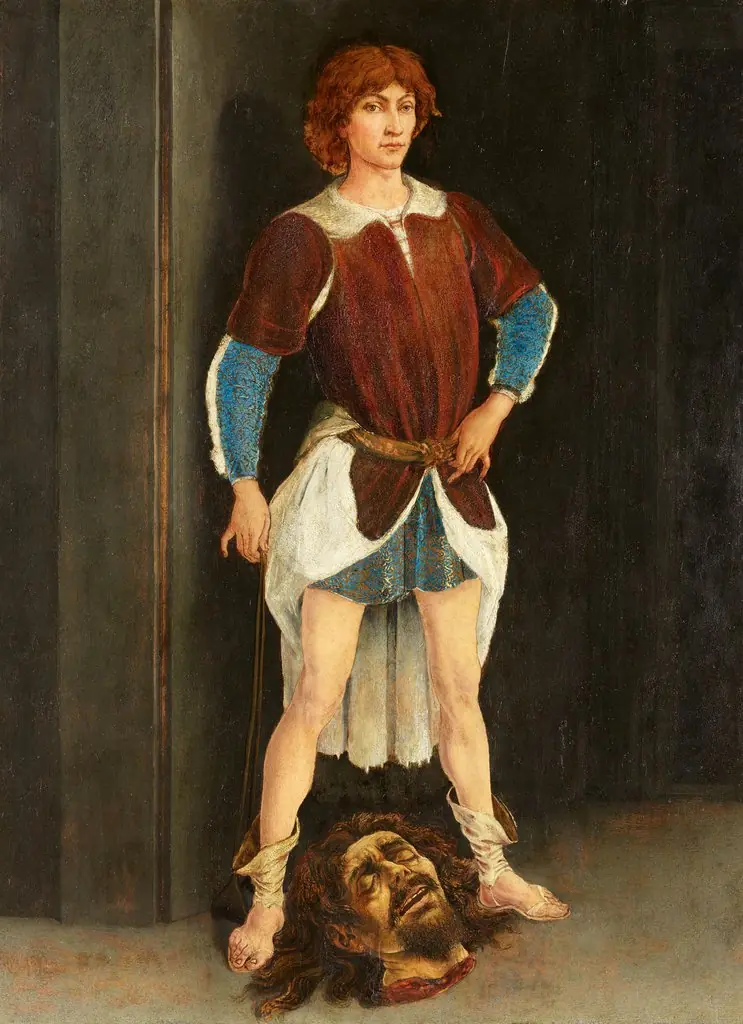 David Victorious
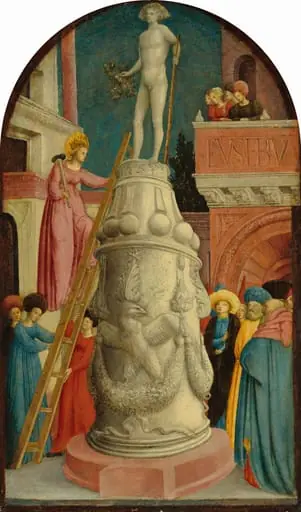 Saint Apollonia Destroys a Pagan Idol
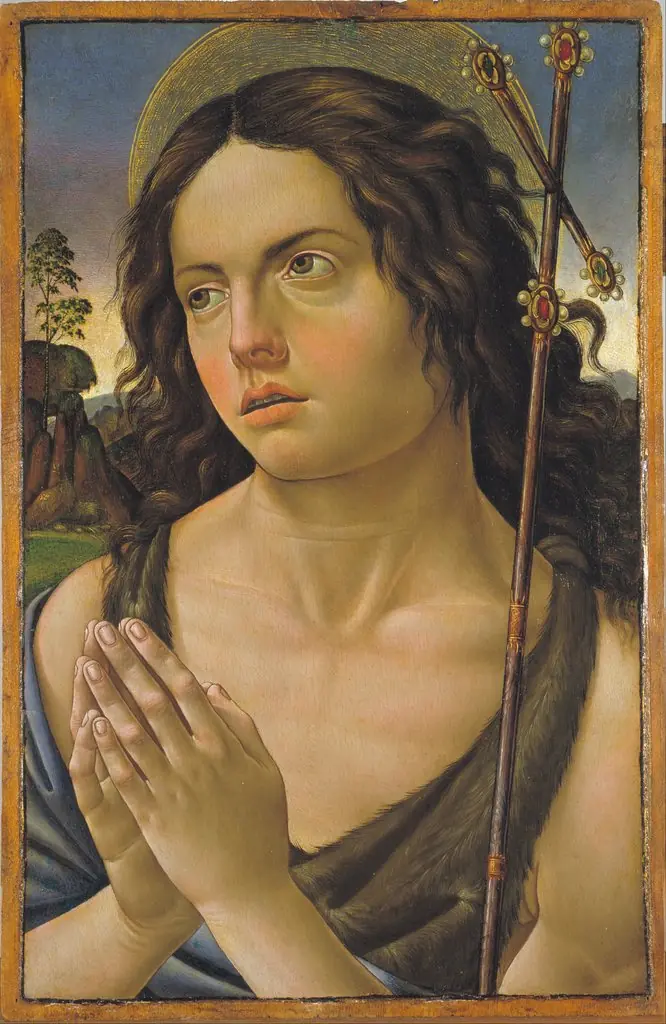 Saint John the Baptist
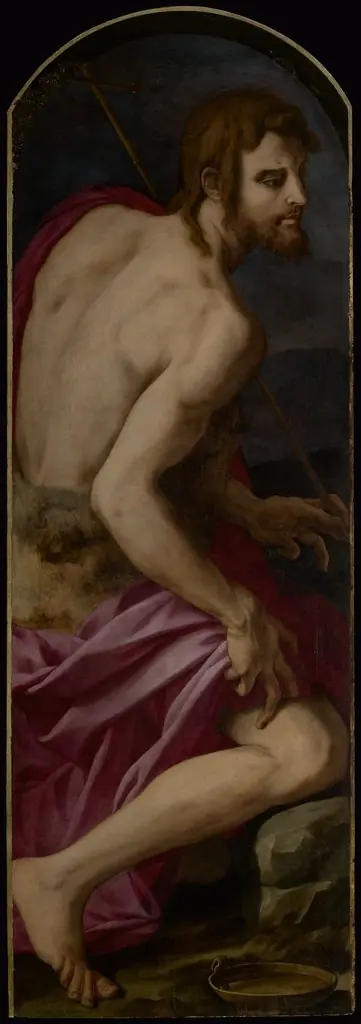 St. John the Baptist
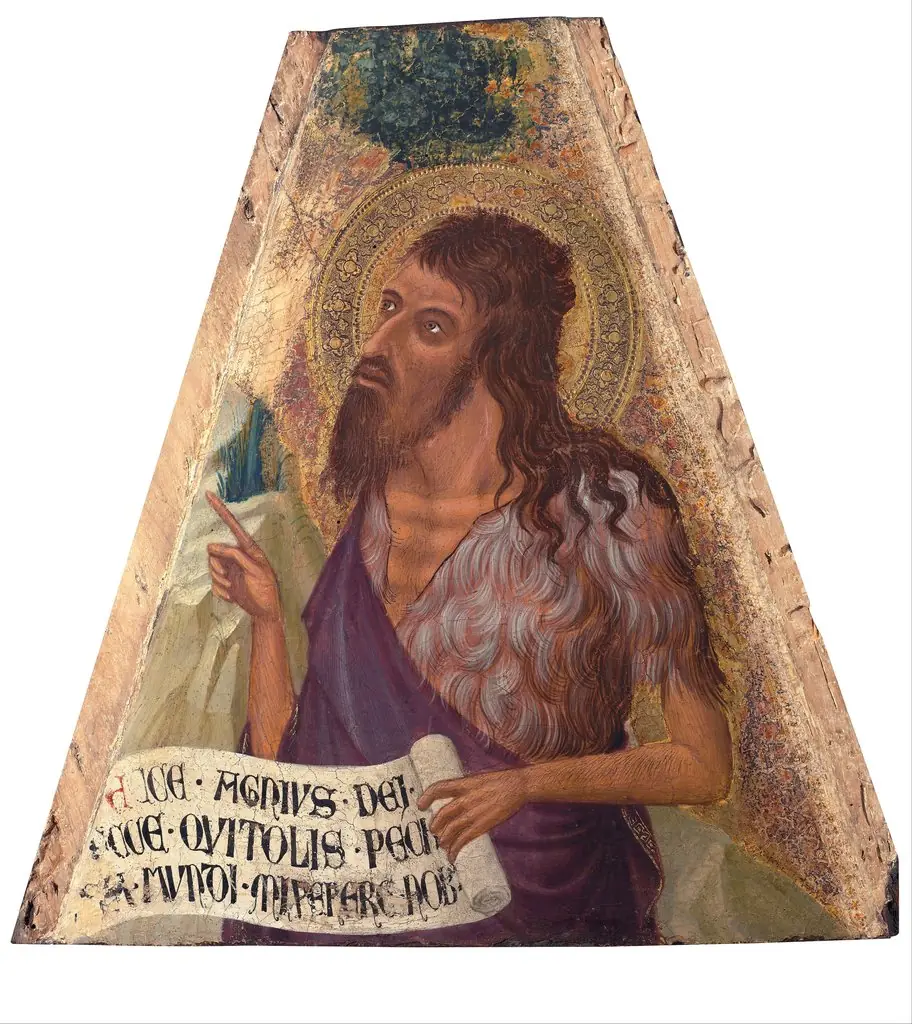 St. John the Baptist