Christ Presented to the People by http://www.wikidata.org/.well-known/genid/3c3feead0c4c17fa273414468fbd489f
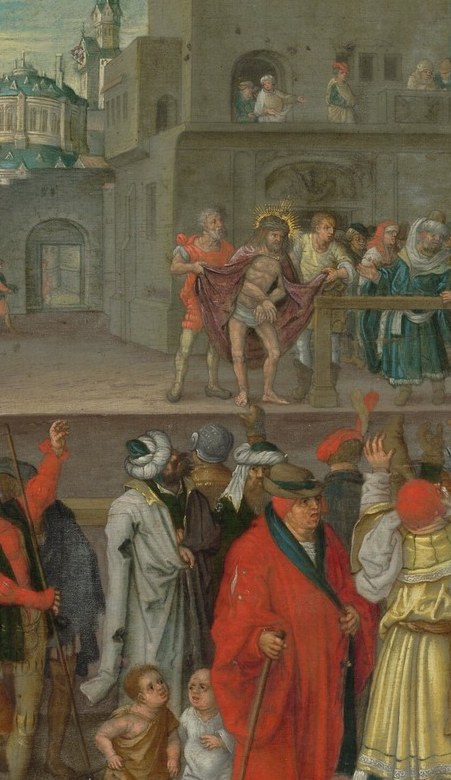
This is 'Christ Presented to the People' by an unknown Flemish painter, circa 1600. It depicts the biblical moment when Pontius Pilate offers the crowd a choice between freeing Jesus or Barabbas. But the most interesting figure in the painting isn't Pilate or Christ. It's a man most viewers never notice.
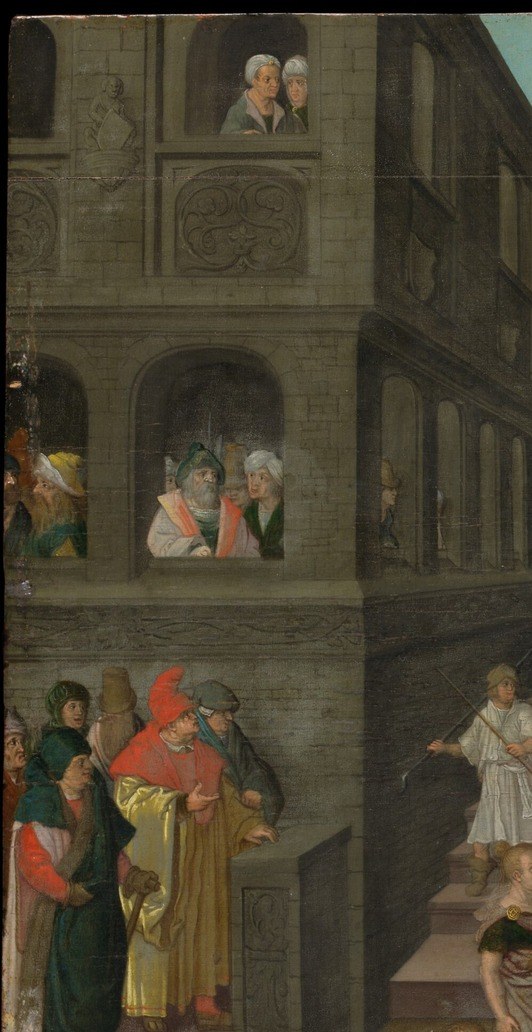
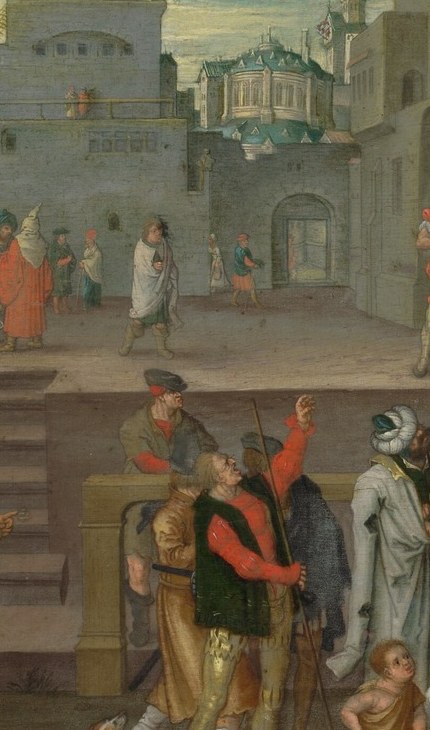
Look closely at the upper background, beyond the central drama. While every other figure crowds toward Pilate and Christ, this man is turned away. His posture cuts against the entire current of the scene, walking deeper into the city, disengaged from the judgment happening behind him.
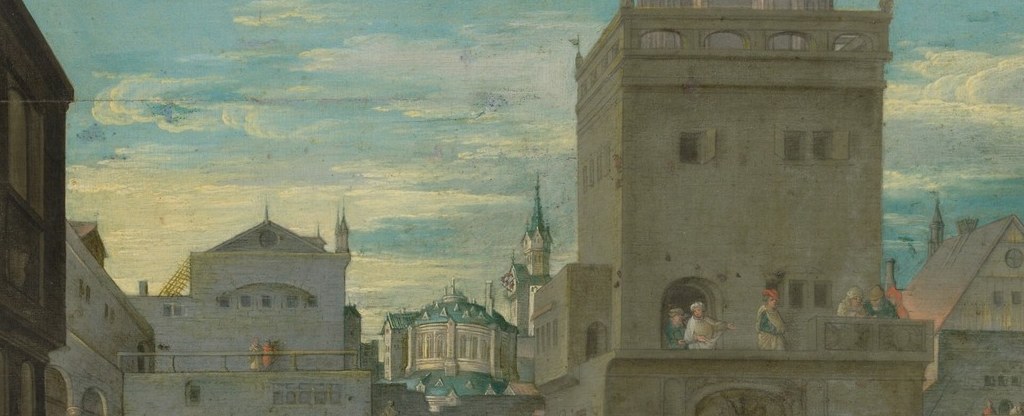
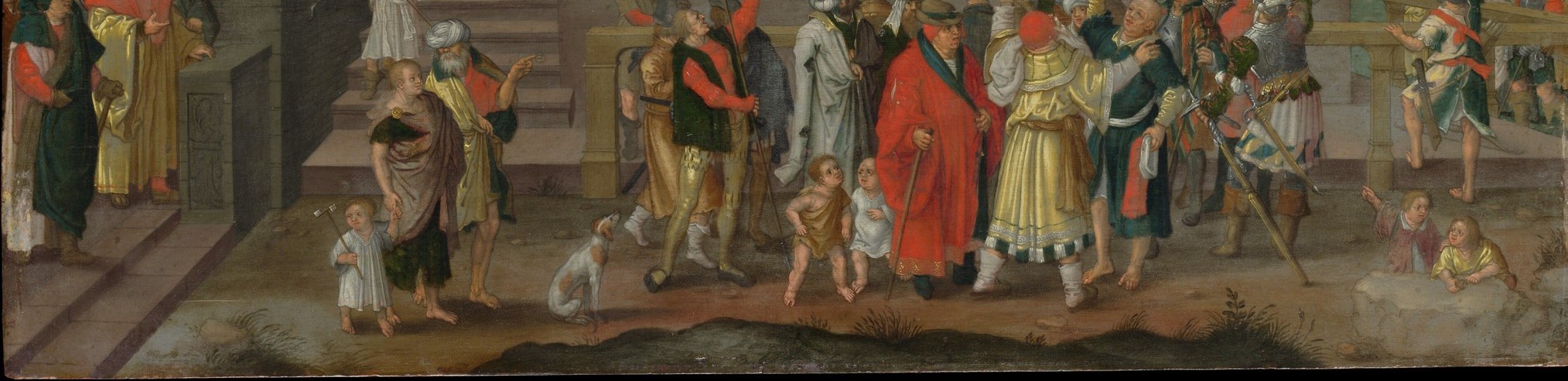
The painting is packed with the kind of teeming detail that rewards patient looking: the stone arch framing the action like a stage, the soldier's armor glinting at the right edge, the elevated spectators on a left balcony watching with detached curiosity. But that solitary figure moving against the crowd's direction is the detail that lingers. Is he the one person who refuses to participate in a mob? Or simply a passerby who has seen enough?
The artist remains unidentified, working in the Flemish tradition around 1600, when such crowd scenes drew on Mannerist theatricality and a fascination with cosmopolitan costume. The figure in the turban signals the Eastern setting, the armored soldier anchors the legal authority, and the pale open sky offers no divine commentary at all. The moral weight of the moment falls entirely on human choice. That one man made his.
Details
Transcript
A familiar scene. Pilate presents Christ to the crowd. Your eye goes straight to the red robes. But look past him. High in the distant crowd. One man has turned his back on the entire scene. He walks away from the judgment everyone else faces.