The Stranded Ship by Durand, Asher Brown
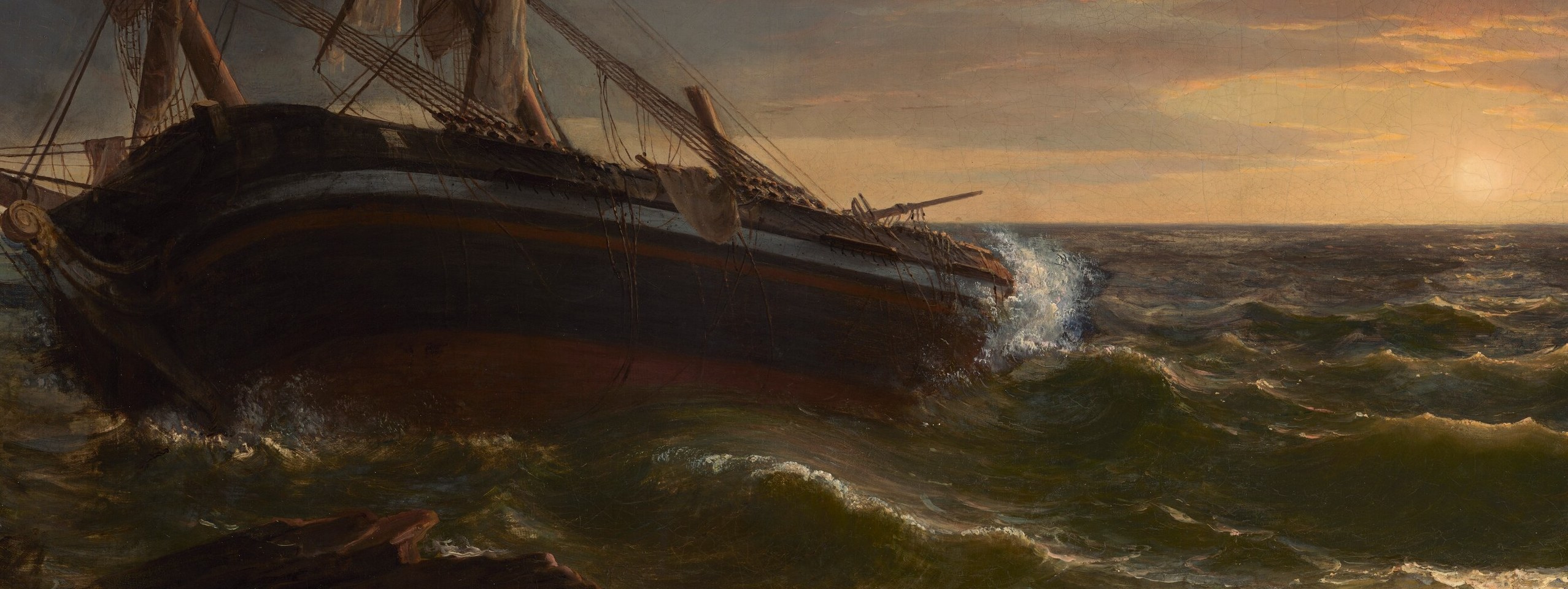
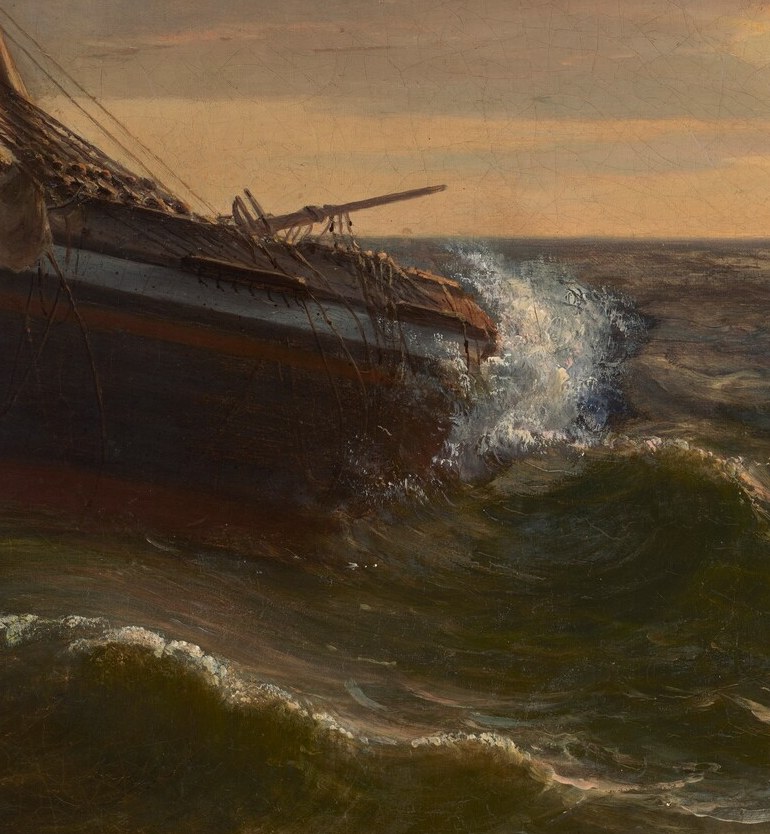
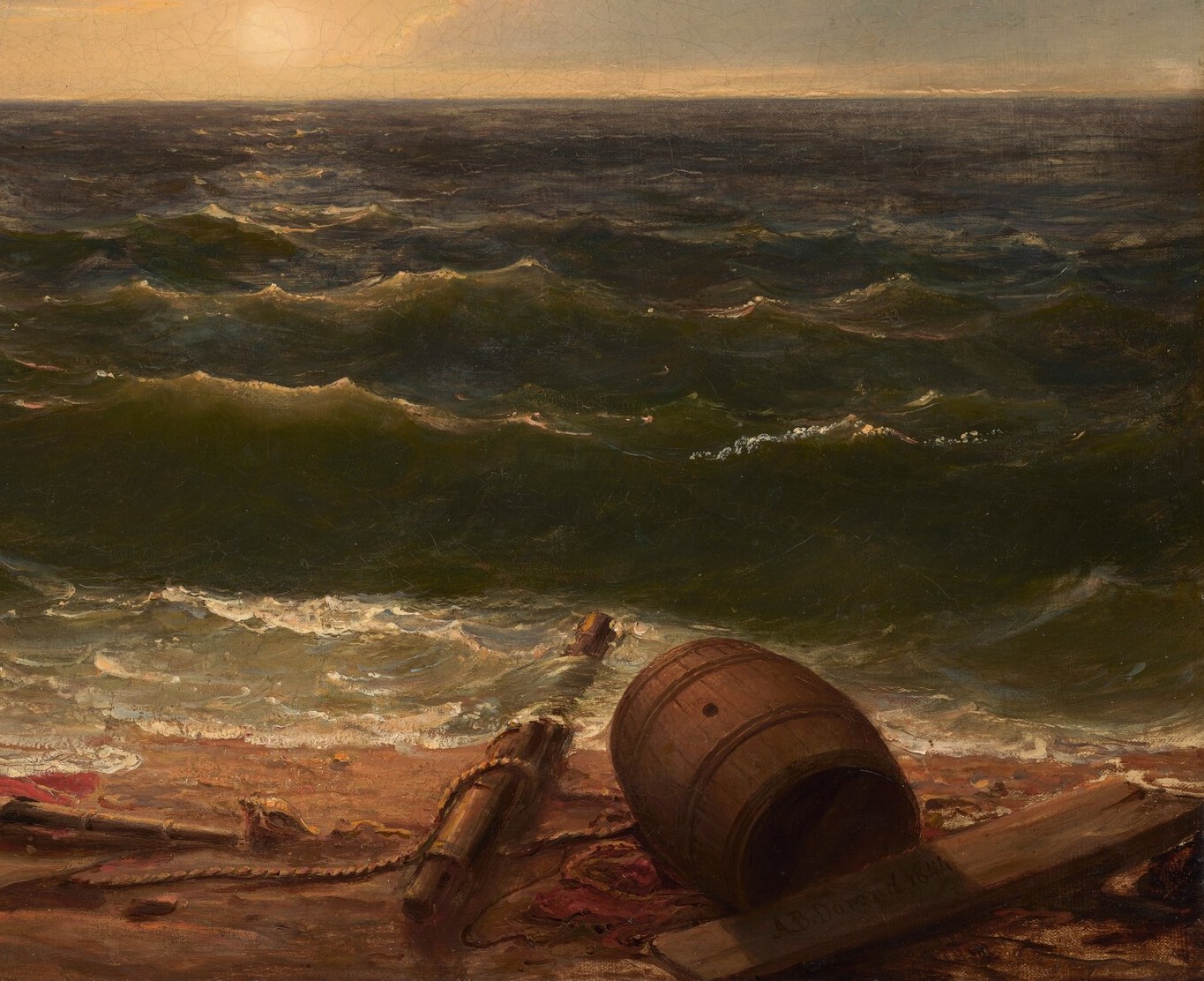
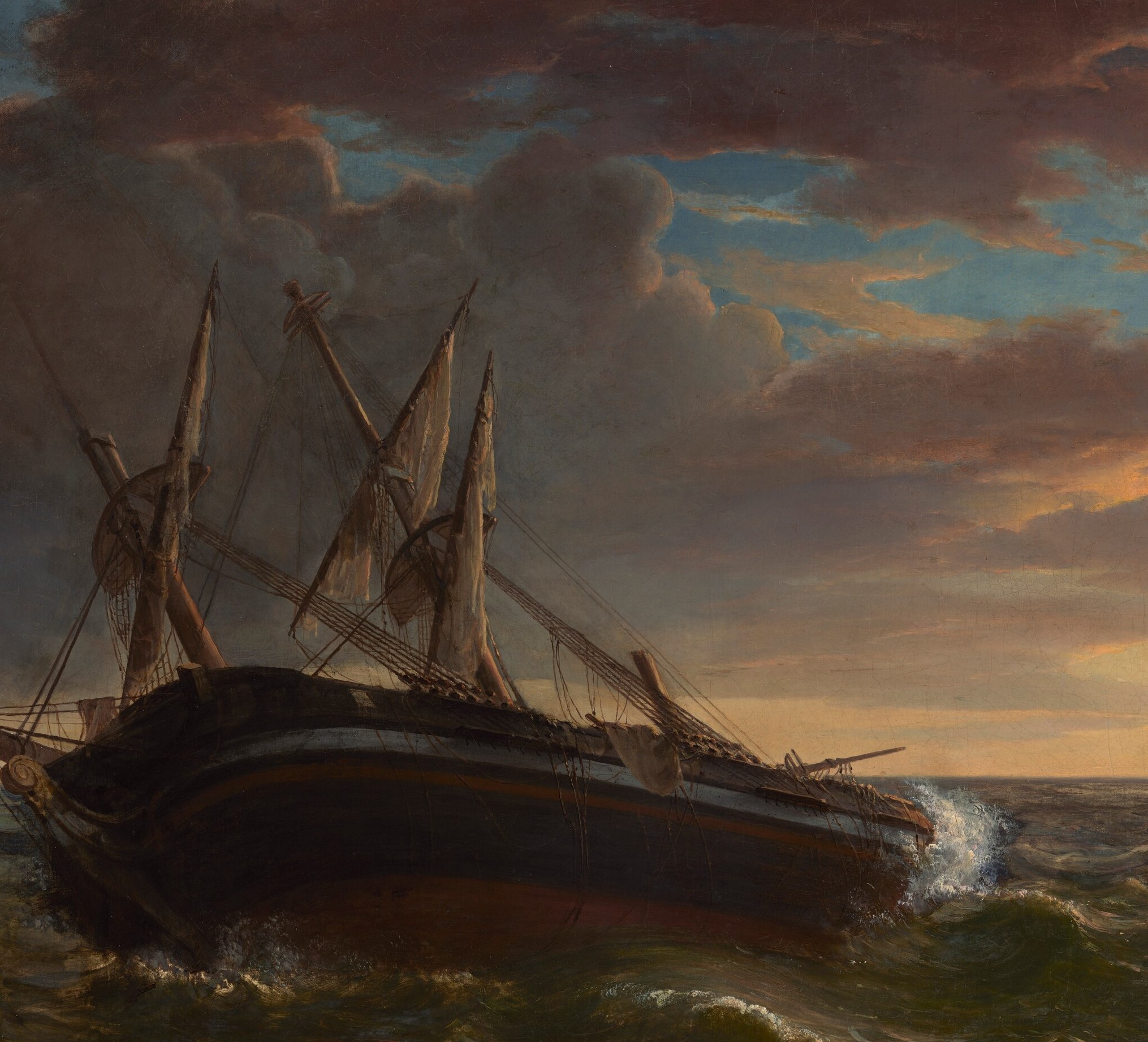
This is Asher Brown Durand's The Stranded Ship, painted in 1844 and held by the Metropolitan Museum of Art. X-ray imaging has revealed that the solitary figure walking away from the wreck was not always alone.
Look at the rocky shore in the foreground right. That empty space once contained a second human figure, a companion Durand deliberately painted over. The single survivor carrying a bundle away from the sea was originally part of a pair.
Durand was a leader of the Hudson River School, American painters who treated the landscape with religious reverence. But here, the wilderness is not sublime and welcoming. It is indifferent. The ship is already lost, the storm is breaking, and the survivor does not look back. By removing the second figure, Durand sharpened the isolation.
What do you think made him change his mind and erase the other person?
Details

Transcript
Shipwrecks were popular in American art. But this one refuses the obvious drama. No thrashing sailors. No splintering wood. Just a lone figure walking away. X-rays of this painting found a second man. The artist painted him out. Leaving the survivor utterly alone.