Untitled by Bakhta
This is *Untitled*, an equestrian portrait from the small princely state of Devgarh in Rajasthan, painted around 1775 by an artist named Bakhta. We know the painter's name, but the ruler's has been lost, a striking reversal for a genre whose entire purpose was to immortalize the powerful.
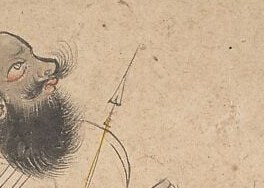
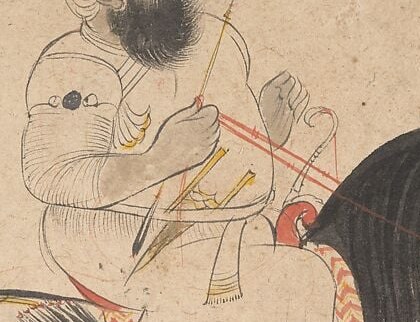
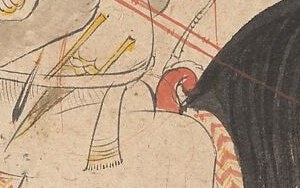
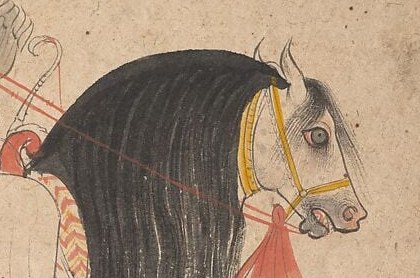
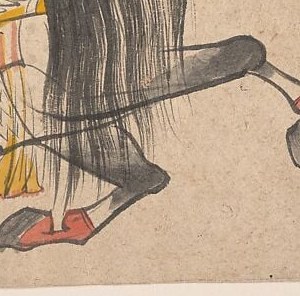
Look first at the rider's face. It follows the established formula for Rajput royal portraiture: the three-quarter profile, the turban's shadow, the beard. Yet there is a specific weight to it, a particularity that makes you wonder how much of a real man Bakhta was permitted to record. Then look at the horse's eye. The most attentive passages in the whole painting are not the ruler's hands or coat, but the animal's alert gaze and the careful red-and-gold fittings of its bridle.
Devgarh was a minor kingdom, and its court painters produced work for a local audience that understood the visual language of authority perfectly. A bare paper background meant pure portraiture, eternal, context-free power. A white jama coat was a luminous void that elevated the wearer above everything around him. Bakhta worked within these conventions, but the life in the horse's eye and the particular set of the rider's bearded jaw suggest he painted what he saw, not just what was expected.
The painting survives. The kingdom does not. The ruler's name evaporated while the artist's clung to the paper. Sometimes the record-keeper outlasts the recorded.
Details
Transcript
Devgarh, Rajasthan. Around 1775. A tiny kingdom. Its ruler commissioned this portrait. We no longer know his name. His face follows a formula. Every Rajput ruler sits this way. His white coat is a deliberate void. A luminous signal of rank. His hands hold the reins. Control, mastery, the ideal image of a king. Now look at the horse's eye. The artist was named Bakhta. The eye is alert, alive. The bridle is painted with real care. Bakhta made a formula breathe. He saw a living creature holding a man.