The Calm Sea by Gustave Courbet
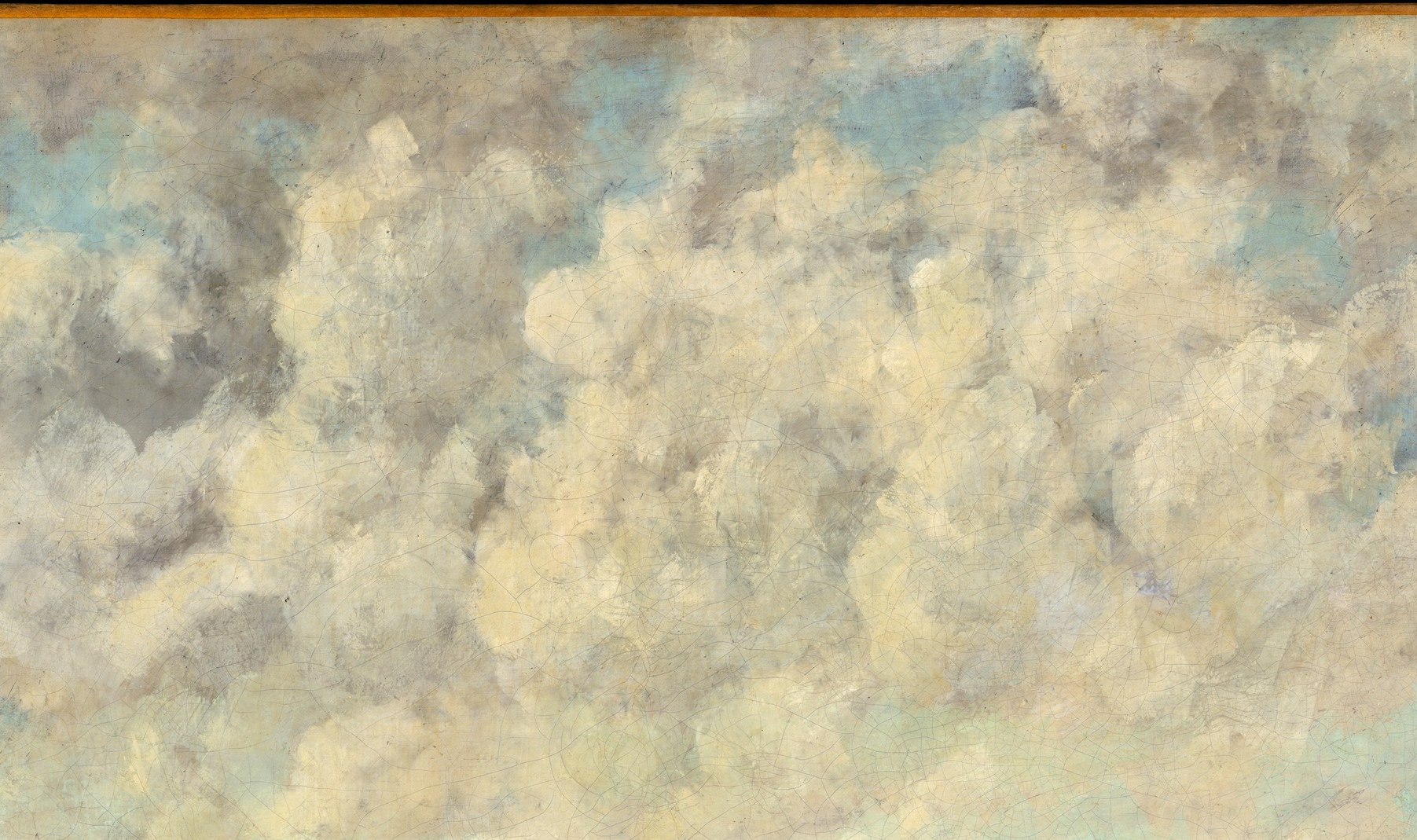
Gustave Courbet's 1869 painting The Calm Sea lives up to its name. At first glance, it is a study in stillness: a broad beach on the Normandy coast, a flat English Channel, and a towering mass of cloud that occupies nearly half the canvas. The painting hangs at the Metropolitan Museum of Art in New York.
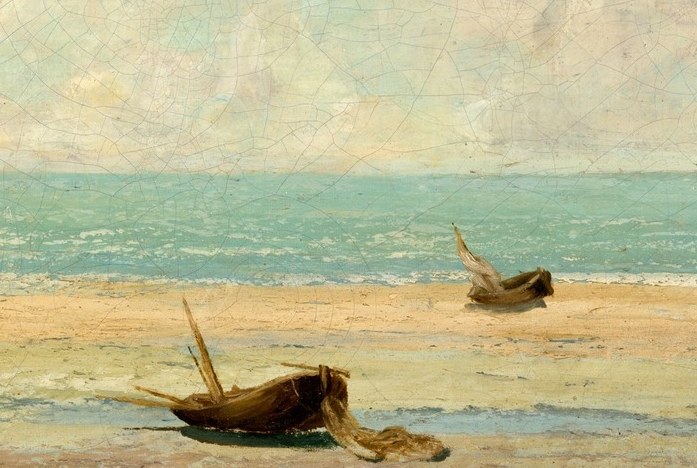
Look long enough, and the emptiness starts to speak. The composition is a series of horizontal bands, pale dry sand, a thin strip of wet reflections, a razor-flat horizon, and a cumulus cloud so solidly painted it feels architectural. Courbet's Realism was a refusal of invention. He painted what he saw, and on this day he saw almost nothing. Almost.
There are two tiny sails on the horizon. One sits just left of center, the other faintly on the right. They are easy to scroll past, but they are the painting's quiet key. On the shore below, two beached boats bracket the foreground. The distant sails mirror them exactly, linking land and sea commerce across miles of water without a single visible human figure.
Courbet was imprisoned after the Paris Commune and died in exile. A painter of huge, defiant figure compositions spent his later years watching weather on the Channel coast, finding enough drama in the light hitting a cloud to fill a canvas. What do the sails do for you?
Details

Transcript
It looks empty at first. Just sand, sea, sky. The painter was Gustave Courbet. He refused to paint anything he couldn't see. So this is a real day on the Normandy coast. Specific and still. Now scan the horizon, left of center. One tiny sail. And on the right, a second one. They mirror the two boats beached on shore. Land and sea, quietly linked.