Nocturnal Crayfishing by Jan Asselijn
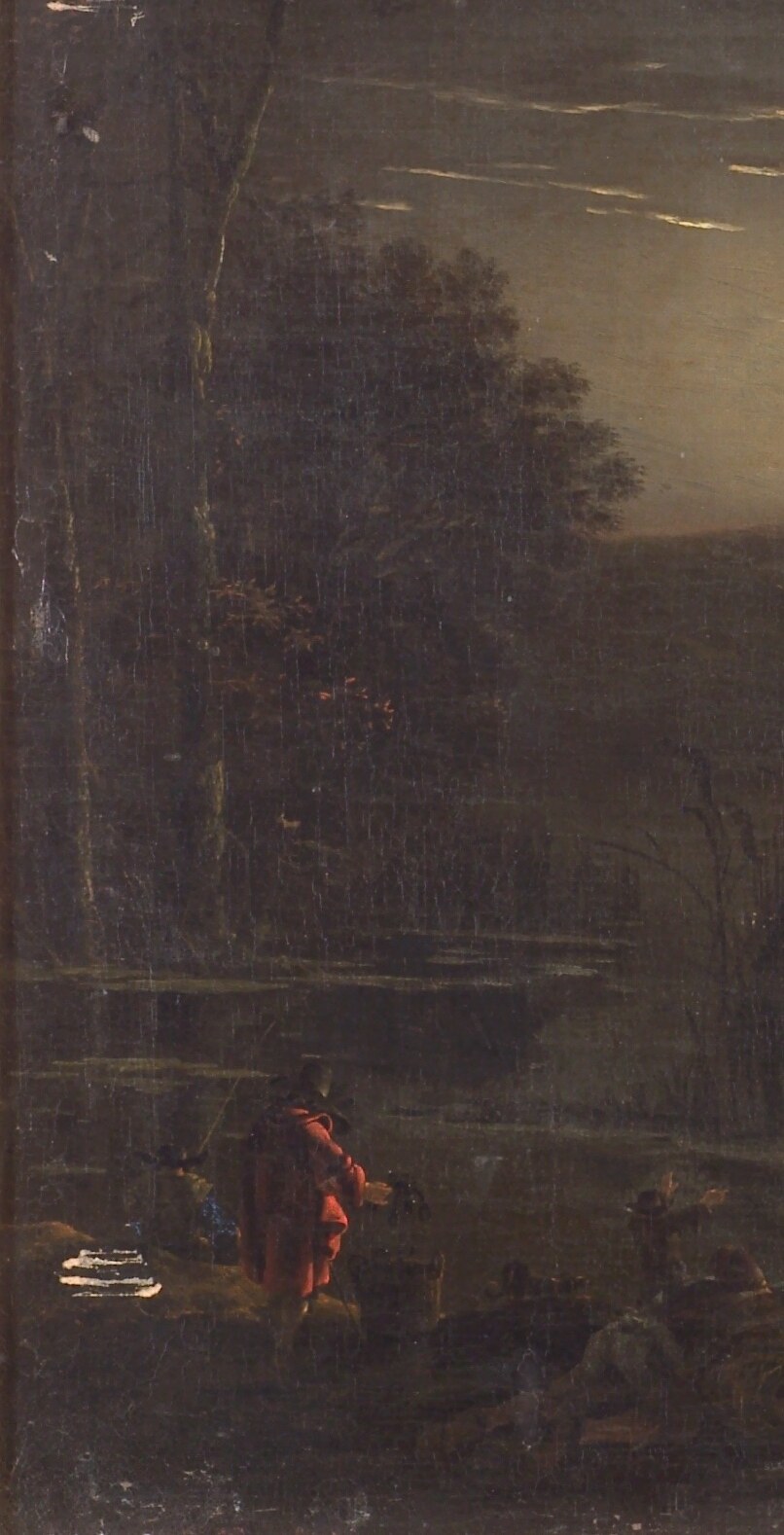
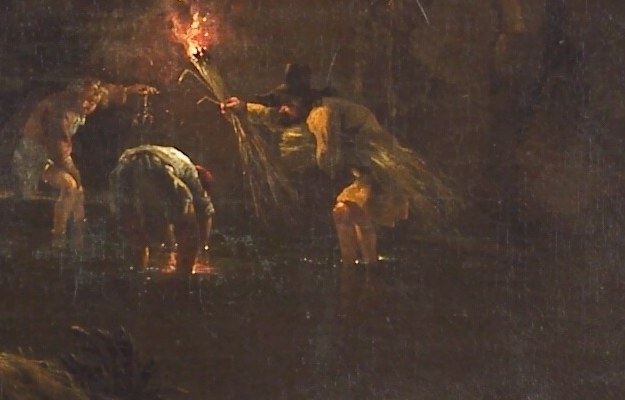
Jan Asselijn's "Nocturnal Crayfishing," painted in 1638, offers a fascinating glimpse into a common activity of the past, captured at night. This oil landscape, now at the Statens Museum for Kunst, showcases a group of figures engaged in crayfishing along a stream in a dense forest.
Look closely at the figures huddled around a small fire and the central figure holding a torch. The interplay of these light sources dramatically illuminates their faces and the water, contrasting sharply with the deep surrounding shadows. This masterful use of chiaroscuro creates a powerful sense of depth and mystery.
Asselijn, a Dutch artist born in Dieppe, created this work early in his career. It exemplifies the Dutch Golden Age interest in nocturnal scenes and demonstrates his skill in blending realistic observation with atmospheric effects, before his later shift towards more classical Italianate landscapes.
What details in the painting help you feel the stillness of the night?
Details
Transcript
This painter was known for landscapes and cityscapes. Here, he shows a scene often performed under darkness. These figures are crayfishing in a forest stream. They gather around a fire and a torch for light. See how the torch illuminates the faces and water. This technique, chiaroscuro, creates dramatic light and shadow. It was painted in 1638, early in the artist's career.