Calvary by Antonello da Messina
Antonello da Messina's "Calvary," painted in 1475, is a significant work in the Royal Museum of Fine Arts, Antwerp, and notably, it is the sole piece by the artist in Belgium.
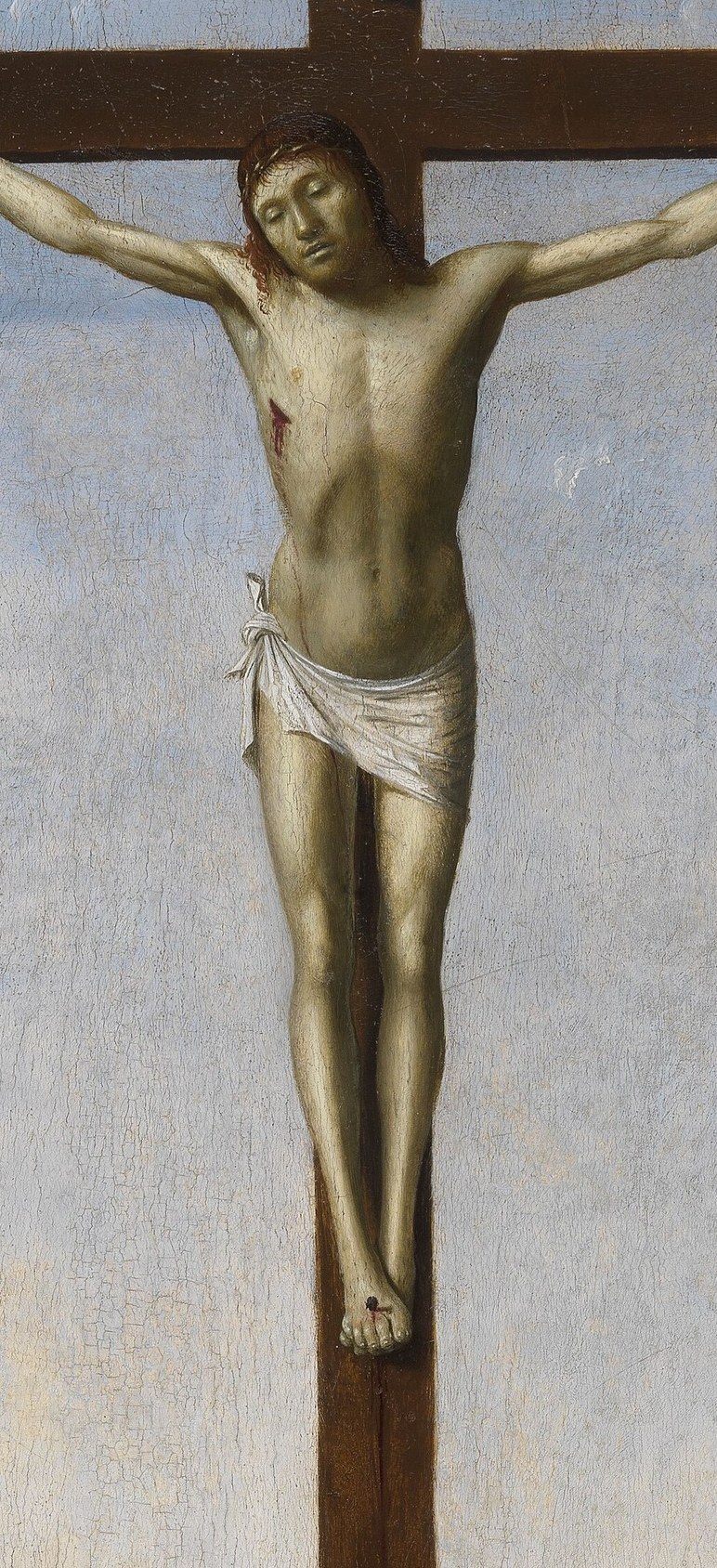
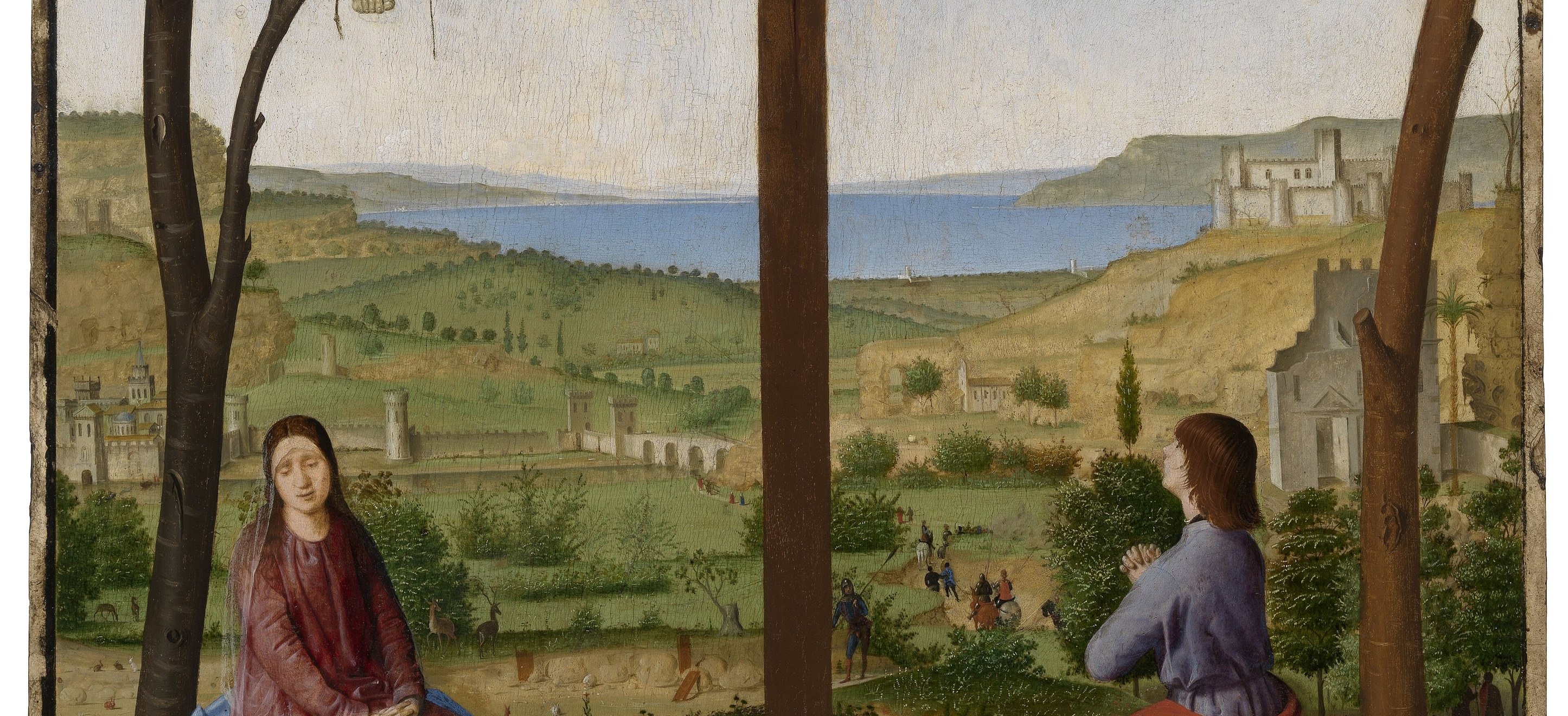
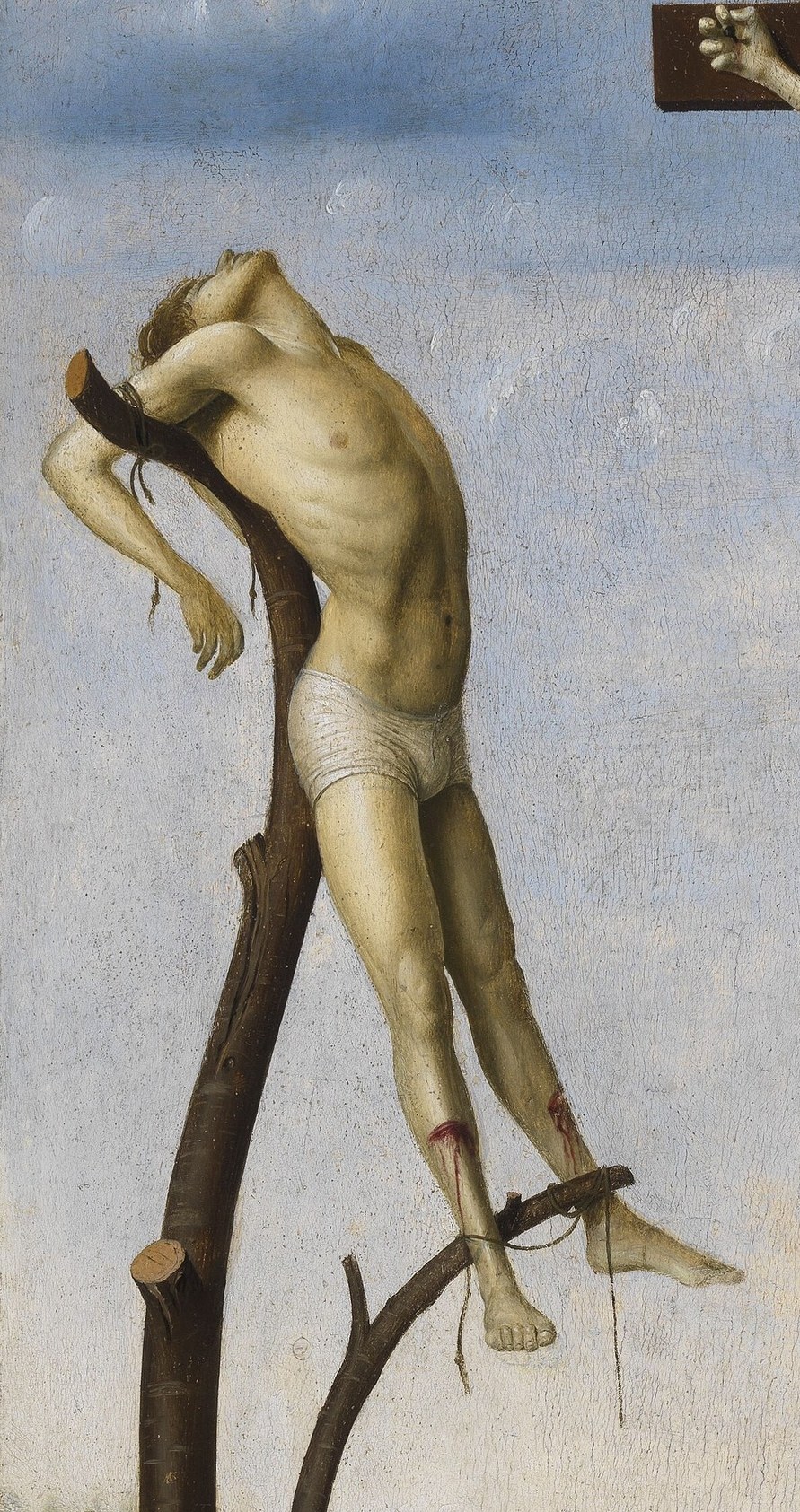
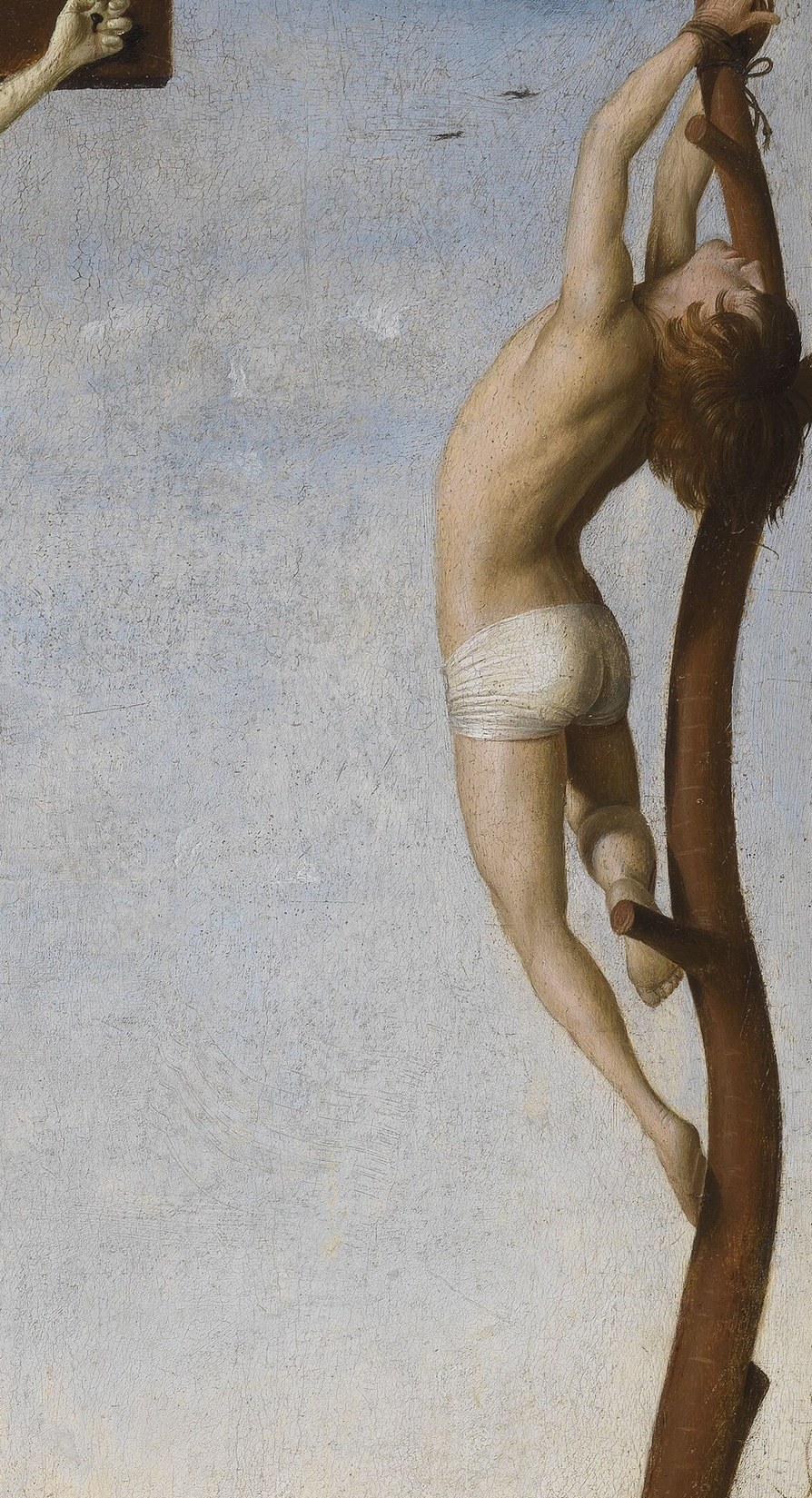
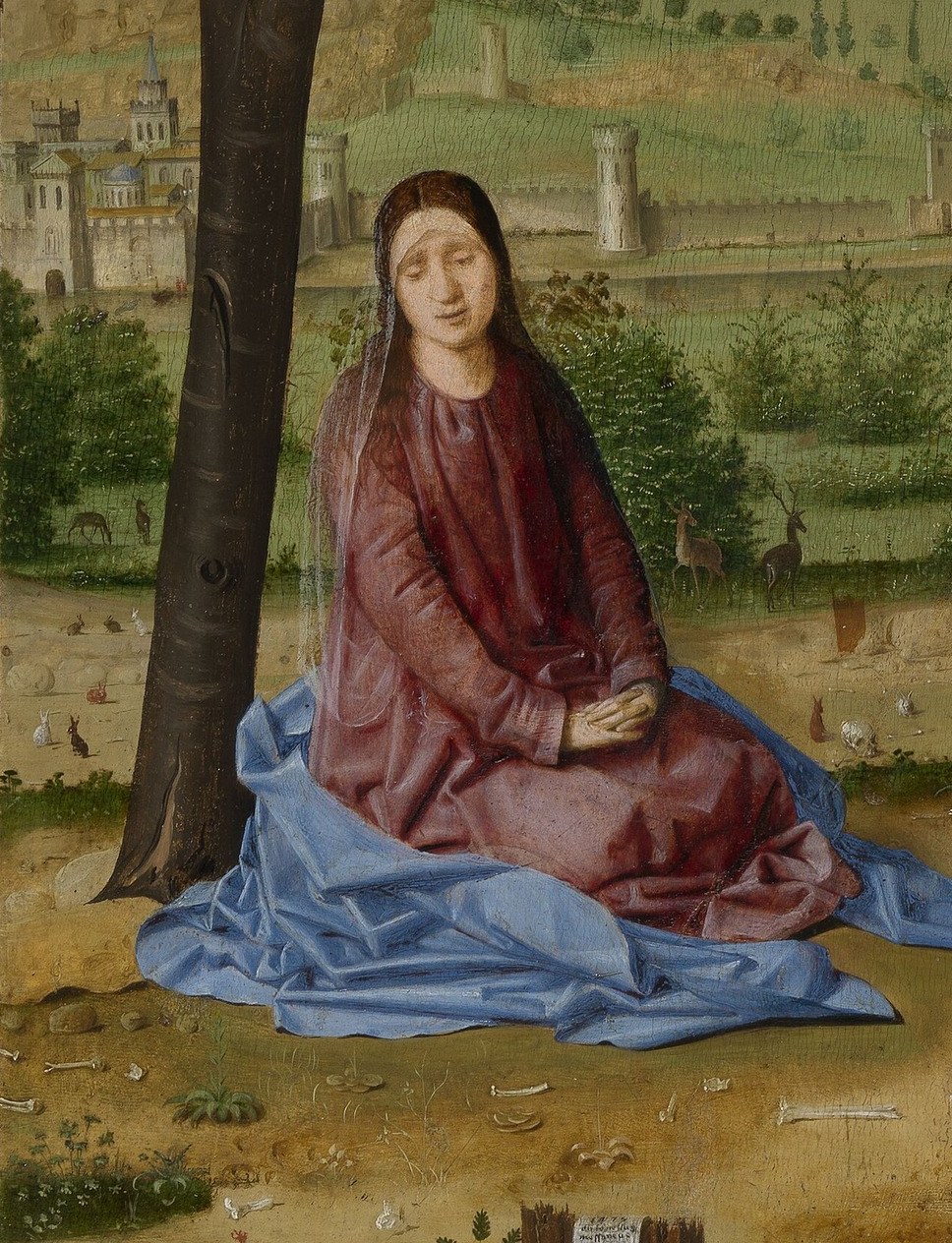
Observe the masterful use of oil paint, a technique Antonello da Messina learned from Northern European artists. This allowed him to create subtle shifts in tone and a luminous quality on the figures, particularly evident in the depiction of Christ. The background's rolling hills showcase atmospheric perspective, where colors soften to suggest distance, a hallmark of Renaissance realism.
Antonello was celebrated for integrating these Northern oil techniques with traditional Italian compositional principles. This synthesis is clearly demonstrated in "Calvary," which balances dramatic biblical narrative with meticulous natural detail. The painting's journey into the Antwerp collection in the early 20th century marked a pivotal moment for the museum, enhancing its representation of early Italian Renaissance art.
This unique blend of influences makes "Calvary" a quiet testament to a changing artistic world. What details do you find most striking?
Details
Transcript
This painter was a master of oil, a Northern technique. Look at the gentle light on Christ’s body, lending it volume. His use of oil allowed subtle gradations of tone. The distant hills show atmospheric perspective, softening colors. This blend of styles made his work unique in Italy. And this is the only painting by him in all of Belgium.