Madonna and Child with the Infant Saint John the Baptist by Santi di Tito
View the artwork: Madonna and Child with the Infant Saint John the Baptist →
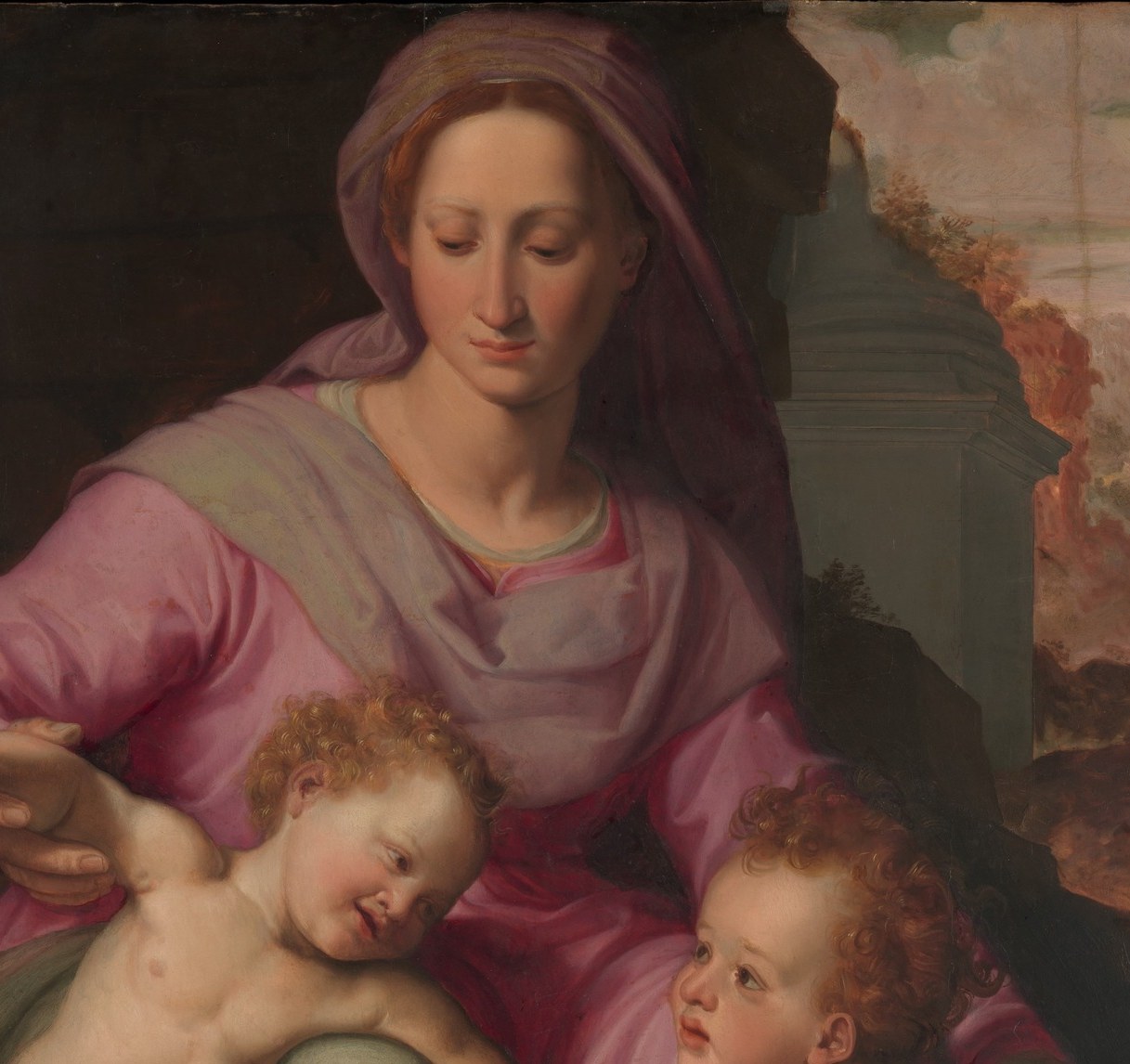
This is Santi di Tito's "Madonna and Child with the Infant Saint John the Baptist," painted in Florence around 1570. It looks like a gentle family portrait, but every gesture is packed with precise theological messaging aimed at a 16th-century audience.
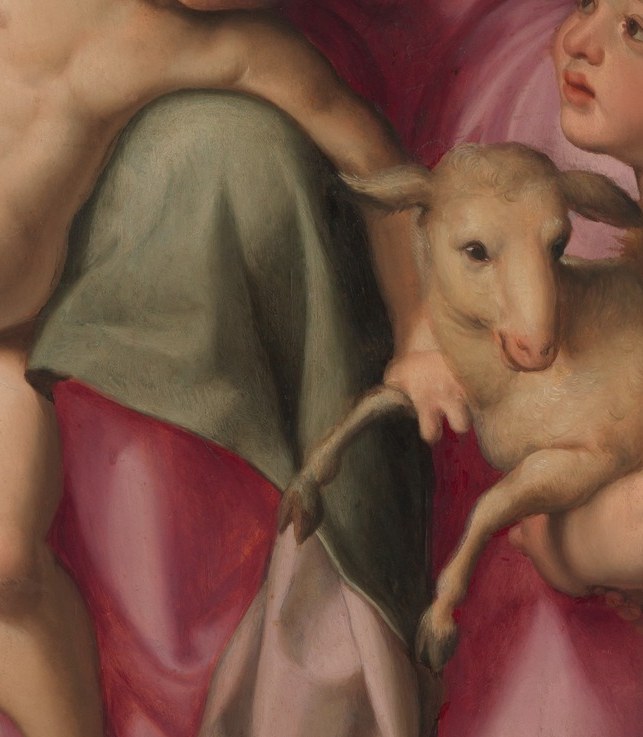
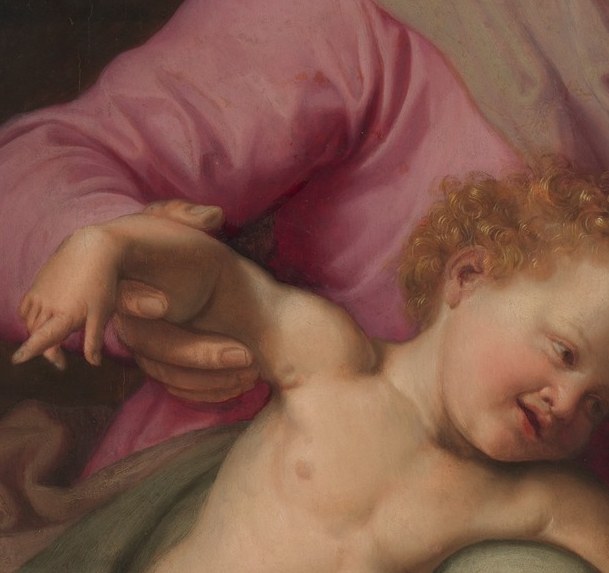
Look at the center of the canvas. Cradled between the two infants is a small white lamb. The older child, Saint John the Baptist, points directly at it. This is the "Ecce Agnus Dei" gesture, "Behold the Lamb of God", but compressed into infancy. The lamb is not a pet. It is the central visual anchor of the composition, glowing pale against the blue drapery, and it carries the whole weight of the story: a premonition of Christ's sacrifice placed in the hands of a toddler.
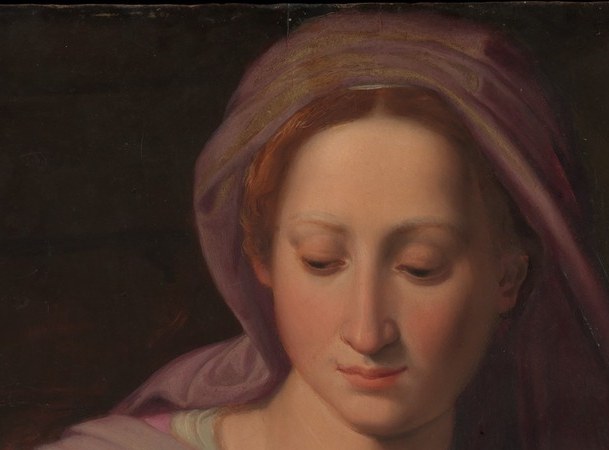
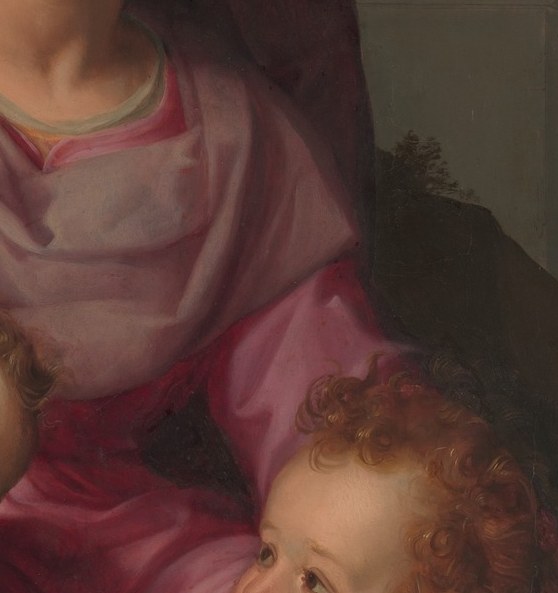
Now look at the Madonna. Her expression is not one of maternal bliss. Santi di Tito, a leading figure in the move away from the artifice of Mannerism toward naturalism, painted her with a heavy, grave foreknowledge. Her left hand touches her son's back in a gesture that is protective but makes no attempt to shield him from the lamb's implication. She sees the symbol and understands it.
Santi di Tito was a key figure in the Counter-Reformation's push for clarity in art. The Church wanted paintings that taught, not just dazzled. This work does exactly that: it hides its most important lesson in plain sight, in a small, bright creature that a viewer scrolling past might miss entirely.
#arthistory #renaissance #florence
Details
Transcript
At first glance, a tender moment between mother and children. Florence, 1570s. The Church wanted paintings the faithful could understand. So the artist gave the Madonna a real face and a heavy, human silence. Her left hand rests on her son, protective yet somehow resigned. She already knows what the little boy on the right is about to announce. His finger directs us to the reason for her heavy silence. A small white lamb. The Agnus Dei. The symbol of a future sacrifice.