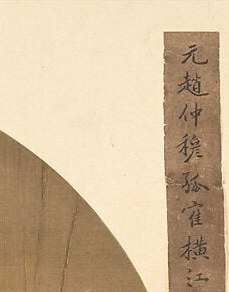
元/明 佚名 舊傳趙雍 倣盛懋 蘇軾後赤壁賦圖 團扇|元/明 佚名 後赤壁賦圖 扇|Illustration of Su Shi's "Second Ode on the Red Cliff" by Sheng Mao|Unidentified artist|Zhao Yong
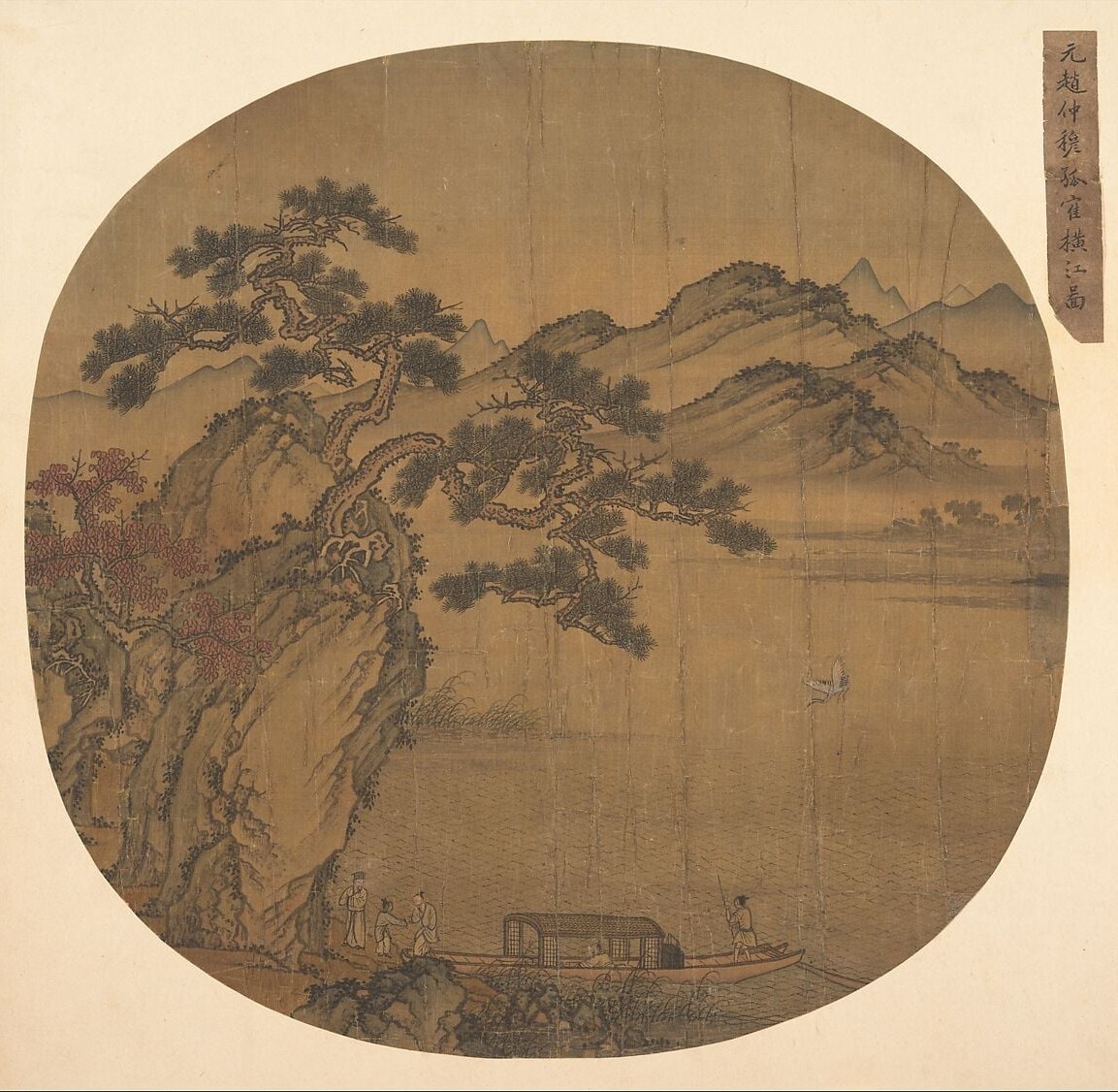
This small fan painting, an illustration of Su Shi's 'Second Ode on the Red Cliff,' is ink and color on silk from the late 14th or early 15th century. It is anonymous, though once associated with the painter Zhao Yong. The single most arresting thing about it is what the artist did not do.
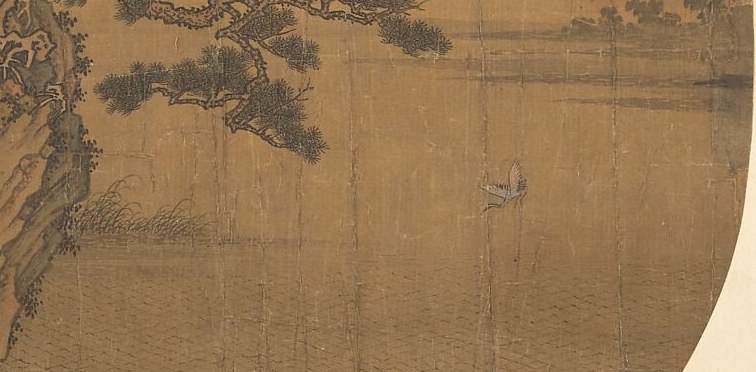
The water is not painted. That vast central expanse is the warm tan-brown of aged silk, left untouched. The artist used the material itself as silence, making the void between the cliff and the distant mountains feel psychologically immense. Su Shi's original poem from 1082 describes a moonlit boat journey, but the painter set the scene in daylight, likely to make the contour of the cliff and the texture of the brushwork more legible.
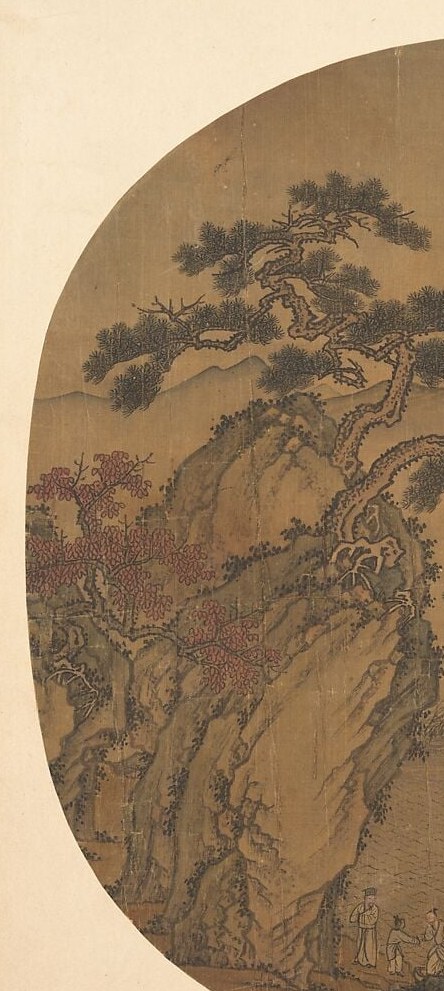
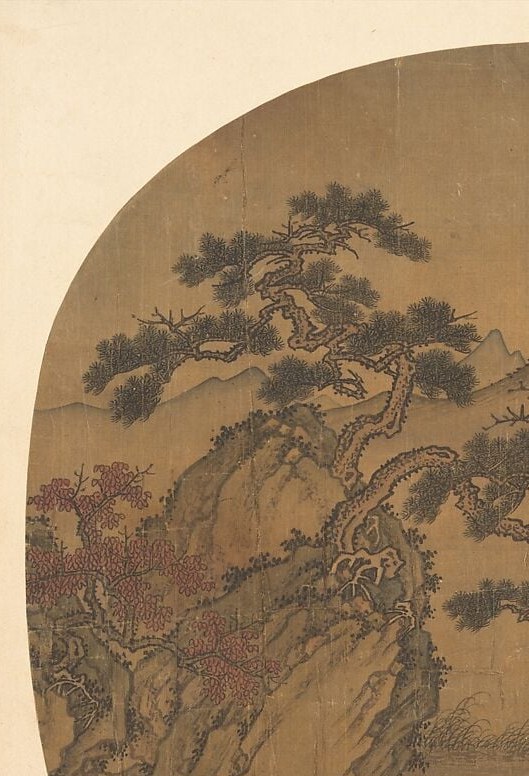
Where the silk ends, the ink begins. The Red Cliff face is built with dense, dark strokes of the 'axe-cut' technique that turns rock into calligraphy. The contrast is the entire argument of the piece: pure presence butting up against pure absence. The tiny boat on the water only amplifies the scale of the emptiness around it.
The fan was originally a handheld object, a private experience meant for one pair of eyes at a time. Now mounted as an album leaf, it still rewards close looking. Find the barely-visible sail mark far across the water, a hidden detail that makes the emptiness feel even larger.
Details
Transcript
Water. Still, vast, and completely empty. That is not paint. It is bare silk. The whole psychological weight of the poem sits on nothing. Now look at the cliff. Dense, dark, layered ink. Every stroke lands hard. This is the Red Cliff, made of brush calligraphy. One artist, two extremes. Silence and noise in the same hand.