Ingres (1780–1867) as a Young Man by Laurence-Augustine Jubé Héquet
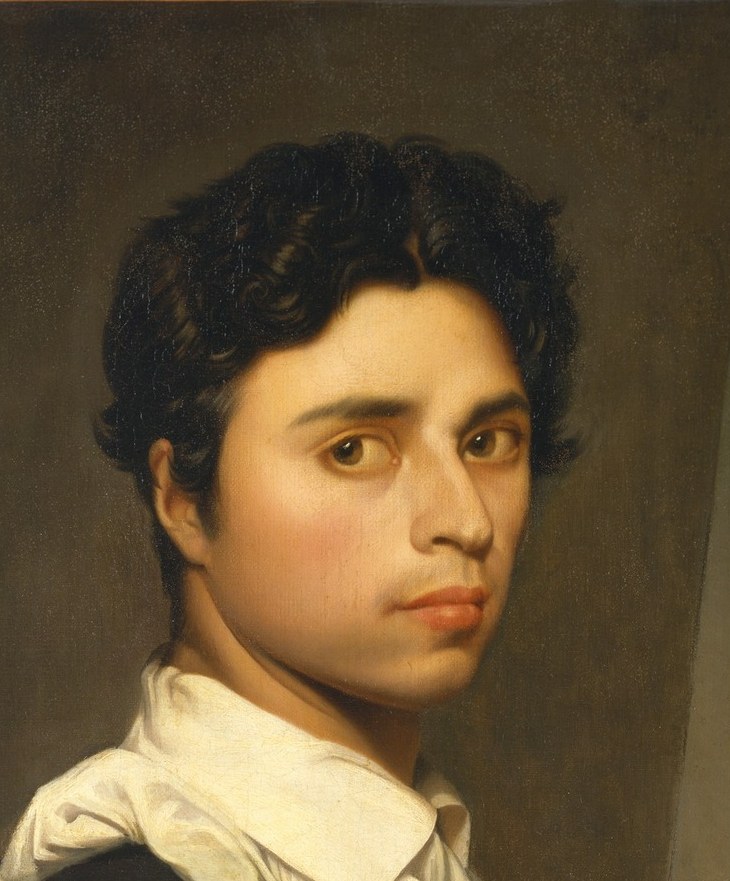
This is "Ingres (1780-1867) as a Young Man," painted in 1855 by Laurence-Augustine Jubé Héquet. It hangs at The Metropolitan Museum of Art. The strange thing: Jean-Auguste-Dominique Ingres, the sitter, had been dead for 41 years when Héquet painted this portrait of his youth. The two men never met.
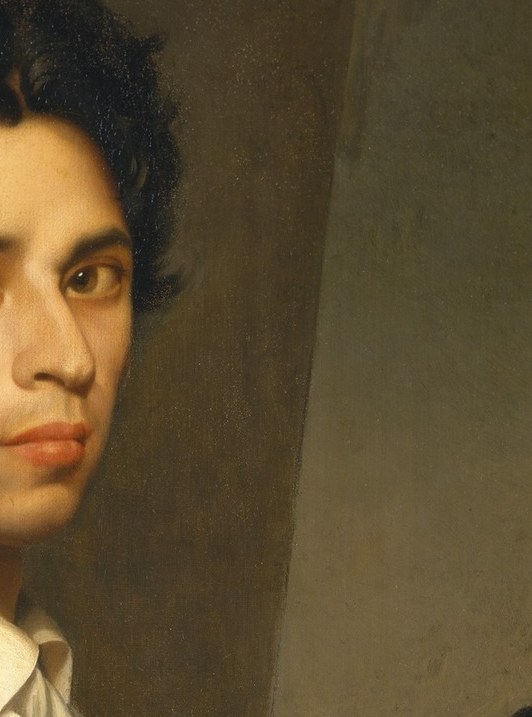
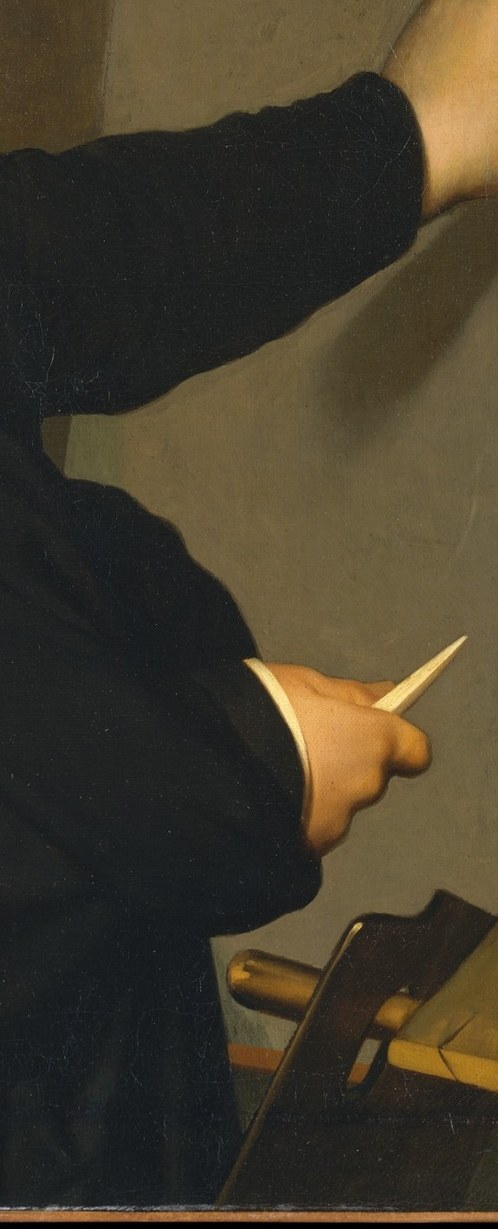
Héquet had to construct a young Ingres from reputation alone. Look at what he reached for: the brush held low, the white cloth raised mid-wipe, the wooden easel on the right. These are not personal details. They are workshop props, a visual shorthand that tells you the subject is not just a man in a dark coat but an Artist, interrupted in the act of creation.
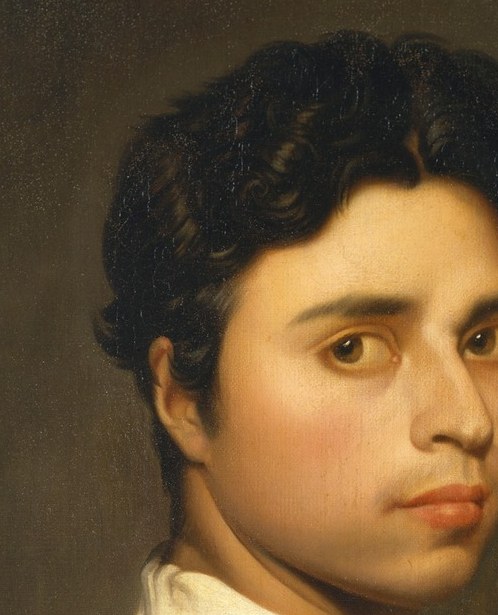
Ingres himself was a towering figure in 19th-century French painting, a champion of line over color and a lifelong defender of classical tradition. By 1855, the year of this portrait, his reputation was so monumental that a younger painter like Héquet could treat his youth as a kind of myth. The strong raking light across the cheekbone is a direct quotation of Ingres's own dramatic illumination, Héquet honoring the master by using the master's own visual language.
The code of props, brush, cloth, easel, light, adds up to a single claim: the great artist arrives fully formed. No fumbling, no doubt. Just a young man who already looks like his own statue. What do you think a painter today would put in the frame to signal the same thing?
Details

Transcript
He painted this 41 years after the sitter died. The painter never met young Ingres. So he built him from symbols. The white cloth in his hand: the artist wiping his brush, caught mid-work. The brush below, barely emerging from the dark: creation is what he disappears into. The easel on the right anchors the scene, a canvas just out of frame, a life's work implied. The raking light across his cheekbone is Ingres's own signature technique. The code adds up to one claim: the great artist was never young. He was born ready.