Calf, spotted black and white by Geo Poggenbeek
Geo Poggenbeek's "Calf, Spotted Black and White," painted around 1888 and held at the Rijksmuseum, might seem like a straightforward animal portrait, but a closer look reveals a story beyond the brushstrokes.
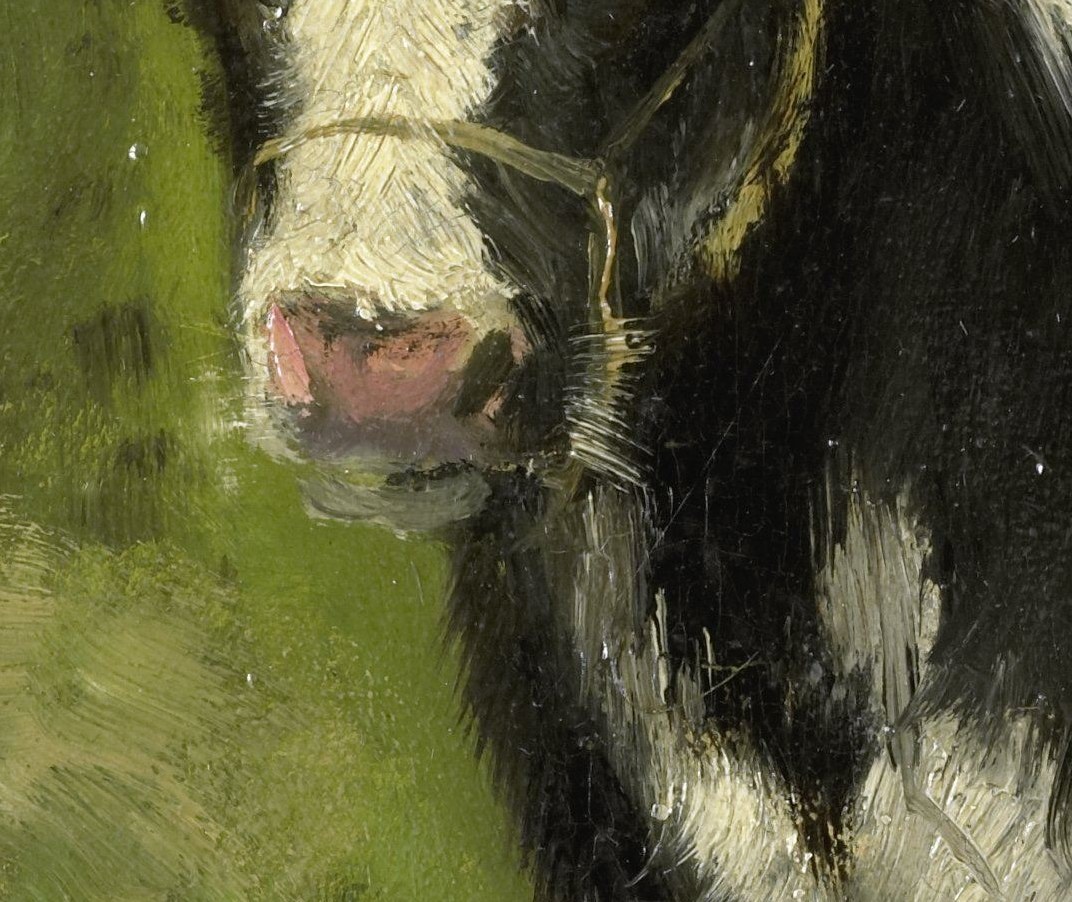
The painting focuses on the calf's direct gaze and alert ears, rendered with visible brushwork characteristic of the Hague School and Impressionism. The subtle yellow rope around its neck hints at its domesticated life in the pasture.
Most interesting is the red circular stamp in the lower right, which reads 'ATELIER GEO. POGGENBEEK.' This isn't the artist's personal signature, but a mark indicating the painting was sold from his studio inventory after his death. This common practice in the 19th century allowed works to find homes even after the artist had passed.
It's a small detail that tells a larger tale about the art market of its time and how artists' legacies were managed. What other hidden marks might tell a story?
Details
Transcript
This painting of a calf looks like a simple study. The artist, Geo Poggenbeek, was known for his animal paintings. He captures the calf's curious gaze and alert ears. Notice the subtle rope around its neck, a sign of domestication. But look closely in the lower right corner. That red stamp is not a signature, but an atelier mark. It means this was sold from his studio after his death.