清 沈焯 山水 冊頁|Landscape by Shen Zhuo
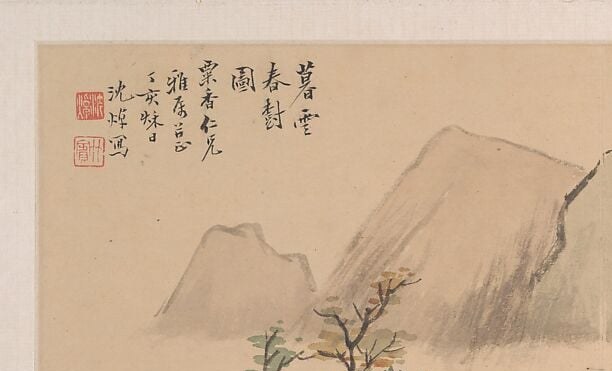
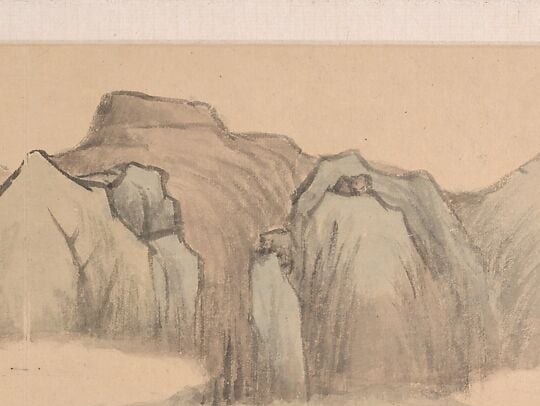
Shen Zhuo painted this album leaf, titled *Landscape*, in 1827. It is ink and a touch of green mineral color on paper, made to be held in the hands and viewed up close, not hung on a wall. The entire image depends on a technical paradox: the deepest space, the mist filling the valley floor, is the one part of the scene the painter never touched.
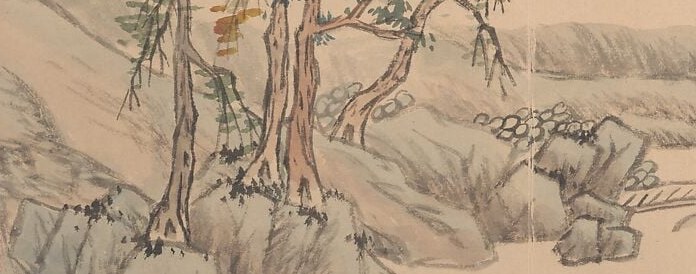
Run your eye across the texture strokes on the left ridges and the bold dark ink of the pines on the right. Then rest at the center. The paper is raw and empty, and your brain reads it as a thick, breathable atmosphere. That negative space is the single hardest passage to calibrate because there is no correction possible, once ink touches the paper, the mist would be gone.
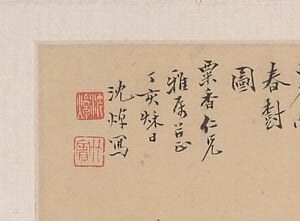
Chinese landscape painters of the Qing dynasty treated this technique as foundational, almost spiritual. The blank paper was not a void but a presence, the qi that moves through mountains and valleys. Shen Zhuo’s seals and calligraphic inscription in the upper left locate the painting in a specific poetic tradition, likely recording the artist and the occasion for which the leaf was made.
Notice the tiny dwellings tucked into the green hills. You have to search for them, which is the whole idea. The painting rewards the kind of attention no scroll can demand.
Details

Transcript
Mountain peaks. Space. A quiet valley. The painter splits the world with ink. Sharp fractured rock on the left. Soft smooth dome on the right. The sky is the lightest possible ink wash. Now find the center. That mist is not painted. It is bare paper. 1827. An album leaf meant for one pair of hands.