Saint John the Baptist and Saint Catherine Altar Piece by Juan de Sevilla
This impressive "Saint John the Baptist and Saint Catherine Altar Piece" by Juan de Sevilla, painted around 1410, offers a glimpse into early 15th-century Spanish devotion. Housed at the Museo del Prado, it served as a powerful visual narrative for its original audience.
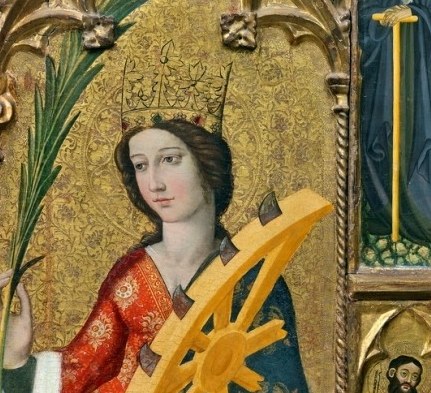
At the center, Saint Catherine of Alexandria is depicted with her characteristic symbols: the sword of her martyrdom and the broken wheel, representing her miraculous deliverance from torture. Beside her, Saint John the Baptist holds his lamb and book.
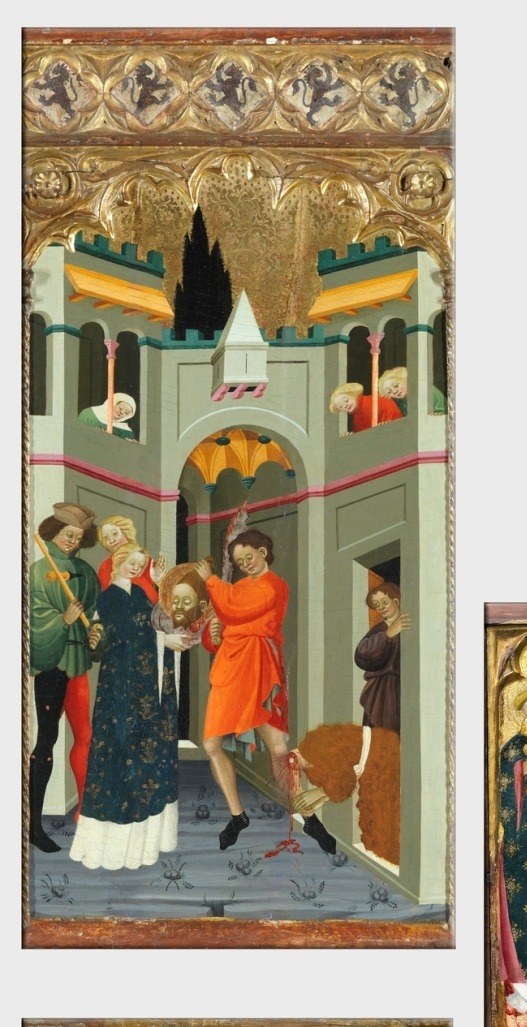
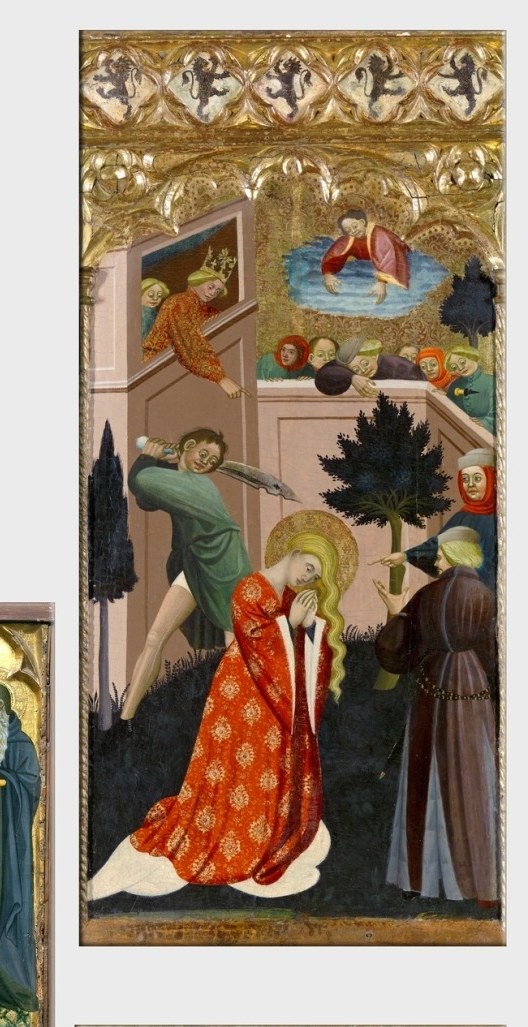
Flanking these central figures are smaller panels depicting various martyrdoms and scenes of life, including a feast and a wheel of fortune. These multiple narratives within a single altarpiece were common, designed to instruct and inspire medieval viewers on matters of faith and sacrifice. The vibrant colors and meticulous details, set against a shimmering gold background, create an ornate and visually rich experience.
What do these detailed stories reveal about the beliefs and values of people living over 600 years ago?
Details
Transcript
This Spanish altarpiece, from 1410, tells several stories at once. Saint Catherine stands here, known for her sharp intellect. She holds the sword that was used to behead her. Next to her, the broken wheel that failed to kill her. Below, other martyrs meet their violent ends. Scenes like these were common, instructing medieval viewers on faith. The gold background elevates the saints into a divine, timeless space.