Hudson's Bay Lemming by John Woodhouse Audubon
Did you know John James Audubon had a son who also painted wildlife? "Hudson's Bay Lemming," painted in 1846 by John Woodhouse Audubon, continues his father's legacy of meticulous natural history illustration, focusing on the often-overlooked mammals of North America. This oil on canvas is part of a tradition of scientific artistry.
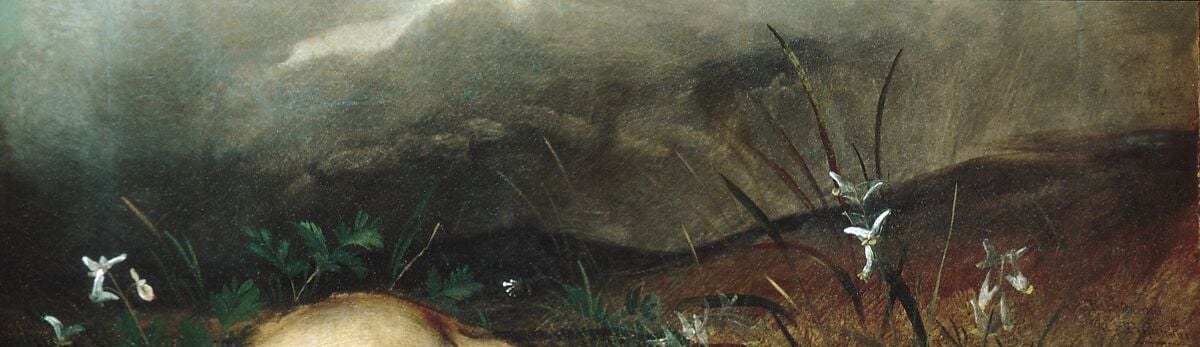
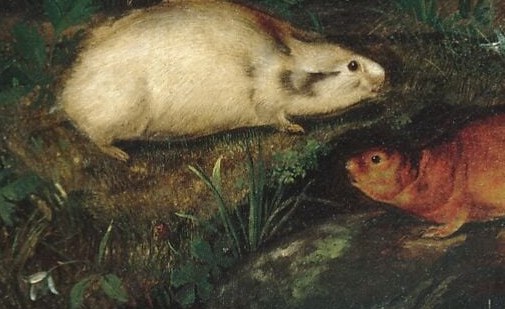
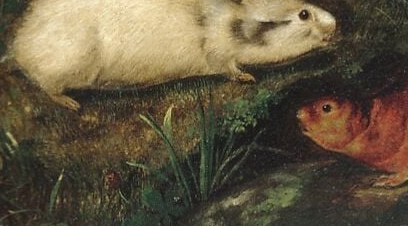
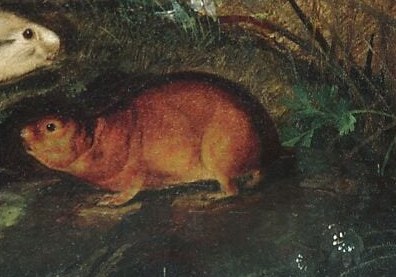
In this work, Audubon presents two lemmings, showcasing both their white winter coat and their reddish-brown summer coat. This serves a practical purpose, like a visual field guide, allowing for easy identification of the species in different seasons. Observe the careful rendering of the fur and the delicate plant life in the foreground, demonstrating the artist's keen eye for detail.
John Woodhouse Audubon worked independently from his famous father, developing his own focus on individual animal studies. While his father concentrated on birds, the younger Audubon explored the world of mammals, contributing significantly to the documentation of American wildlife during a time of great scientific curiosity. This painting can be seen as a still life, capturing a moment in the broader natural history tradition.
What other unsung natural history artists do you admire?
Details

Transcript
This painting is by the son of a famous American artist. His father, John James Audubon, was world-renowned for his bird paintings. But his son, John Woodhouse Audubon, painted mammals like this lemming. He documented the animal's exact form, just like his father did. Notice he included both a white winter-phase and a brown summer-phase lemming. This work served as a naturalist's field guide on canvas.