Saint George and the Dragon by Luca Signorelli
Luca Signorelli's "Saint George and the Dragon," painted around 1500, is a masterful display of foreshortening and dramatic composition, now housed at the Rijksmuseum. Signorelli was renowned for his skill in draftsmanship, bringing figures vividly into the viewer's space.
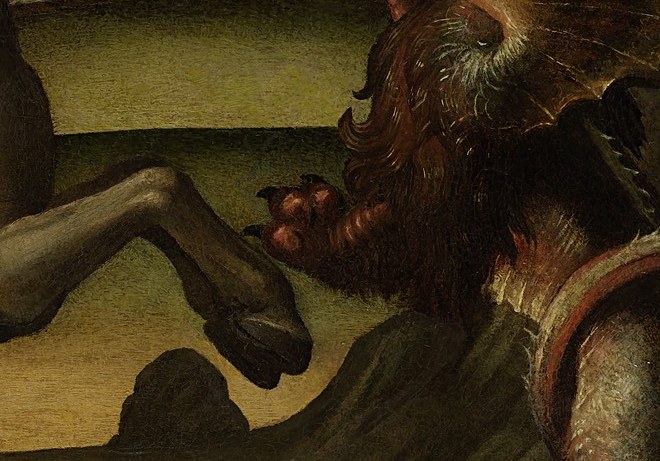
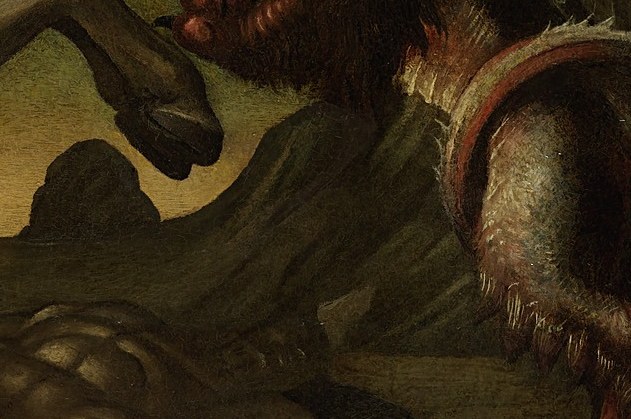
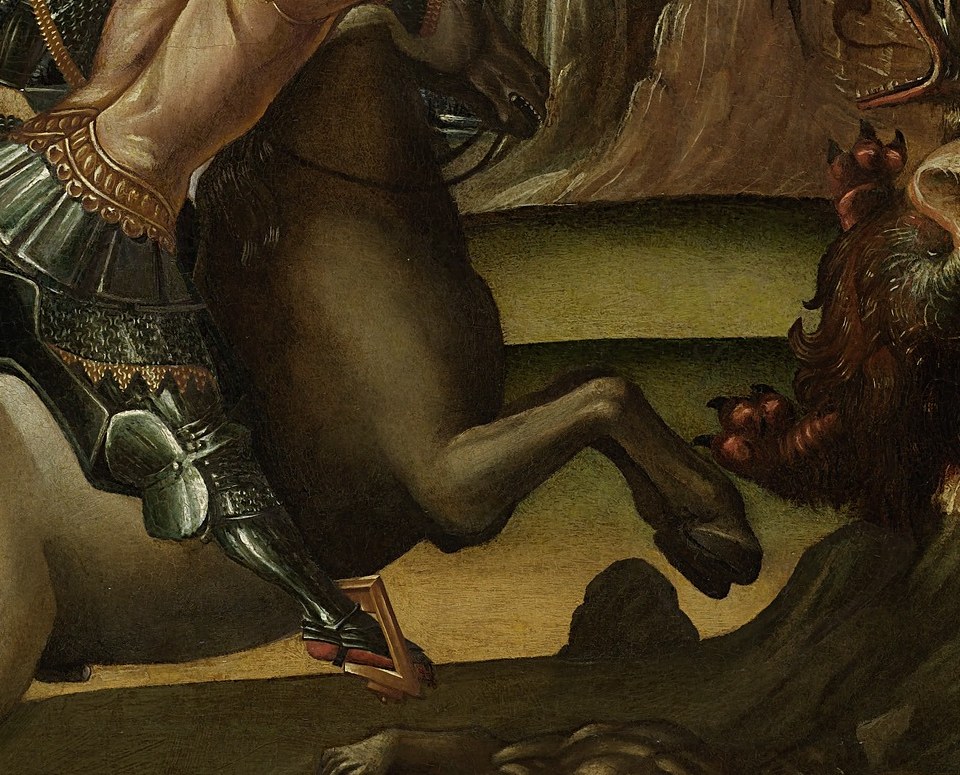
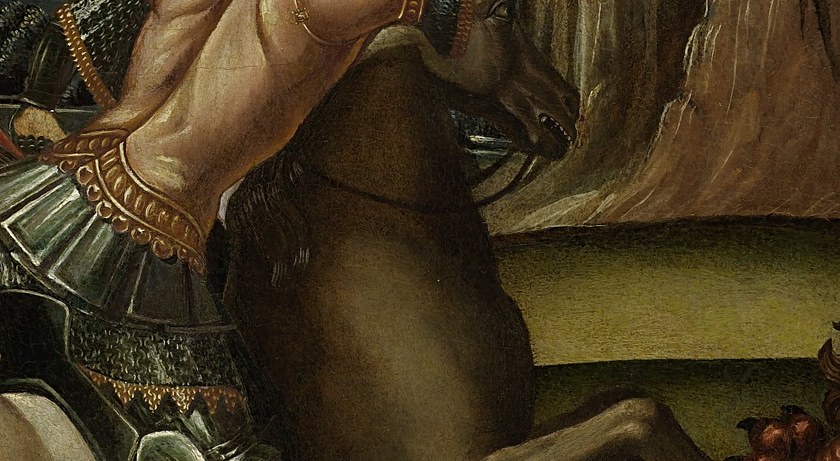
Observe how the dragon's gaping maw and sharp claws seem to lunge out of the painting, a testament to the artist's command of perspective. Similarly, the powerfully rendered back of Saint George and his horse convey immense strength and a dynamic sense of movement.
Signorelli, an Italian Renaissance painter from Cortona, used oil paint to create this intense scene. He honed his skills in major Italian art centers like Florence and Rome before returning to his hometown. This painting reflects the Renaissance fascination with heroic myths and religious allegories.
The careful alignment of every element, from the princess's terror to the poised spear, creates a powerful illusion. What other details capture your eye in this vibrant scene?
Details

Transcript
This painter was a master of perspective and anatomy. Look at the dragon's head, lunging towards us. The open maw seems to emerge from the canvas. He used foreshortening to create this intense illusion of depth. Saint George's muscular back also twists into space. Each element is perfectly aligned for dramatic impact.