相阿弥筆 四季山水図 (瀟湘八景)|Landscape of the Four Seasons (Eight Views of the Xiao and Xiang Rivers) by Sōami
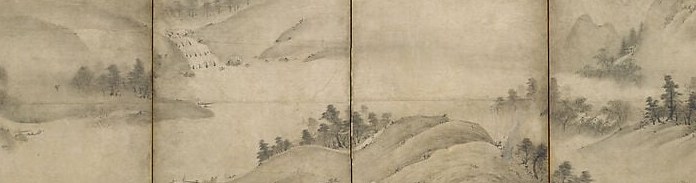
Sōami's Landscape of the Four Seasons (Eight Views of the Xiao and Xiang Rivers), created around 1516, is a pivotal work in Japanese ink painting, now at a museum. This pair of six-panel folding screens showcases the artist's remarkable skill in the suiboku (ink wash) tradition.
Observe how Sōami masterfully uses varying ink washes to depict towering, mist-shrouded mountains and serene rivers. Delicate pine trees, distant villages, and tiny figures in small boats are integrated, inviting contemplation on nature's cyclical changes and human's place within the vast landscape.
Sōami was an influential artist during Japan's Muromachi period, known for drawing inspiration from Chinese Song and Yuan dynasty styles. His refined brushwork and compositions not only defined the aesthetic tastes of his era but also established a significant precedent for subsequent generations of Japanese landscape painters.
What details do you find most captivating in this sweeping natural panorama?
Details


Transcript
This tranquil ink landscape unfolds across folding screens. Sōami, a master of ink wash, painted it in 1516. He used varied ink washes to create mist and depth. Small boats and figures hint at human presence. His work helped shape Japanese aesthetic sensibilities. It influenced generations of landscape painters after him.