Gaspard de Daillon du Lude (ca. 1602–1676) by Jean Saillant
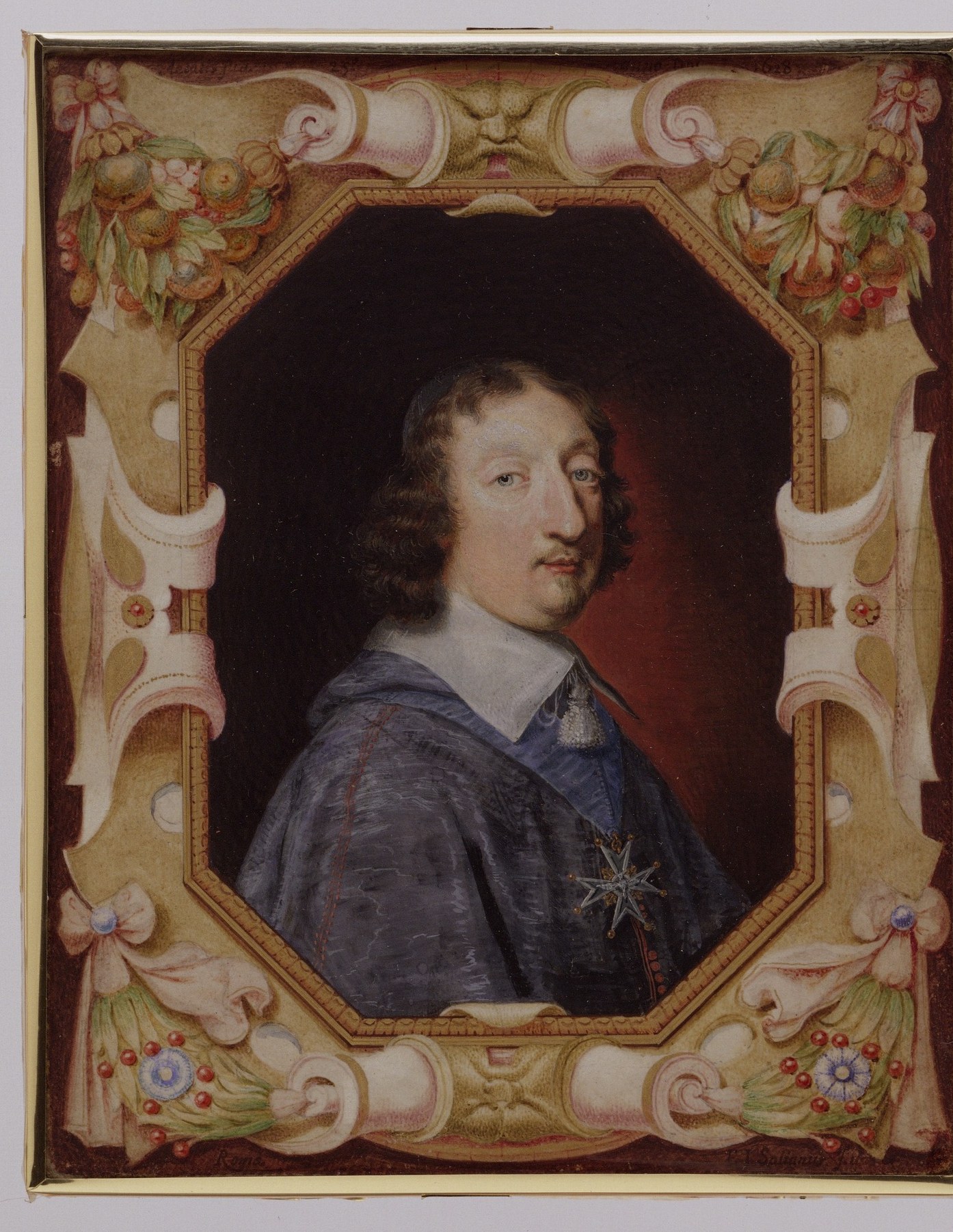
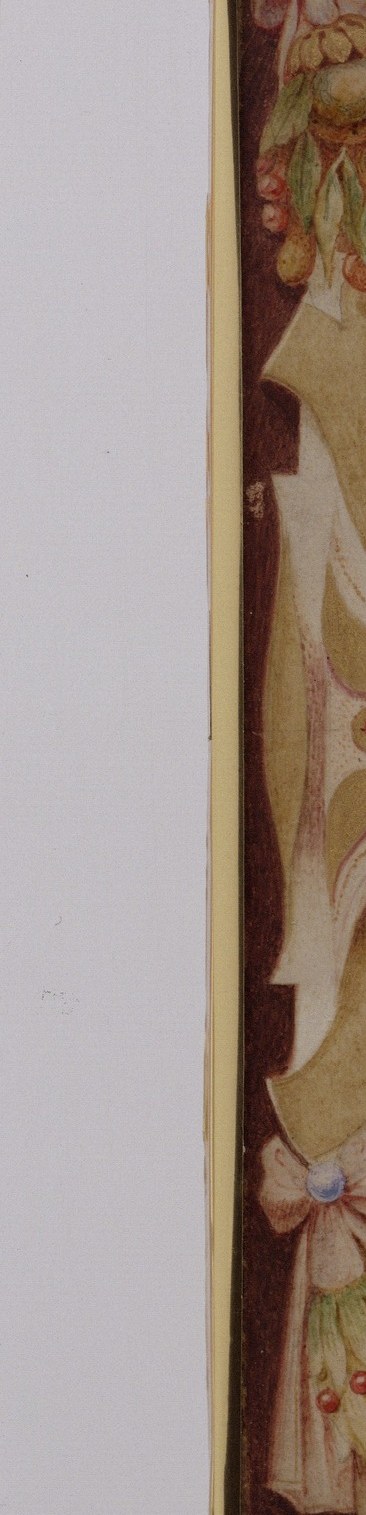
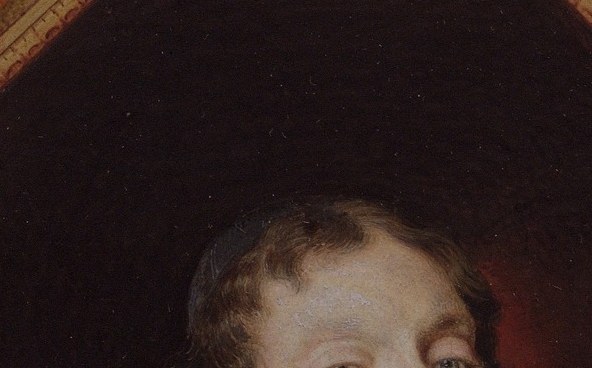
This is Gaspard de Daillon du Lude, painted in 1628 by Jean Saillant, and it is smaller than your open hand. The entire portrait, the carved stone cartouches, the floral garlands, the lace collar, the face, sits on a single sheet of vellum stretched over a support, at a scale that required a magnifying lens to execute. It lives at The Metropolitan Museum of Art.
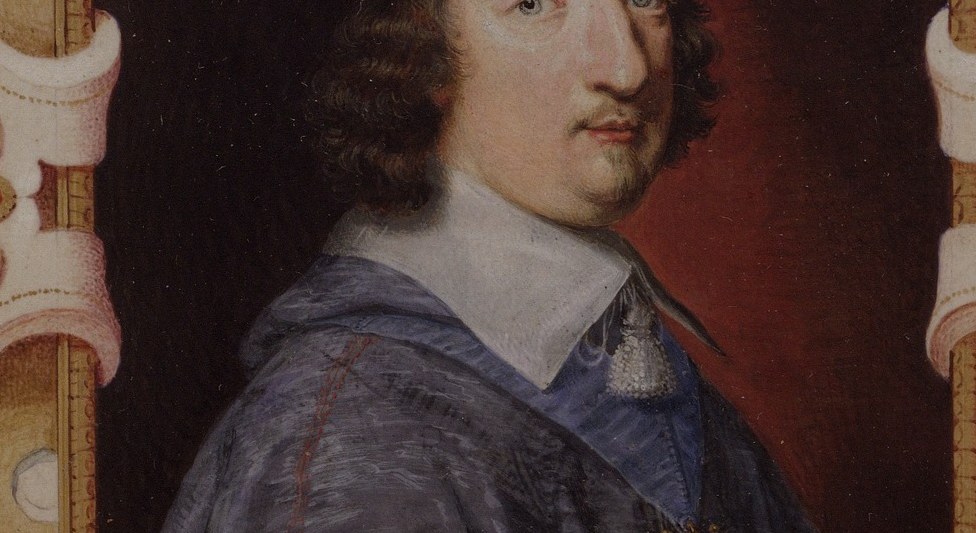
What you are looking at is a complete architectural monument, rendered in miniature. The oval frame, the scrollwork on both sides, and the fruit-and-flower garlands above and below are not applied ornament; they are painted illusions on a flat surface. Run your eye along the white falling band collar: every thread of the lace is a single stroke from a sable brush small enough to hold maybe three or four hairs.
Jean Saillant was born in Avignon, entered the Augustinian order, and worked in Rome and Florence between about 1620 and 1633. His miniatures sit at the crossroads of French and Italian small-scale portraiture, but documentary traces of him thin out after 1633, and he died sometime in or after 1638. The sitter was a 26-year-old nobleman whose thin mustache and falling band collar pin him precisely to the French court of Louis XIII.
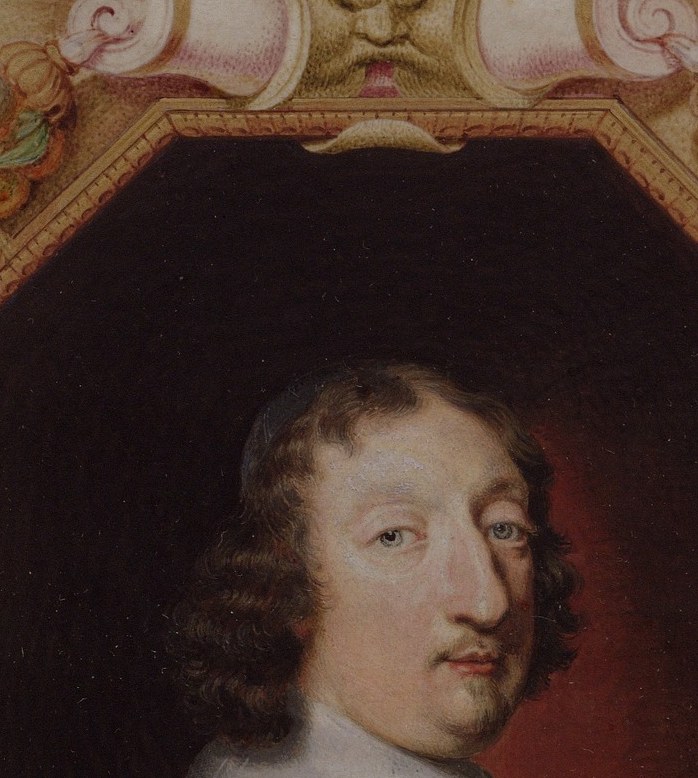
The astonishing thing is that none of the illusion collapses when you move closer. The stippled face, the soft folds of the blue-gray cloak, the carved-stone shadows, they all hold. A portrait built one dot at a time, meant to be seen from inches away, still reading three centuries later.
Details
Transcript
This whole portrait is smaller than your hand. And all of it, frame, stone, flowers, is paint. That carved scrollwork? A flat sheet of calfskin. Now look at the lace collar. Every thread is a single hair from a sable brush. The face is built from tiny stippled dots. He painted it under a magnifying lens, in 1628.